
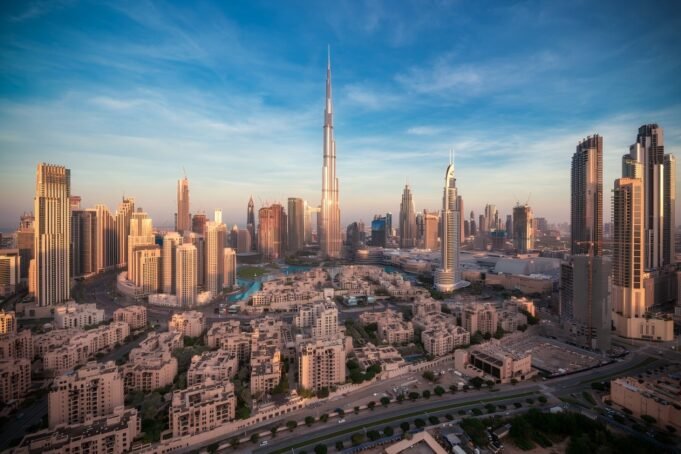
In recent years, Dubai real estate has evolved from a conventional store of savings into a comprehensive platform for wealth creation, bringing together capital appreciation, rental income and opportunities for reinvestment. As its investor base widens and capital flows in from around the world, the emirate has emerged as a model of an economy that does more than attract affluent individuals: it enables investors to turn property ownership into capital that can grow over time, according to an analysis by W Capital Real Estate Brokerage.
The company said describing Dubai as a “millionaire-making engine” reflects the real estate ecosystem’s capacity to create opportunities for wealth accumulation—not a claim that every property buyer becomes a millionaire. The true measure lies in asset-value appreciation, net rental income, costs and financing, as well as an investor’s ability to hold property and redeploy returns into additional assets.
W Capital cited the latest complete set of government data for 2025, showing approximately AED 680 billion in property investments across 258,600 investments, with year-on-year increases of 29% in value and 20% in volume. The investor base rose to more than 193,000, an increase of 24%, including around 129,400 new investors. Residents accounted for 56.6% of all investors, underscoring broader participation and increasingly diverse sources of demand.

From Attracting Wealth to Creating Value
Walid Al Zarooni, Chairman of W Capital Real Estate Brokerage, said in a proposed statement for the release: “Dubai’s real estate story is no longer simply about record sales or new towers. It is about assets becoming wealth and investment confidence translating into long-term stability. An investor who chooses the right location, manages cash flow with discipline and reinvests returns is not merely buying a property; they are building a financial foundation that can expand year after year.”
He added: “One of Dubai’s greatest strengths is that investment opportunities are not limited to the ultra-wealthy. They extend to a broad spectrum of investors through products ranging from apartments and houses to off-plan developments and completed properties. Capturing these opportunities depends on the right price, project quality and investment horizon—not speculation on quick gains.”
These developments coincide with Dubai’s standing on the global wealth map. The World’s Wealthiest Cities Report 2025, published by Henley & Partners, counted approximately 81,200 resident millionaires in Dubai, representing growth of 102% over the decade from 2014 to 2024, and ranked the emirate 18th worldwide. The figure illustrates Dubai’s success in attracting and retaining wealth; it does not mean that all these millionaires made their fortunes through property. That distinction is essential to understanding real estate as one component of a wider ecosystem spanning business, investment and financial services.
What Can Five Years Do to a Property’s Value?
The mechanics of wealth creation become clearer when changes in the value of an asset are examined over time. PropertyIndex, which draws on sales data registered with the Dubai Land Department and adjusts for changes in the mix of transactions, recorded cumulative residential price growth of 64.5% over the five years to September 2026. This reflects movement in a market-wide index, not the return achieved by every individual property: outcomes vary by location, unit type, purchase timing and project quality.
To illustrate, a hypothetical property valued at AED 1 million at the start of a comparable period would be worth approximately AED 1.645 million if its value rose by the same percentage as the index. That would represent a paper gain of AED 645,000 before registration, financing, maintenance, selling and other costs. The example is neither an actual transaction nor a guaranteed return; it demonstrates how appreciation over several years can become a cornerstone of wealth accumulation.
At the same time, gross rental income should not be treated as net profit. Vacancy periods, service charges, maintenance, brokerage fees and financing costs, where applicable, must first be deducted. Only then can an investor determine the net cash flow available for saving or reinvestment—a distinction that separates sound investment analysis from headline promotional figures.
Illustrative Table: The Effect of Appreciation on a Hypothetical Asset
| Indicator | Value |
| Initial asset value | AED 1,000,000 |
| Residential price-index increase over five years | 64.5% |
| Illustrative value after appreciation | AED 1,645,000 |
| Paper gain before expenses | AED 645,000 |
Note: For illustration only. The calculation excludes income, ownership costs, the effects of borrowing, and applicable taxes and fees. Source: PIX index, September 2026.
Why Does Dubai’s Ecosystem Support Asset Ownership?
W Capital explained that Dubai’s appeal goes beyond rising prices. It rests on interconnected strengths, beginning with transparent regulation and registration procedures and foreign-ownership options in designated areas, and extending to advanced infrastructure, transport networks, amenities and services, as well as long-term residency under the applicable eligibility rules. Together, these factors give investors a clearer basis for assessing a property’s use, rental potential and resale prospects, while supporting demand from both owner-occupiers and investors.
The city’s competitive tax environment, including the absence of personal income tax on individuals, also enhances its attractiveness to businesses, skilled professionals and high-net-worth individuals. Nevertheless, the tax treatment of property-related gains may depend on the investor’s status, ownership structure and activities, and real estate transactions still involve fees and other costs. Investment decisions should therefore not be reduced to the simplistic proposition of “tax-free property.”
In another proposed statement, Al Zarooni said: “Dubai’s strength lies in how closely it connects property with the real economy. Every expansion in business activity, population, services and transport creates new uses for real estate and gives investment depth beyond temporary waves of demand. Successful investors study the map of the city that is taking shape tomorrow, not just the asking price today.”
A New Generation of Investors
Official figures show that the market is no longer confined to a narrow circle of major property owners. An investor base of 193,100 in 2025, together with approximately 129,400 new entrants, highlights Dubai’s ability to broaden market participation. Women accounted for AED 154 billion in investments across 76,700 investments, further illustrating the market’s diversity. Investor numbers are not the same as millionaire numbers, but they point to more individuals gaining exposure to assets with the potential to appreciate over time.
Opportunities to build portfolios progressively arise from purchasing assets that match financial capacity, maintaining adequate liquidity, spreading risk across locations and property types, and reinvesting surplus rental income or proceeds from exits into new opportunities. Excessive leverage or an assumption of perpetually rising prices can alter investment outcomes. For that reason, W Capital stressed the importance of assessing net returns, liquidity risks and purchase timing before committing capital.
Indicators of Market Depth
| Indicator | Value | Period / Source |
| Real estate investment value | Approx. AED 680 billion | 2025 / Dubai Government data |
| Number of investments | 258,600 | 2025 / Dubai Government data |
| Number of investors | 193,100 | 2025 / Dubai Government data |
| New investors | Approx. 129,400 | 2025 / Dubai Government data |
| Resident millionaires in Dubai | 81,200 | Henley 2025 report |
| Growth in millionaire population | 102% | 2014–2024 / Henley |
| Residential price-index growth | 64.5% | Five years to Sept. 2026 / PIX |
From a Boom to Sustainable Wealth Creation
W Capital said the next phase of the market’s evolution calls for a shift in how performance is assessed—from a narrow focus on sales volumes towards the quality of investment. How much has an investor’s net equity grown? What operating income has the asset produced? And how effectively can it preserve value and generate cash flow across different market cycles? These are the questions that distinguish sustainable wealth creation from a temporary rise in valuations.
Al Zarooni concluded in a proposed statement: “Dubai does not attract capital simply to let it stand idle. It offers a dynamic marketplace and multiple avenues for enterprise and growth. When long-term planning is combined with the right asset and prudent management, property becomes a means of building wealth across generations. That is the real economic meaning of describing Dubai real estate as a millionaire-making engine.”