
Home Blog Page 67

ImpactGulf unveils G4Green platform to green supply chains
ImpactGulf unveils G4Green platform to green supply chains

UAE-based sustainability tech solutions provider, ImpactGulf, today announced the launch of G4Green, a green engagement platform that uses AI and blockchain technology to bring transparency to the ESG space, connect relevant stakeholders and accelerate the greening of supply chains.

G4Green enables large organizations as well as government agencies and global institutions to bring together their entire network of suppliers, partners, members or portfolio companies on the basis of ethical principles, onboard them in one go, monitor and drive their sustainability performance and implement incentive tools to accelerate their ESG journey.

The platform serves as an internal database and green navigator to help organizations map the ESG factors that are beyond their direct control, yet for which they are held accountable. With a complete view of their stakeholders’ green performance, organizations can easily engage their suppliers in green activities, enable them to set sustainability goals and upload their CSR, ESG and carbon accounting reports and accreditations, while companies new to green practices can use AI to help set their first sustainability goals. As an enterprise solution, G4Green also assists in identifying sustainable products, services, partners and suppliers, as well as initiating green procurement and building a green supply chain.

Using AI to detect false sustainability claims from large organizations and their suppliers and partners, the platform also helps companies avoid greenwashing, including through scanning their own social media posts for sustainability claim violations before posting.
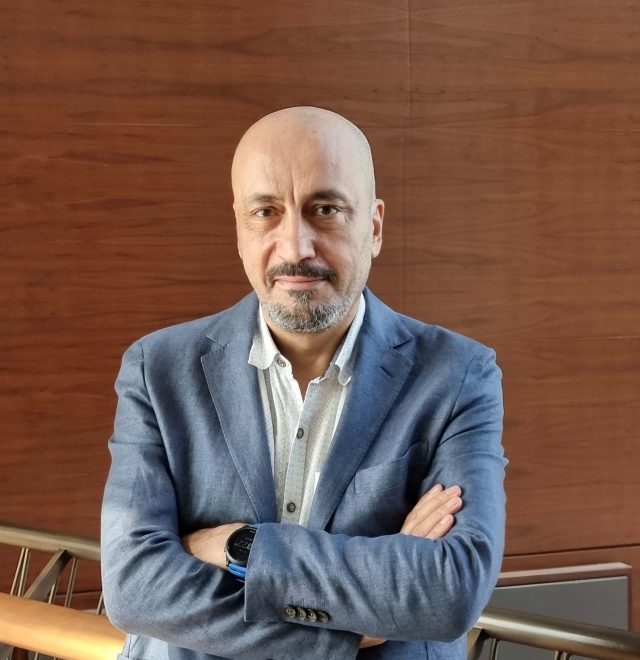
Commenting on the platform, Yassin Nasri, Founder & CEO of ImpactGulf, stated: “G4Green represents a significant milestone in our ongoing commitment to driving positive environmental change and building capacities in the sustainability space. By providing organizations with the tools and resources to streamline their sustainability efforts, we aim to catalyze a broader shift towards greener business practices. Building and operating a sustainable business is not possible without engaging the entire supply chain.”

“We could not be prouder to showcase such technological advancements from the UAE to the world, especially during this second Year of Sustainability as declared by His Highness Sheikh Mohamed bin Zayed Al Nahyan,” Yassin added.

The platform provides an excellent foundation for green procurement, ESG risk assessment and sustainable stakeholder empowerment. It is built on the latest technological infrastructure, including the use of AI for data analysis and greenwashing avoidance, as well as blockchain technology for sustainability data traceability.

“Ultimately, the platform is about how key stakeholders in business and society can take their corporate community on an ESG journey, identifying the emissions hotspot within their value chain and minimizing the risk of dumping chemicals into the ocean anywhere in the world, or other unethical practices such as the employment of children by a supplier or partner. G4Green is the answer to all these key ESG risks,” concludes Yassin.

Vidunas Gedeikis, CTO at ImpactGulf, added: “Depending on individual needs, our platform is able to adapt to clients’ own ESG and partner engagement metrics, and integrate advanced technologies, including AI-driven data analytics and blockchain-enabled traceability, to ensure the integrity and reliability of sustainability initiatives. With the customization capabilities of G4Green, we are paving the way for a more transparent, interconnected approach to sustainability management.”

ImpactGulf is a signatory to the UAE Climate-Responsible Companies Pledge, a participant of the United Nations Global Compact, an officially approved member of the Greentech Alliance, and was selected by Shell Middle East and StartUpbootcamp for Shell StartUp Engine UAE 2022.

For more information, please visit G4Green.com.
TikTok, INJAZ Al Arab and INJAZ Saudi Partner to Pursue Entrepreneurship

TikTok, INJAZ Al Arab and INJAZ Saudi Partner to Inspire 2 Million Saudi Youth To Seek Employment and Pursue Entrepreneurship

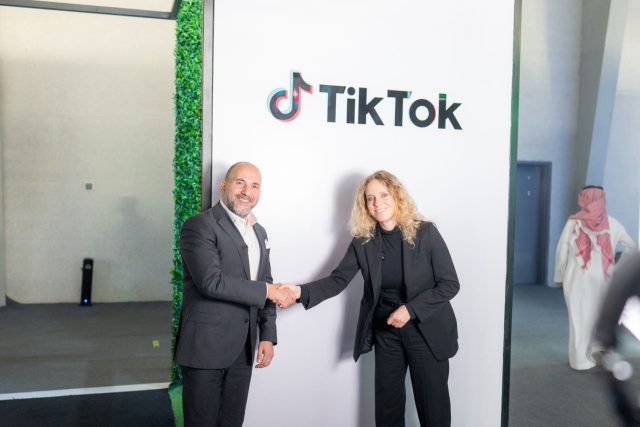
Through a strategic partnership, TikTok, INJAZ Al Arab and INJAZ Saudi are leveraging the content platform to raise awareness of key employability skills among Saudi youth. Together, they are set to launch groundbreaking initiatives aimed at inspiring 2 million Saudi youth with essential employability and entrepreneurial skills, in alignment with the Kingdom’s Vision 2030. These initiatives, which include a dynamic mix of in-person and virtual activities, are designed to inspire high school and university students to explore various career paths and ignite their entrepreneurial spirit. This significant collaboration was formalized at LEAP KSA on March 5, 2024.

TikTok and INJAZ-Al Arab will develop content centered around success stories, advice and guidance from the real life experiences of entrepreneurs and how to navigate the workplace successfully. Likewise, the organizations will also host face-to-face and virtual experiential learning sessions for 6,000 high school and university students across 85 educational institutes across the country on both employability and entrepreneurship skills. TikTok employees will also have an opportunity to engage with students through ‘career sessions’.

The collaboration will also aim to create at least 50 student enterprises across universities, which will then compete on a national level for the ‘Company of the Year Award’. The winning team would then advance to the regional competition, INJAZ AL Arab’s capstone event the “Youth Entrepreneurship Celebration”, which would gather students from across 13 MENA countries.

TikTok Vice President of Public Policy Emerging Markets and Global Head of Corporate Social Responsibility Helena Lersch shared, “Entrepreneurship and employment initiatives are critical to realizing Saudi Arabia’s Vision 2030, the nation’s ambitious roadmap for economic transformation. TikTok is committed to working with local leaders to support initiatives that will help realize this Vision and be a platform to inspire the next generation. Our collaboration with INJAZ Al Arab and INJAZ Saudi is an important element of our commitment to working with the local population to mobilize the economy and align with the visionary leaders of the Kingdom.”

INJAZ Al Arab CEO Akef Aqrabawi also said, “The mentorship of global and regional business leaders is critical to inspiring a culture of entrepreneurship and business innovation among Saudi youth. Partnering with TikTok helps us drive the economy of the Kingdom and the MENA region and create a lasting impact not just to the economic landscape but also the cultural attitudes towards the youth’s entrepreneurial pursuits.

Agthia Group Reports Net Revenue, Underlying Group Net Profit During 2023, Surpassing Guidance Ranges

Agthia Group Reports AED 4.56 Billion Net Revenue, AED 342 Million Underlying Group Net Profit During 2023, Surpassing Guidance Ranges

Agthia Group PJSC (“Agthia” or “the Group”), one of the region’s leading regional food and beverage companies, today announced its final results for the fiscal year ending 31 December 2023. Agthia delivered strong performance during 2023, outperforming guidance ranges. The group’s profitable growth across the Snacking, Water & Food, and Agri-Business segments, combined with leveraging group-wide efficiencies, resulted in both Group EBITDA and Group underlying net profit growing faster than revenue.
Group net revenue increased 12.1% year-on-year to AED 4.56 billion (8.1% growth from volume# and 4.1% from pricing), with strong performance from the Snacking, Agri-Business, and Water & Food segments mitigating the adverse impact of continued currency devaluation in Egypt and increased competitiveness in the Jordan protein market. Adjusted revenue for the impact of currency devaluation in Egypt (AED -346.4 million), Group net revenue increased +20.7% year-on-year. LFL revenue, including Abu Auf in the prior comparable period, increased 5.7% year-on-year, or 13.8% excluding FX impact.
Snacking revenue grew 38.0% year-on-year (+9.3% on a LFL basis) on strong revenue growth across the Group’s snacking portfolio. This was led by dates strong innovations across mid and high value ranges, and expansion in date varieties, and strong value growth across retail channels in the UAE and internationally (e.g., India, Indonesia, Malaysia, and Brazil).
Besides dates, revenue contribution for FY’23 from BMB and Abu Auf collectively was AED 546.4 million, with the latter seeing stronger growth in core markets, and continued volume and value gain in premium-branded coffee at Abu Auf in Egypt resulting in a 72% increase in FY’23 local currency revenue.
Water & Food revenue grew 6.0% year-on-year, reflecting significant growth in the UAE, driven by premiumization and innovation, with margins expanding on improved mix and productivity. The Group continued to retain its market leading position in the UAE bottled water segment, successfully launching value-added innovations such as Al Ain Plus (zinc fortified water), premium glass bottles, and a 100% rPET bottle (made of post-consumer recycled plastic which is infinitely recyclable). International business revenue also increased, with notable performances from Saudi Arabia, Kuwait, and Turkey.
Protein & Frozen showcased resilience despite a reported decline in AED terms, amid the challenging macro and consumer environment of 2023, which included the significant devaluation of EGP. Excluding impact of currency devaluation, revenue grew 19.3% year-on-year for the full-year period, with the segment proactively safeguarding and prioritizing its profitability and market leadership by implementing effective pricing strategies, portfolio tiering and optimizing costs.
Agri-Business revenue grew 19.9% year-on-year, with strong volume growth across Flour and Feed. This was driven by consistency in quality and product performance and excellent in-market execution in our Flour business, while strong performance in Feed reflected good open market growth, participation in Abu Dhabi Agriculture and Food Safety Authority’s (ADAFSA) compound feed program and related new product development.
EBITDA growth was ahead of revenue, up 21.2% year-on-year to AED 689.3 million (+30.5% excluding currency headwind), reflecting strong growth in Snacking, Water & Food and Agri-Business profitability, combined with a continuing focus on profit protection in Egypt and group-wide efficiency generation.
Snacking: EBITDA growth of +62.0% (+47.2% in Q4) reflected positive price and mix effects in both domestic and international date markets, strong growth in Abu Auf’s market-leading premium coffee, and a step up in profitability from BMB post cost reset in Saudi. LFL EBITDA, including Abu Auf in the prior comparable period, increased +22.4% year-on-year, with +LFL EBITDA margin expanding +237bps year-on-year.
Protein and Frozen: A combination of channel optimization, productivity enhancements and disciplined cost management resulted in EBITDA growth (excluding devaluation impact) of +11.6% year-on-year, notwithstanding the inflationary cost environment in Egypt and external challenges affecting Jordan. Reported EBITDA margin modestly declined for the full-year period year-on-year, largely driven by increased competitiveness in Jordanian market, localization drive in Saudi market and EGP currency headwind.
The completion of our new Protein facility in Jeddah in Q2 2024 will provide localized production capacity at comparatively favorable economics and establish Agthia as a local protein producer in Saudi Market.
Water & Food: A combination of positive volume growth, favorable mix toward high-margin premium products, further cost efficiencies in the UAE and Saudi, and a more benign commodity environment resulted in EBITDA growth of +21.8% year-on-year (

Task Force Calls For International Trust To Address Gaza Crisis

Task Force Calls For International Trust To Address Gaza Crisis

 A non-partisan task force composed of former national security officials and business executives today issued a report calling for the creation of an International Trust for Gaza Relief and Reconstruction. “The Day After: A Plan For Gaza” is based on nearly 100 expert interviews and multiple trips to the Middle East. It concludes that the creation of a legally independent Trust committed to a peaceful post-Hamas Gaza offers the most realistic path for addressing the territory’s urgent humanitarian crisis and governance vacuum. The group has been briefing the plan to senior U.S. and Middle East leaders for the past eight weeks.

Convened by business leaders Steven Price and Gary Ginsberg, the non-partisan Gaza Futures Task Force was organized under the auspices of the Jewish Institute for National Security of America and The Vandenberg Coalition. Chaired by John Hannah, task force members include Elliott Abrams, Robert Danin, Eric Edelman, Gary Ginsberg, Emily Harding, Lewis Libby, and Steven Price. Their 50-page report provides a comprehensive assessment of Hamas’s October 7 attack on Israel and places the massacre in the larger context of the Iranian threat to Middle East security. After evaluating the viability of other “day after” solutions, the report’s plan calls for nations concerned about Gazans and countering Iran’s axis of terror to fund an International Trust that would promptly begin to deliver massive humanitarian and other aid to Gaza. It also includes steps to restore a political horizon for two states and progress toward a U.S.-backed regional alliance for defeating Iran and its proxies.

Supported by the United States and other nations, the Trust would be led by a group of Arab countries such as Saudi Arabia, Egypt, and the United Arab Emirates that have the greatest legitimacy, resources, and interest in assisting Gaza, advancing Middle East peace, and countering Iran. These states would establish the Trust, fund it, and appoint members to a board that would govern the Trust’s work and be closely advised by a council of Gazans from both inside and outside Gaza committed to a peaceful future. As a private entity, the Trust would offer its donors a vehicle for significantly accelerating their engagement in Gaza without directly putting their national prestige, officials, or troops on the line in a high-risk environment.

The Trust’s first priority would be addressing the most urgent humanitarian needs of the population and helping stem Gaza’s descent into chaos as Hamas’s rule unravels. This would include ensuring the secure delivery of food, water, medicines, and housing, as well as restoring services and repairing critical infrastructure. As the situation stabilizes, the Trust would work with other donor states, NGOs, and international agencies to help initiate reconstruction and generate responsible new leaders and police.

Importantly, the Trust would provide security for its operations, personnel, and local partners. Capable forces from non-regional states with close ties to Israel would be recruited, as would vetted Gazans. But if not available, the report recommends that the Trust hire private security contractors (PSCs) with good reputations among Western militaries to conduct a series of limited missions such as guarding convoys and critical infrastructure. The report notes that based on lessons from a variety of global conflicts, PSCs have proven reliable and effective when subject to strict monitoring and accountability regimes.

“Two things are essential to get to a better day after for Gaza,” said John Hannah. “First, Israel needs to succeed in dismantling Hamas’s political and military power and delivering a major blow to Iran’s proxy strategy. No less important, however, responsible states need to fill the vacuum with a viable alternative that mitigates the suffering triggered by Hamas’s attack and helps build a more hopeful future for Gaza and the Middle East. After studying many other options and finding them wanting, we believe that the most realistic option for mobilizing rapid action by the key concerned states is the creation of a private Trust.”

Q HOLDING ACHIEVES MAJOR MILESTONE WITH SUCCESSFUL COMPLETION OF ACQUISITION

Q HOLDING ACHIEVES MAJOR MILESTONE WITH SUCCESSFUL COMPLETION OF ACQUISITION

Q Holding (ADX: QHOLDING), Abu Dhabi’s leading real estate development and investment company, has successfully completed the transaction with ADQ Real Estate and Hospitality LLC (ADQ) and IHC Capital Holding LLC (IHC).

Q Holding acquired control over 100 per cent of the share capital for Abu Dhabi National Exhibitions Company (ADNEC); Modon Properties; Miza Investments LLC; Sahel 1 Restricted Limited; Sahel 2 Restricted Limited; and Oryx Action Restricted Limited, among other real estate assets.

As part of the transaction, Q Holding will be issuing a total of 25,627,000,000 mandatory convertible bonds with a nominal value of AED 1 each to both ADQ, which will receive 17,087,770,000 bonds, and IHC, which will receive 8,539,230,000 bonds. The allocation of bonds to ADQ and IHC will translate into 6,328,803,704 and 3,162,677,778 new shares in the share capital of the company respectively using a conversion ratio of 2.70 bonds for each share.

As a result of this transaction, Q Holding’s share capital is increased to AED 16,347,080,368 through the issuance of 9,491,481,482 new shares with a nominal value of AED 1 each to the two corporate entities. The increased share capital stemming from the agreement reflects Q Holding’s commitment to sustainable growth and preludes a robust and dynamic financial evolution that will propel the group’s mission to new heights.

Commenting on the sale and purchase, H.E. Jassem Al Zaabi, Chairman of Q Holding, said: “The finalisation of the agreement with ADQ and IHC is a major milestone for Q Holding, highlighting our competitive leverage in the UAE’s dynamic real estate and financial markets. Following the deal, we will continue to prioritise the advancement of Abu Dhabi’s real estate economy, while setting new standards in the field of strategic investment that align with the nation’s comprehensive development plans. Furthermore, there will be a significant expansion in our International Portfolio which will further increase our real estate development ambitions. Our primary objectives remain, including the enhancement and progression of existing projects and the integration of sustainable systems into our strategic vision. As we look to the future, we are excited to announce that the company will be rebranded to Modon Holding, following approval of its shareholders. This rebranding represents a new chapter in our journey, symbolizing our commitment to innovation and excellence in the investment sector. We are confident that it will further enhance our brand identity and propel us towards greater success in the years to come.”

Bill O’Regan, Group Chief Executive Officer of Q Holding, echoed a similar sentiment: “The recent sale and purchase agreement marks a significant shift in Q Holding’s business approach, with ADQ and IHC serving as important regional investment partners. Our acquisition of these assets and the subsequent conversion of bonds establishes a new benchmark for strategic investment potential, effectively enabling Q Holding “soon to be Modon Holding” to reshape its outlook through expansion and entry into new verticals and new international markets. We remain dedicated to the transformative growth of the real estate sector and are confident that this latest agreement serves to advance our leading presence in it.”

To learn more about Q Holding, visit: www.qholding.com.

CBRE: Villa prices rally while office rents continue to record strong growth rates

CBRE: Villa prices rally while office rents continue to record strong growth rates

Saudi Arabia’s real estate market ended the year with villa prices rallying in major cities while office rent continued to record strong growth rates.

Looking at Saudi Arabia’s office sector, in Riyadh, rents have increased across all grades in the 12 months to Q4, 2023, with average prime rent increasing by 20.7%. Average rents in the capital for both Grades A and B grew by year-on-year by 13.0% and 22.2%. As for average occupancy rates, Grade A rate increased by 0.8% to reach full occupancy while Grade B rate stood at 99.4%. In Jeddah, Grade A office rents increased by 19.7% from a year earlier, whereas Grade B rents slightly increased by 1.0%. Occupancy rates for both Grade A and Grade B offices in Jeddah rose to reach 92.5% and 82.1% respectively. In the Eastern Province, Dammam and Khobar’s office markets saw Grade A increase by 7.4% and 7.2% respectively from a year earlier. Grade A occupancy levels in Dammam and Khobar registered at 84.2% and 83.6% as at Q4 2023 while the occupancy rates for Grade B offices in Dammam stood at 71.6%.

In the residential sector, total transaction volumes in Riyadh increased by 63.7% compared to the same quarter in 2022. Jeddah has also witnessed an increase of 23.4% in terms of transaction volumes, while Dammam’s volumes declined by 23.4%. Average apartment prices across most major cities in Saudi Arabia saw growth, with prices in Riyadh, Dammam and Khobar increasing by 10.7%, 1.8% and 2.0%. In Jeddah’s apartment market we saw average prices falling by 1.9%. In the year to Q4 2023 villa prices in Saudi Arabia demonstrated uniform growth across all key tracked cities. Average villa prices in Riyadh, Jeddah, Dammam, and Khobar increased on average by 5.5%, 4.8%, 0.3% and 1.1% respectively.

Looking at the hospitality sector, Saudi Arabia’s hospitality indicators have mostly outperformed their 2019 baselines. For the full year 2023, compared to 2019, Saudi Arabia’s average occupancy rate recorded a 3.5 percentage points increase with the kingdom’s ADR improving by 12.3%, leading to a 18.9% increase in RevPAR. On a city level, in the year to 2023, Riyadh gained a 3.1 percentage points increase in its average occupancy rate, while its ADR expanded by 17.5% leading to a 23.5% increase in RevPAR. In Jeddah, the average occupancy levels saw a hike of 7.0 percentage points accompanied by a 0.4% growth in its average daily rate culminating in RevPAR growth of 12.9%. Makkah and Madinah persisted with the positive performances seen over the year with average occupancies rising by 3.9 and 5.6 percentage points, and their average daily rates registering growth of 21.9% and 35.3% respectively. As a result, Makkah and Madinah witnessed RevPAR growth rates of 29.8% and 46.6%. In Khobar we saw the average occupancy rate expanding by 7.5 percentage points while its ADR declined by 5.0%, resulting in its RevPAR improving by 8.1%. In Dammam, the average occupancy rate rose by 7.5 percentage points while its ADR softened by 1.6% leading to an overall increase in RevPAR of 13.1%.

During Q4 2023, the Ministry of Transportation and Logistics Services showcased the results of ongoing structural and operational reforms carried out in the pursuit of transforming the industrial and logistics sector. One of the key deliverables of National Transport and Logistics Strategy (NTLS) has been optimising shipping services offered under the Saudi Ports Authority (MAWANI). This was accomplished through the addition of 28 new cargo services and enhancing container handling, which propelled Saudi Arabia to 16th place in the Lloyd s List One Hundred rankings. Structural changes such as these are continuing to underpin demand, given this and very limited supply levels, in the year to Q4 2023, average industrial and logistics rents in Riyadh, Khobar, Dammam and Jeddah increased by 17.6%, 17.8%, 11.3% and 6.6% respectively.

Taimur Khan, Head of Research – MENA at CBRE, comments: “On the whole, demand in Saudi Arabia’s continue to severely outpace supply across almost all real estate market sectors, hence, we have seen relatively strong levels of performance in 2023, despite some headline economics headwinds. In 2024, whilst supply across many sectors is set to expand, we expect that it will still continue to lag demand materially, as a result we expect that performance levels will remain robust throughout the year.”

Oman plans to phase out plastic bags by 2027, but have they considered sustainable alternatives?

Oman plans to phase out plastic bags by 2027, but have they considered sustainable alternatives?‏

The ban on single-use plastic bags in Oman, which came into effect in 2021, has yet to achieve the expected outcome of 100% compliance, as disclosed by a senior official from the Environment Authority (EA). Fast forward three years, and the EA has announced a plan to ban the use of all kinds of plastic shopping bags by January 2027.
But according to Symphony Environmental, a world leader in environmentally-friendly packaging, plastic products are usually the best materials for the job, and have the best life-cycle assessment. They are for example much better than paper
Michael Laurier, CEO of Symphony, said: “the process of implementing a plastic bag ban is a challenging task and it would be better to find a sustainable alternative.
We have noticed that plastic bans are being driven in several countries by plastiphobia, but this is already out of date. Plastiphobia arose because plastic can create microplastics and can lie or float around for decades if it gets into the open environment, but this can now be prevented by upgrading the plastic with Symphony’s d2w® technology at manufacture, instead of depriving people of their plastic products.
Our d2w® masterbatch technology is paving the way towards a more sustainable future, because plastic products can be made with d2w at little or no extra cost and will convert rapidly at end of life into biodegradable materials, anywhere on the planet so long as oxygen is available. They are then consumed by micro-organisms like fungi and bacteria in a quick and safe manner and are assimilated back into the natural environment. Sunlight and heat will accelerate the process, but d2w plastic will biodegrade much more quickly, even in cold dark conditions, than ordinary plastic in the same place.
However, the same cannot be said for plastics marketed as “compostable” because they are designed to biodegrade under specific, human-driven conditions, mainly in industrial composting facilities. This means unlike d2w biodegradation – which is a natural process, composting involves human intervention. Also the “compostable” plastic will not turn into compost but rather into CO2, causing more harm to the environment
D2w® has been used globally for the past 15 years, and is compulsory for a wide range of products in Saudi Arabia, the UAE, Bahrain, and Yemen. If it were made compulsory in Oman too it would be an excellent approach to a more sustainable future.”

Mowasalat (Karwa) Forges Partnerships with the Autonomous e-Mobility Forum

Mowasalat (Karwa) Forges Partnerships with the Autonomous e-Mobility Forum to Drive Innovation and Business Collaboration

The Autonomous e-Mobility Forum (AEMOB) continues to surge forward in the global conversation on autonomous e-mobility, with the Ministry of Transport serving as the host and strategic partner. A significant addition to the Forum is Mowasalat, a leading transportation provider in Qatar, recognized for its commitment to mobility innovation and growth. Mowasalat joins AEMOB as the transportation partner, showcasing their dedication to shaping the international discourse around autonomous e-mobility and sustainable transport.
The Forum is scheduled to take place in Doha, Qatar from 30 April to 02 May 2024.

Mowasalat’s extensive expertise in transportation services further amplifies the Forum’s capacity to become a central driver for change. Together, they aim to accelerate the realization of intelligent and sustainable mobility solutions, catering to local needs while contributing to global e-mobility advancements.
Commenting on this collaboration, Mr. Ahmad Hassan Al-Obaidly, Chief Operations Officer (COO) at Mowasalat, (Karwa) expressed enthusiasm, stating, Our partnership with the Autonomous e-Mobility Forum signifies our commitment to nurturing cutting-edge transportation solutions in Qatar that are not only technologically advanced but vitally, also environmentally conscious.
We look forward to contributing what we know towards shaping the future of e- mobility across the world.

This partnership stands as cornerstone for the Autonomous e-Mobility Forum 2024, fostering an environment where technological innovation merges with businesses to drive change in the mobility sector. Aligned with Qatar National Vision 2030, this collaboration underlines the Forum dedication to helping expert stakeholders to shape a sustainable and dynamic future for driverless e-mobility worldwide.

Forbes Middle East Honors 100 Influential Female Leaders Shaping The Business Landscape In 2024

Forbes Middle East Honors 100 Influential Female Leaders Shaping The Business Landscape In 2024

Forbes Middle East has unveiled its signature annual list of the region’s most powerful businesswomen for 2024, ranking the most successful, influential, and impactful women in business, championing the way to a brighter, fairer future. The list was constructed based on the size of the business, the individual’s impact, achievements, and performance over the last year, and the scope of CSR and other initiatives led by the person. Leaders of family businesses were excluded this year.

Hana Al Rostamani, Group CEO of the First Abu Dhabi Bank (FAB), leads the list for the second consecutive year. She was also recognized on Forbes’ list of the World’s Most Powerful Women 2023, ranked at 63 overall and 14th in the finance category globally. Two Kuwaiti powerhouses – NBK Group’s Shaikha Khaled Al Bahar and KNPC’s Wadha Ahmad Al-Khateeb – round up the top three.

The 2024 list features 100 entries, with 104 women from 27 sectors and 28 nationalities. Egyptians dominate with 17 women, followed by 14 Emiratis, and Saudis and Lebanese with nine women each. Leaders in banking and financial services make up over a quarter of the ranking with 26 entries, followed by healthcare with 13, and investments and technology with six entries each. A wave of 35 newcomers have joined this year’s list from 15 different sectors.

Three industry titans broke into the top 10 for the first time: Dana Nasser Al Sabah, Group CEO of Kuwait Projects Company (Holding) – KIPCO; Shazia Syed, Unilever’s General Manager – North Africa, Levant, and Iraq & Arabia Senior Customer Development Lead; Reem Asaad, Cisco’s Vice President – Middle East, Africa, Türkiye, Romania & The Commonwealth of Independent States (CIS). Of the top 10 ranked women, 50% work within the banking and financial services industry, and two Pakistani trailblazers represent the region’s non-Arab, diverse senior leadership.

Top 10 Most Powerful Businesswomen In The Middle East 2024

  1. Hana Al Rostamani

Nationality: Emirati

Group CEO, First Abu Dhabi Bank (FAB)

  1. Shaikha Khaled Al Bahar

Nationality: Kuwaiti

Deputy Group CEO, National Bank of Kuwait Group (NBK Group)

  1. Wadha Ahmed Al-Khateeb

Nationality: Kuwaiti

CEO, Kuwait National Petroleum Company (KNPC)

  1. Shaista Asif

Nationality: Pakistani

Cofounder and Group CEO, PureHealth Holding

  1. Dana Nasser Al Sabah

NEWCOMER TO TOP 10

Nationality: Kuwaiti

Group CEO, Kuwait Projects Company (Holding) – KIPCO

  1. Randa Sadik

Nationality: Jordanian

CEO, Arab Bank

  1. Sarah Al-Suhaimi

Nationality: Saudi

Chairperson, Saudi Tadawul Group

  1. Maryam Al Suwaidi

Nationality: Emirati

CEO, Securities and Commodities Authority (SCA)

  1. Shazia Syed

NEWCOMER TO TOP 10

Nationality: Pakistani

General Manager – North Africa, Levant, and Iraq & Arabia Senior Customer Development Lead, Unilever

  1. Reem Asaad

NEWCOMER TO TOP 10

Nationality: Egyptian-American

Vice President – Middle East, Africa, Türkiye, Romania & The Commonwealth of Independent States (CIS), Cisco

The Islamic Corporation for the Development of the Private Sector (ICD) returns to the Dollar market with tight five-year print

The Islamic Corporation for the Development of the Private Sector (ICD) returns to the Dollar market with tight five-year print

The Islamic Corporation for the Development of the Private Sector (ICD) (www.ICD-ps.org), a Jeddah-based supranational, has printed a USD 500 million Sukuk maturing in February 2029.

The Sukuk issuance, which was oversubscribed with an orderbook over USD 2.2 billion, subscribed by 4.2 times from 46 investors, demonstrating the confidence of investors in the ICD’s vision and prospects. The proceeds from the sukuk issuance will be invested in development assets, facilitating its mission to foster economic growth and development initiatives across our 56 member countries.

Eng. Hani Salem Sonbol, the Acting Chief Executive Officer of ICD, commented: “We are thrilled with the overwhelming response to our sukuk issuance, which reflects the trust and confidence investors have in ICD’s business strategy and financial stewardship. This successful issuance not only strengthens our balance sheet but also provides us with the resources needed to pursue our strategic objectives and drive sustainable growth. The Sukuk issuance was well-received by a diverse group of investors and is a testament to the growing belief on the financial and operational improvements of ICD and appreciation of ICD’s development impact across our 56 Member Countries.”

With its return to the fixed income market and being a multilateral development financial institution, ICD has established itself as a unique credit quality. ICD is rated ‘A2’ by Moody’s, ‘A+’ by Fitch, and ‘A-’ by S&P. Further, 82% of voting power is held by shareholders that are rated A+ or above.

The Joint Lead Managers / Joint Bookrunners for this transaction were Al Rayan Investment LLC, Bank ABC, Boubyan Bank, Emirates NBD Capital, First Abu Dhabi Bank, HSBC, KFH Capital, Mashreq, MUFG and Standard Chartered Bank.