Home Blog Page 6

Uzum secures over $130 Million in strategic investment led by the sovereign entities of the Sultanate of Oman

Uzum secures over $130 Million in strategic investment led by the sovereign entities of the Sultanate of Oman

Uzum, Uzbekistan’s leading digital ecosystem, is pleased to announce the closing of a strategic investment exceeding $130 million, anchored by the sovereign entities of the Sultanate of Oman.

The transaction combines primary equity and structured capital and establishes a $2.3 billion pre-money valuation reference point, with conversion terms linked to the Company’s next qualified financing round. The investment marks a significant step-up from Uzum’s previous funding rounds and materially strengthens the Company’s positioning ahead of its Series B.

The transaction also includes participation from existing international shareholders VR Capital, Tencent, and FinSight Ventures, underscoring strong international confidence in Uzum’s long-term growth and Uzbekistan’s rapidly expanding digital economy.

The capital will be used to accelerate Uzum’s next phase of growth across its core verticals — e-commerce, digital banking, payments, and consumer lending — with a focus on expanding product depth, strengthening infrastructure, and increasing access to digital services nationwide. Uzum has built a fully integrated ecosystem combining commerce and fintech at a national scale. Its platforms — including Uzum Market, Uzum Tezkor, Uzum Bank, and Uzum Nasiya — are used by over 20 million people, representing more than half of Uzbekistan’s population.

The Investor brings long-term regional expertise and a strong focus on high-growth consumer and technology markets. The partnership reflects growing international interest in Uzbekistan as one of the most attractive emerging digital economies globally.

“This investment is a strong endorsement of both Uzum’s strategy and Uzbekistan’s digital potential,” commented Djasur Djumaev, Founder and CEO of Uzum.

“We are focused on building an infrastructure of national scale — technology-driven, inclusive, and designed for everyday use by millions of people and businesses. The support from the Investor, alongside our existing global shareholders, gives us strong momentum as we prepare for Series B and continue scaling our ecosystem.”

Uzum was advised on this transaction by DLA Piper. The Investor was advised by Greenberg Traurig.

Braving conflict to protect children from polio in Gaza: women at the frontline of the response

Braving conflict to protect children from polio in Gaza: women at the frontline of the response

In July 2024, amid ongoing conflict and widespread displacement in the Gaza Strip, variant poliovirus – with links to poliovirus found in Egypt – was detected in wastewater in Khan Younis and Deir al Balah for the first time in more than 25 years. Poliovirus was then confirmed in a 10-month-old child in Gaza who had never received any vaccines. Immunization had been on hold in Gaza since the conflict began.

This triggered an urgent public health response. Under the leadership of the Ministry of Health, and with support from WHO and partners, health workers mobilized to vaccinate hundreds of thousands of children against a disease that can cause lifelong paralysis.

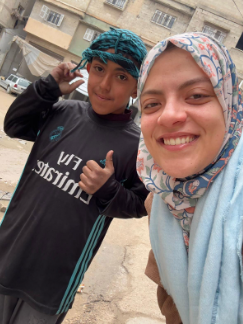
Behind this complex operation were countless individuals working under extraordinary conditions, among them 4 women whose leadership, determination and commitment – despite conflict, insecurity and personal loss – helped ensure that children in Gaza received protection against polio.

In October 2023, during the first week of the conflict in the Gaza Strip, Dr Ola El Najjar lost 16 members of her family, including her parents, siblings and their children. Her home was bombed and belongings stolen and she was forced to flee with her husband and 4 young children.

In the face of devastating personal loss, she remained determined to protect children from polio – a preventable disease. When she heard about the polio outbreak Dr Ola was determined to take action, even though this meant leaving her own children at home amid the insecurity.

Destroyed roads and no power or internet were among the challenges she faced as she oversaw vaccination campaigns as a municipal supervisor actively involved in microplanning and coordination with partners. Dr Ola led vaccination activities in Gaza City. Even after the fragile ‘hours of peace’ set aside during the humanitarian pause for vaccination campaigns had ended, she and her colleagues stayed behind to collate data, knowing the journey home could be risky.

Reflecting on why the campaigns were effective, Dr Ola says the presence of women alongside men in the vaccination and social mobilization teams were among the reasons that helped ensure better outreach to mothers and children.

During the third round of the polio vaccination campaign in February 2025, Dr Yara Alhajahmed spent her days moving through Gaza City, monitoring vaccine carriers, tally sheets and mobile teams. In the evenings, she attended to essential logistics, including arranging additional supplies for the following day.

Amid the many challenges she faced one memory, of a 9-year-old boy living in a school that served as a shelter at night and a temporary vaccination centre during the day, stands out. It still brings a smile to her face.

“He took it upon himself to knock on all the doors in his neighbourhood to ensure caregivers brought every child under 10 years of age for vaccination,” says Dr Yara.

At a time when survival often took priority over everything, Dr Yara witnessed vaccinators going beyond the call of duty. In one area where underserved Bedouin families were living, bordering another area that required special coordination for access, a female vaccinator worked closely with social mobilizers to ensure that every child received the vaccine, bringing hope to the children and families she served.

In addition to vaccination-related work, Dr Yara and her colleagues joined other partners to support the Health Ministry set up a unified surveillance system for 16 diseases and conditions across the Gaza Strip. Their ongoing work entails onboarding facilities, training staff, verifying alerts and analysing data to enable timely, evidence-based public health action. This helped strengthen health systems at a time when most efforts were focused on responding to immediate emergencies.

During the polio vaccination campaign, Dr Refqa Skaik worked across Deir al Balah (the Middle Area) and Khan Younis, coordinating teams, supplies and partners.

In the course of her work, she noticed the extraordinary commitment of both health workers and families. She watched as caregivers set aside their fears to protect their children from a preventable, paralysing disease, and how they continued to trust health workers when nothing else felt safe.

Reflecting on women’s roles in the response, Dr Refqa noted that young female doctors sometimes had to work harder to build trust with families and demonstrate their expertise, using careful explanations and evidence-based discussions.

Despite everything the children had witnessed, she also observed moments of joy during the vaccination efforts — a child proudly showing a little finger marked with purple ink after vaccination, a cameraman sharing a kind word. For Dr Refqa, these small moments revealed children’s ability to find joy in the harshest conditions.

“Parents couldn’t protect their children from airstrikes or hunger,” she reflects. “But they believed they could protect them from polio, and they did.”

During the 3 campaigns rolled out as part of the polio outbreak response in Gaza, Dr Mona Farid Abu Omar took on 2 roles, as field supervisor in the Middle Area and manager of vaccines and logistics in Al-Qarara and Abasan Al-Kabira Primary Health Centre.

Of the 2 roles, she preferred managing vaccines and logistics, which required strong leadership: to guide teams, ensure the availability of supplies, coordinate activities, prepare reports and maintain accountability. It was a role that placed her at the centre of both health worker teams and the communities they served.

Working close to areas that needed special coordination for access, mornings often began with quiet but palpable tension as she prepared for the day ahead. Yet whatever challenges she faced, she remained determined that no delay would prevent a child from receiving protection.

“Our mission was stronger than fear,” she said. “There were moments of concern, but we remained focused, following safety protocols and supporting one another as a team. Being part of the response strengthened my resilience and reaffirmed my belief that women can lead and serve courageously, even in the most difficult contexts.”

Weego lève 1,1 million de dollars auprès d’Azur Innovation Fund pour moderniser l’accès aux transports publics et privés 

Weego lève 1,1 million de dollars auprès d’Azur Innovation Fund pour moderniser l’accès aux transports publics et privés 

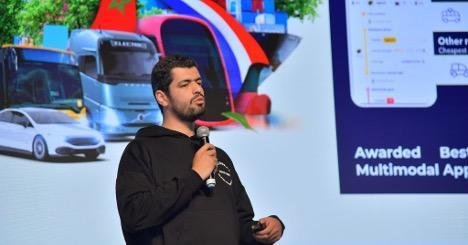
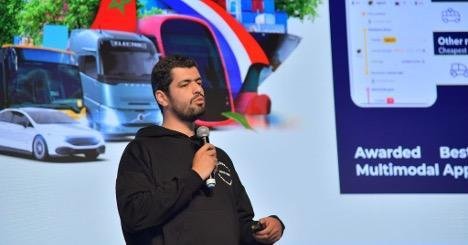
Fondée par Saad Jittou et Mor Niane, la startup maroco sénégalaise Weego annonce avoir clôturé une levée de fonds de 1,1 million de dollars auprès  d’Azur Innovation Fund. Ce tour de table vise à accélérer le déploiement de sa plateforme  d’intégration multimodale des transports au Maroc, tant pour le grand public que pour les  entreprises et d’initier son expansion sur l’ensemble du Continent, en Europe et au Moyen Orient.  

Répondre aux enjeux de 2030 : l’infrastructure digitale du transport 

La congestion urbaine constitue l’un des principaux freins économiques dans les grandes métropoles  africaines. À l’approche des grandes échéances de 2030, la fluidité des déplacements urbains est  devenue un enjeu de souveraineté et d’attractivité pour le Royaume. Disponible à date dans cinq villes  au Maroc, Weego se positionne comme le lien digital entre les différents modes de transport : bus,  tramway, transport privé et taxis. 

Plutôt que de multiplier les solutions isolées, Weego propose une porte d’entrée unique pour l’usager.  L’objectif : rendre le transport public aussi simple et prévisible qu’un trajet en voiture privée, en permettant  de planifier et de suivre ses déplacements en temps réel sur une seule interface. 

Une ambition régionale et un levier pour les entreprises 

Si le Maroc sert de base d’excellence, Weego projette déjà son modèle de mobilité intelligente sur  l’ensemble de la région (Afrique, Europe et Moyen-Orient), où les problématiques de transport urbain sont  similaires. 

En parallèle de son action sur les transports publics, Weego renforce ses solutions dédiées aux  entreprises. La startup aide les employeurs à optimiser le transport de leurs salariés, réduisant ainsi les 

coûts logistiques et l’empreinte carbone, tout en améliorant la ponctualité et le confort des  collaborateurs. 

« Le transport est le premier frein à l’activité économique dans nos villes. En 2030, nos métropoles devront  gérer des flux de voyageurs sans précédent. Chez Weego, nous construisons la couche technologique  qui permet de connecter les infrastructures existantes pour les rendre plus efficaces. Ce financement  nous permet de consolider cette vision au Maroc et d’entamer notre expansion régionale », a déclaré 

Saad Jittou, CEO et co-fondateur de Weego

Un investissement stratégique pour Azur Innovation Fund 

Ce soutien d’Azur Innovation Fund confirme l’importance stratégique de la Smart City dans le  développement économique actuel. 

Adnane Filali, Managing Partner chez Azur Innovation Management, a  ajouté « L’approche de Weego répond à un besoin critique : l’unification des modes de transport. En  investissant dans cette solution, nous soutenons une innovation marocaine capable de devenir un  standard régional et de répondre aux exigences de modernisation de nos villes africaines. » 

Utilisation des fonds 

Les 1,1 million de dollars levés serviront à :  

  • Renforcer les équipes techniques ;  
  • Développer les capacités d’intégration de données ;  
  • Étendre le déploiement dans plusieurs villes marocaines ;  
  • Accélérer l’acquisition de clients B2B ;  

Préparer l’expansion régionale.

Weego raises $1.1 million from Azur Innovation Fund to modernize access to public and private transport 

Weego raises $1.1 million from Azur Innovation Fund to modernize access to public and private transport 

Moroccan-Senegalese startup Weego, founded by Saad Jittou  and Mor Niane, today announced it has closed a $1.1 million funding round with Azur  Innovation Fund. This round aims to accelerate the deployment of its multimodal transport  platform in Morocco, both for the general public and for businesses, and to initiate its  expansion across Africa, Europe and the Middle East.  

Addressing the challenges of 2030: the digital transport infrastructure 

Urban congestion is one of the main economic obstacles in major African cities. With major 2030  milestones approaching, the smooth flow of urban transport has become a matter of sovereignty and  attractiveness for the Kingdom. Weego positions itself as the digital link between the different modes of  transport: buses, trams, taxis and private transport services. 

Rather than offering multiple isolated solutions, Weego provides a single entry point for users. The goal:  to make public transport as simple and predictable as using a private car by allowing users to plan and  track their trips in real time on a single interface. 

A regional ambition and a lever for businesses 

While Morocco serves as a base of excellence, Weego is already projecting its model of smart mobility  across the entire region (Africa, Europe and the Middle East), where urban transport issues are similar. 

Alongside its work on public transport, Weego is strengthening its solutions for businesses. The startup  helps employers optimize employee transportation, thereby reducing logistics costs and carbon  footprint, while improving punctuality and employee comfort. 

“Transportation is the primary obstacle to economic activity in our cities. By 2030, our metropolitan areas  will have to manage unprecedented passenger flows. At Weego, we are building the technological layer 

that connects existing infrastructure to make it more efficient. This funding enables us to accelerate this  vision in Morocco and begin our regional expansion,” Saad Jittou, CEO and co-founder of  Weego

A strategic investment for Azur Innovation Fund 

This support from Azur Innovation Fund confirms the strategic importance of the Smart City in current  economic development. 

Adnane Filali, Managing Partner at Azur Innovation Fund, added, “Weego’s  approach addresses a critical need: the unification of transport modes. By investing in this solution, we  are supporting a Moroccan innovation capable of becoming a regional standard and meeting the  modernization requirements of our African cities.” 

Use of funds 

The $1.1 million raised will be used for: 

  • Strengthen the technical teams 
  • Develop data integration capabilities 
  • Expand the deployment to several Moroccan cities 
  • Accelerate B2B customer acquisition 
  • Prepare for regional expansion

Zoom introduces next-gen Zoom Virtual Agent to automate end-to-end customer resolution

Zoom introduces next-gen Zoom Virtual Agent to automate end-to-end customer resolution
  • New virtual agent capabilities reduce customer effort, prevent repeat contacts, and give service leaders confidence to scale automation
  • With 43% of consumers saying chatbots fail to resolve their issues, Zoom Virtual Agent 3.0 can help organizations close that gap

Today Zoom Communications, Inc. (NASDAQ: ZM) unveiled Zoom Virtual Agent 3.0 (ZVA), the next evolution in agentic automation. ZVA introduces a new execution architecture and expanded AI capabilities designed to resolve customer issues end to end, seamlessly hand off to human agents, and help enterprises shift from transactional service interactions to connected customer relationships.

Organizations face growing pressure to automate more customer service interactions as volumes rise and cost efficiency becomes a priority. Enterprises are entering what Zoom calls the “resolution economy,” where competitive advantage is defined not by speed, but by first-contact resolution, reduced repeat contacts, and end-to-end workflow completion. Yet disjointed virtual agents can get stuck in silos, unable to seamlessly transfer full context to human agents, creating bottlenecks for complex issues. A recent Morning Consult report commissioned by Zoom found that the top three chatbot frustrations among the groups surveyed are failure to resolve the issue (43%), getting stuck in a loop (38%), and having to repeat information (37%).

“Agentic AI was just the beginning,” said Chris Morrissey, general manager of Zoom CX. “Zoom Virtual Agent 3.0 orchestrates multi-step workflows across systems, continuously learns from human resolutions, and provides full transparency into every agentic action. This allows organizations to confidently automate complex interactions. It’s more than a product update, it’s another step toward more connected customer relationships, where AI and humans work together to resolve issues faster and build trust.”

The next evolution of Zoom Virtual Agent operates across voice and chat, and introduces a new execution architecture designed to automate complex, cross-system interactions with enterprise governance. Unlike competing solutions focused primarily on conversational containment, ZVA is built for execution and resolution, securely orchestrating multi-step actions across systems with observability, control, and measurable outcomes. The following new features are now available:

  • Enhanced AI execution framework: Zoom Virtual Agent 3.0 is built on the latest Zoom AI Companion 3.0 architecture, allowing multi-step workflows to run across compatible CRM, billing, order management, and other enterprise systems with full observability and governance. This extends Zoom’s agentic AI capabilities by enabling full-cycle resolution rather than just single-step responses.
  • Agent journey transparency and governance enhancements: Account admins can now see the data sources, decision logic, and workflow paths behind automated actions. CX teams can audit performance, troubleshoot breakdowns, and refine automation policies, enabling responsible scaling without sacrificing adherence or control.

The following next-generation enhancements, expected to be generally available in Spring 2026, will expand ZVA’s ability to handle more complex workflows while improving reliability, oversight, and operational efficiency:

  • Multimodal large language model (LLM) intelligence: ZVA will be able to interpret and act on customer-submitted documents, images, and structured identifiers such as serial numbers and forms. By extracting relevant data directly from visual and document inputs, the virtual agent can automate service scenarios that previously required manual review, helping reduce customer effort and the need for escalation.
  • Continuous learning: When integrated with Zoom Contact Center, ZVA extracts insights from escalated engagements that human agents successfully resolved and applies those validated recommendations, with oversight and controls, to similar future requests. This creates a structured feedback loop based on human-agent resolutions, reducing repeat contacts and improving resolution consistency over time.
  • Proactive outbound engagement: The virtual agent can initiate contact, confirm updates, and complete tasks based on known events. This helps organizations resolve issues before customers reach out, reducing inbound volume and customer effort.

Modern customer issues rarely fit into a single scripted response. Zoom Virtual Agent (ZVA) is designed to move beyond basic automation, including authenticating users, interpreting inputs, orchestrating backend systems, and completing real business actions within a single, connected workflow.

By reducing repetitive steps and minimizing handoffs, ZVA helps increase first-contact resolution while lowering handling time and operational effort. An example of this is below:

  • Scenario: End-to-End Warranty Fulfillment
  • When a customer submits a warranty claim, ZVA can authenticate the user, extract a serial number from an uploaded image, validate eligibility across backend systems, schedule device pickup, initiate a replacement order, and confirm shipment, all within one continuous interaction.
  • If escalation is required, the complete workflow history, including verified inputs and actions already taken, transfers seamlessly to a live agent. The customer does not need to repeat information or restart the process, accelerating resolution and improving the overall experience.

As organizations automate more interactions to manage rising volumes and cost pressures, performance is increasingly measured by resolution quality — not containment rates alone. In the resolution economy, automation must accurately interpret intent, execute across systems, and meaningfully reduce operational load.

Zoom is already seeing measurable results internally after implementing the latest updates to ZVA in its own virtual agents:

  • Query understanding accuracy: Zoom’s no-match rate (the percentage of total conversation turns in which a virtual agent failed to understand the user’s input) has dropped from 35% to 0%, meaning almost all customer requests are accurately interpreted on the first attempt, reducing repeat queries and friction.
  • Significant time savings: On Zoom’s billing team, deflection rates (measuring the percentage of customer support inquiries resolved through self-service tools) rose from 0% to 30% in just three months, saving over 1,000 agent hours per month.

Zoom Virtual Agent 3.0 reflects Zoom’s broader ambition to power intelligent, connected customer experiences where AI and human agents work together to complete complex interactions with speed, transparency, and trust. This is automation designed not just to scale, but also to earn trust with every interaction.

Read the Zoom blog to see how ZVA supports Zoom’s own customers by improving resolution at scale, and stop by Zoom’s booth (#519) at Enterprise Connect 2026, March 10–12 in Las Vegas, to see a live demo.

UK Embassy in Cairo Hosts Pre Departure Reception for Egyptian International Science Partnerships Fund Early Career Research Fellows

UK Embassy in Cairo Hosts Pre Departure Reception for Egyptian International Science Partnerships Fund Early Career Research Fellows

The UK Embassy in Cairo hosted a pre departure reception to recognise and celebrate nine Egyptian early career researchers selected for the International Science Partnerships Fund (ISPF) Early Career Researchers Fellowship Programme, delivered by the British Council.  

The event brought together the fellows ahead of their 12 month research placements at leading UK universities; the University of Leeds, the University of Bradford, and Liverpool John Moores University. Their research will contribute to priority thematic areas shared by the UK and Egypt, including global health, clean energy and climate resilience, and the intersection of health, sustainability, and climate change.  

The reception marked an important milestone in the fellows’ academic journey. It underscored their role as emerging contributors to Egypt’s research landscape and as future ambassadors for deepening scientific collaboration between the UK and Egypt.  

British Ambassador to Egypt, Mark Bryson-Richardson said:   

“These outstanding fellows represent the future of scientific leadership in Egypt. Through the International Science Partnerships Fund, the UK is proud to support their development, strengthen long-term research partnerships, and work together with Egypt to address shared global challenges.” 

 The International Science Partnerships Fund supports global research collaboration and innovation, placing science and technology at the heart of the UK’s international engagement. It enables UK researchers and innovators to work with peers worldwide on major global themes: planet, health, tech, and talent.  

 Mark Howard, British Council Director in Egypt commented: 

“The ISPF Early Career Fellowship Programme is about investing in people, partnerships, and long-term impact. By supporting early career researchers at this critical stage, we are helping to build research capacity, strengthen institutional links, and empower a new generation of leaders who will contribute to Egypt’s academic and innovation ecosystem.” 

The fund is managed by the Department for Science, Innovation and Technology and delivered by a consortium of the UK’s leading research and innovation bodies, which include: UK Research and Innovation (comprising the 7 research councils, Innovate UK and Research England), the UK Academies, the British Council, the Met Office, the National Physical Laboratory, the UK Atomic Energy Authority, and Universities UK International.  

The ISPF Early Career Fellowships enables early career researchers to collaborate internationally and gain access to new research environments, facilities, knowledge, and expertise, and strengthen their long-term research capability, leadership potential, and institutional networks.  

Upon returning to Egypt, the fellows are expected to share knowledge and experience gained during their time in the UK, contributing to long term research capacity building and strengthening Egypt’s innovation ecosystem.  

 For more information, please contact: Razan.Kaloti@britishcouncil.org   

Bel Group Strengthens Ramadan Giving with Third Year of Partnership with The Saudi Food Bank

Bel Group Strengthens Ramadan Giving with Third Year of Partnership with The Saudi Food Bank

major player in the cheese, fruit and plant-based snacking segment, Bel Group, continues its impactful partnership with The Saudi Food Bank (Et’aam) for the third consecutive year, delivering essential meal boxes during the holy month of Ramadan. This year’s initiative brought together Bel Group and Saudi Food Bank teams on the ground in Jeddah, working side by side to pack 20,000 fresh Iftar meal boxes for families in need.

Chef Sama Jaad, the first Saudi woman to win Top Chef Arab World, joined the teams in participating in the packing process, reflecting the spirit of unity and shared responsibility that defines Ramadan. Expressing her pride in being part of the campaign, she highlighted the importance of collaborating with companies that actively support the Kingdom and contribute to meaningful community initiatives.

The 20,000 meal boxes, carefully prepared to maintain freshness and quality, include Kiri® cheese, cupcake, pie, dates, bread, fresh juice and water, ensuring families can break their fast with dignity and care.

Rabih Bou Dargham, Area Director – KSA, Bel Group said: “At Bel Group, our commitment to Saudi Arabia goes beyond business as it is about creating meaningful impact within the communities we serve. Our continued partnership with the Saudi Food Bank reflects our long-term dedication to supporting food security initiatives across the Kingdom. Seeing our teams come together during Ramadan to pack and distribute 20,000 fresh meal boxes is a powerful reminder of what collective action can achieve.”

Fawaz Bin Khalid Suwaid, Regional Director – Western Region, Saudi Food Bank said: “Strategic partnerships with companies like Bel Group play a vital role in strengthening our food security programs. Ramadan is a time of compassion and solidarity, and initiatives such as this ensure that families in need receive fresh, nutritious meals delivered with dignity. We value Bel Group’s continued commitment and hands-on participation in supporting our mission.”

With a 71-year presence in the Middle East, Kiri® continues to embody the values of sharing and giving back. Through this partnership, Bel Group and the Saudi Food Bank reaffirm their shared commitment to fostering a culture of generosity, solidarity, and care across Saudi Arabia.

KFSH Successfully Implements Advanced Technology to Treat Prostate Cancer

KFSH Successfully Implements Advanced Technology to Treat Prostate Cancer

King Faisal Specialist Hospital and Research Centre (KFSH) in Riyadh has successfully introduced a pioneering high-intensity focused ultrasound (HIFU) treatment for prostate cancer for the first time in the Kingdom. The technique improves therapeutic precision by targeting early-stage tumors confined to the prostate, preserving surrounding healthy tissue.

Performed in a single session without any surgical incisions or scarring, the treatment utilizes an advanced fusion-guided system that combines magnetic resonance imaging (MRI) with precise prostate targeting, allowing physicians to accurately locate and treat only the affected tissue. The procedure also incorporates a sophisticated robotic platform that ensures precise probe positioning and the focused, safe delivery of therapeutic ultrasound energy.

This treatment is indicated for patients with low- to intermediate-risk, early-stage prostate cancer. Early results demonstrate stable clinical outcomes, reduced hospitalization time, and fewer complications compared with standard therapies. Looking ahead, artificial intelligence is expected to further refine precision and broaden the potential of this treatment modality.

Building on this progress, KFSH’s Center of Excellence for Surgery offers a fully integrated program for the diagnosis and treatment of prostate cancer. The program includes robotic-assisted surgery, radiation therapy, focal and systemic therapies, and comprehensive management of localized, locally advanced, and metastatic disease. Care is delivered through a multidisciplinary model distinguished by high case volumes and strong clinical outcomes.

Together, these milestones reflect KFSH’s commitment to adopting cutting-edge medical technologies and delivering high-quality specialized healthcare focused on treatment precision and improving patients’ quality of life in line with international best practices.

King Faisal Specialist Hospital has been ranked first in the Middle East and North Africa and 12th globally among the world’s top 250 Academic Medical Centers for 2026 and recognized as the most valuable healthcare brand in the Kingdom and the Middle East according to Brand Finance 2025. It has also been listed by Newsweek among the World’s Best Hospitals 2025, the World’s Best Smart Hospitals 2026, and the World’s Best Specialized Hospitals 2026.

Al Baraka Group Delivers Record Performance in 2025, with Total Net Income of USD 357 Million and Assets Exceeding USD 31 Billio

Al Baraka Group Delivers Record Performance in 2025, with Total Net Income of USD 357 Million and Assets Exceeding USD 31 Billion

Al Baraka Group B.S.C. (C) (“ABG” or “Group”) continued to deliver record-breaking results, announcing its strongest financial performance in its history for the year ended 2025. The performance was driven by a robust momentum across all banking subsidiaries, a significant increase in operating income, and a qualitative expansion in commercial activities throughout the Group’s banking network.

Against an increasingly challenging and volatile global economic backdrop, the Group once again demonstrated its exceptional ability to convert uncertainty into opportunity. Net income attributable to the shareholders of the parent company for the fourth quarter of 2025 increased by 41% to USD 47 million, compared with USD 33 million for the same period in 2024, reflecting the strength of the Group’s business model and superior operational efficiency. Basic earnings per share rose to US cents 2.44 in Q4 2025, compared with US cents 1.31 in Q4 2024.

The Group also recorded a 93% increase in total comprehensive income attributable to the shareholders of the parent company during the last three months of 2025, reaching USD 44 million compared with USD 23 million in the corresponding period of 2024, supported by improved subsidiary performance and effective foreign exchange risk management.

Total net income for the fourth quarter of 2025 grew by 36% to USD 90 million, compared with USD 66 million for the same period in 2024, underscoring the strong business momentum achieved towards the year-end.

Furthermore, the Group reported a 57% increase in total comprehensive income during Q4 2025, reaching USD 85 million compared with USD 54 million for the same period in 2024, driven by enhanced subsidiary performance and prudent management of currency fluctuation risks.

For the full year 2025, net income attributable to shareholders of the parent company increased by 21% to USD 191 million, compared with USD 157 million in 2024. Basic earnings per share for 2025 rose to US cents 12.85, compared with US cents 10.09 in the previous year, demonstrating the Group’s success in enhancing shareholder returns.

Total net income increased by 16% to reach USD 357 million in 2025, compared with USD 309 million in 2024, representing the highest annual profitability level in the Group’s history.

ABG also achieved a 264% upsurge in total comprehensive income attributable to shareholders of the parent company during 2025, reaching USD 170 million compared with USD 47 million in 2024, supported by stronger subsidiary results and effective foreign currency risk management.

This strong performance reflects the Group’s continued success in executing balanced growth strategies focused on expanding high-quality financing portfolios, strengthening investment products, diversifying income streams through cross-border services—particularly trade finance—, enhancing retail banking and digital service delivery, and further improving risk, liquidity, and capital management efficiency.

Additionally, ABG recorded a 99% increase in total comprehensive income during 2025, reaching USD 293 million compared with USD 147 million in 2024, primarily driven by foreign currency translation reserves.

Total equity attributable to the shareholders of the parent and Sukuk holders increased by 10% to reach USD 1.37 billion as of end of December 2025, underscoring the strength of the Group’s capital base.

Total assets grew by 18% to reach USD 31 billion, representing the highest level since the Group’s inception. This growth was driven by strong expansion in customer deposit bases across its banking subsidiaries, particularly in Turkey, Jordan, and Egypt, which were effectively deployed into financing, investment, and commercial activities.

On this occasion, Shaikh Abdullah Saleh Kamel, Chairman of Al Baraka Group, stated:

“2025 was not merely a year of growth; it was a year in which the Group reaffirmed its ability to consistently generate sustainable value and strong returns even in the most challenging economic environments. These record results stand as clear testimony to the resilience of our business model and the strength of our banking network spanning three continents.

We have reinforced our position as a leading and competitive financial institution while building a stronger platform for a future characterized by greater growth and innovation.”

Mr. Houssem Ben Haj Amor, Board Member and Group Chief Executive Officer, commented:

“Our achievements in 2025 are the outcome of our disciplined approach centered on executing long-term strategic initiatives, making prudent investments in talent, technology, and cross-border product offerings, while simultaneously strengthening our compliance culture and enhancing operational and trade finance control frameworks. These efforts were strongly supported by continuous digital transformation initiatives through which we achieved significant milestones during 2025, with further progress underway. 

Our banking subsidiaries experienced accelerated growth across multiple markets, demand for our trade solutions increased, and the contribution of our ‘Trade Finance Platform’ and ‘Borderless Banking’ initiatives continued to strengthen, enabling us to deliver unprecedented results as we enter the next phase with confidence, clarity, and resilience.”

He concluded by stating that 2025 has firmly positioned Al Baraka Group as one of the fastest-growing and among the most value-creating institutions in the global Islamic financial services industry, placing the Group on a sustainable upward trajectory that supports its regional and international expansion in the years ahead.


Al Baraka Group Sponsors the 46th AlBaraka Islamic Economics Symposium in Madinah

Al Baraka Group Sponsors the 46th AlBaraka Islamic Economics Symposium in Madinah

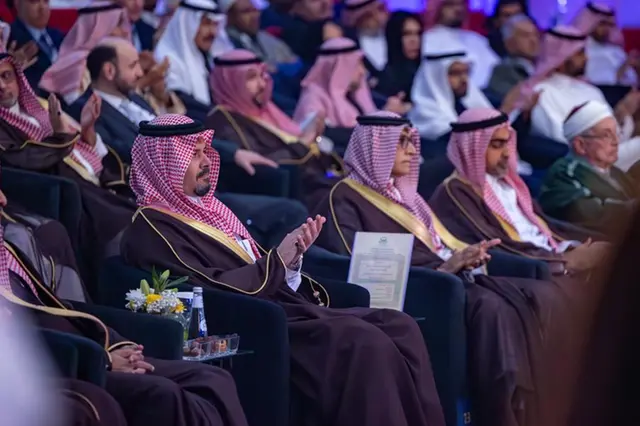
Al Baraka Group announced its sponsorship, as a Global Partner, of the 46th AlBaraka Islamic Economics Symposium, held from 9–11 February 2026, under the theme: “The Righteousness and Benevolence in Islamic Economy: The Future Forward”, at Prince Muqrin University in Madinah, Kingdom of Saudi Arabia.

The symposium was under the patronage of His Royal Highness Prince Salman Bin Sultan Bin Abdulaziz Prince of Madinah Region and brought together leading Sharia scholars, jurists, bankers, academics, and international experts to examine the role of the righteousness and benevolence sector in advancing sustainable economic and social development. Discussions focused on the contribution of Islamic banks in supporting charitable initiatives, including investment strategies for Waqf and Zakat funds, as well as innovative social finance models.

The program also explored the future of the non-profit sector amid financial innovation and emerging technologies, alongside specialized workshops on Awqaf financial engineering and the application of Maqasid Al-Shariah in righteousness. The event further witnessed the signing of several memoranda of understanding with international academic and professional institutions.

Al Baraka Group continues to support the AlBaraka Symposium on Islamic Economics annually, which was established in 1981 as a leading global platform contributing to the development of thought and practice in Islamic economics. This support reflects the Group’s commitment to strengthening the foundations of Islamic banking and advancing Islamic financial and banking operations.