
Home Blog Page 57

UAE Reaffirms Support for Sustainable Finance and Climate Action Empowerment at COP28-G20

UAE Reaffirms Support for Sustainable Finance and Climate Action Empowerment at COP28-G20

His Excellency Mohamed Bin Hadi Al Hussaini, Minister of State for Financial Affairs, has reaffirmed the UAE’s commitment to sustainable finance and collaboration with Brazil, the current Chair of G20, to achieve climate finance goals, emphasising that finance has been and is still key for enabling climate action.

Al Hussaini announced the UAE’s plan to address the financing gap by the UAE banks offering sustainable financing by 2030 and contributing to the International Monetary Fund for resilience and sustainability to support countries vulnerable to climate change. He also highlighted that the UAE is the largest contributor to the GFMR trust fund.

Al Hussaini made these remarks during his participation in the COP28-G20 Conference on Sustainable Finance, held in Rio de Janeiro, Brazil, on July 24. The conference was part of the G20 finance ministers and central bank governors’ meetings, which was co-organised by COP28 and Brazil.

Present at the conference were Samir Sharifov, Minister of Finance, Azerbaijan; Fernando Haddad, Minister of Finance, Brazil; Marina Silva, Minister of Environment and Climate Change, Brazil; Sri Mulyani Indrawati, Minister of Finance, Indonesia; Marsha Caddle, Minister of Industry, Innovation, Science and Technology, Barbados; and senior representatives of multilateral development banks.

“During the COP28 conference, hosted by the UAE last year, a global consensus was reached on the need to limit the temperature rise to 1.5°C. This requires a fair and orderly transition away from fossil fuels, with global targets set to triple renewable energy and double energy efficiency by the end of the decade. To achieve these objectives, we will need to mobilise all sources of public, private, and charitable funding,” stated Al Hussaini at the COP28-G20.

“Realising this goal demands a shift towards climate investments and this presents an unparalleled opportunity for prosperity and economic growth. We need an international framework that supports the distribution of finance in ways that mitigate investment risks in developing countries,” added Al Hussaini.

His Excellency noted that the launch of the Global Climate Finance Framework at COP28 received support from many G20 member countries, commending the close collaboration with a team of high-level experts, which provided a roadmap for the necessary actions to implement this framework. He highlighted that finance ministries play a pivotal role in leading the transition towards climate investments.

Al Husseini pointed out that the G20’s review of multilateral climate funds this year, under the Brazilian presidency, is a necessary move to promote the agenda for accessible and affordable financing. “We hope that COP28 and G20 will establish a robust foundation for future COP conferences, which will be essential for propelling climate finance progress,” he added.

The conference featured discussions on creating a renewable financial structure to facilitate sustainable finance, unlocking investment opportunities for climate action, expanding concessional financing, and enabling private sector financing. It also discussed the role of multilateral development banks in becoming more effective and mobilising financial resources for national contribution plans.

The UAE, represented by the Ministry of Finance and the Central Bank of the UAE, took part in the third G20 Finance Ministers and Central Bank Governors (G20 FMCBG) meeting.

The UAE delegation was led by HE Mohamed Bin Hadi Al Hussaini, Minister of State for Financial Affairs, and included HE Ibrahim Obaid Al Zaabi, CBUAE’s Assistant Governor of the Monetary Policy and Stability Department; HE Ambassador Majid Al Suwaidi, the COP28 Director-General; Ali Abdullah Sharafi, Assistant Undersecretary of the International Financial Relationship Sector at the MoF; and Thuraiya Hamed Alhashmi, Acting Director of Relations and International Financial Organisations at the MoF.

Brazil, holding the current presidency, has steered the G20’s agenda on sustainable finance through the Sustainable Finance Working Group (SFWG). The group is working to advance the implementation of the Sustainable Finance Roadmap—a comprehensive, multi-year plan designed to guide the G20’s efforts on climate and sustainable finance.

This roadmap outlines four key priorities: enhancing access to international environmental and climate funds; fostering fair, reliable, and robust transformation plans; and establishing sustainability reporting standards that accommodate the diverse needs of all stakeholders, including SMEs, developing countries, and emerging markets.
Hedge funds see net inflows as positive performance continues

Hedge funds see net inflows as positive performance continues

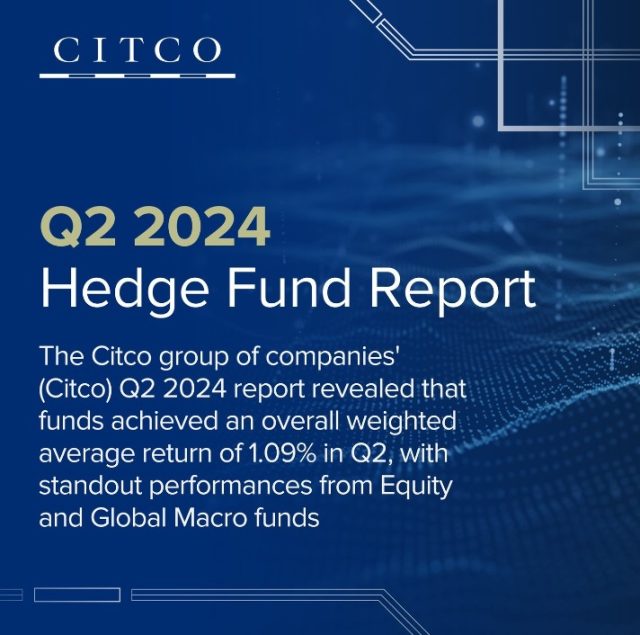
Equity and Global Macro funds were among the winners as hedge funds maintained their winning streak in Q2, making it seven consecutive quarters of positive returns, while the quarter also saw a return to net inflows for the first time since early 2022.

Funds administered by the Citco group of companies (Citco), the leading asset-servicer with over $2 trillion in assets under administration (AUA), delivered a weighted average return of 1.09% in Q2, to take the overall weighted average return year-to-date (YTD) to 7.62%. Some 80% of funds have now achieved positive returns so far in 2024.

Global Macro and Equity funds stood out in Q2, with weighted average returns of 2.26% and 2.25%, to take their YTD performance to 7.45% and 10.86% respectively. Commodity, Fixed Income Arbitrage and Multi-Strategy funds were also positive in Q2, with weighted average returns of 1%, 0.53% and 0.09%. This took YTD returns for Commodities to 3.66%, with Fixed Income Arbitrage at 0.8%, and Multi-Strategy at 5.93%.

All AUA categories also posted positive weighted average returns in Q2, bar the smallest funds which dipped into negative territory. Funds with between $1B-$3B of AUA were the top performers at 1.49%, followed by funds with between $550M-$1B of AUA at 1.39%. Next were funds with more than $3B of AUA, at 1.11%, while funds with between $200M-$500M of AUA were just positive at 0.09%. On a YTD basis, the largest funds remain in top spot, with a weighted average return of 8.18%, followed by the $1B-$3B category at 8.07%, and the $500M-$1B grouping at 6.54%. The $200M-$500M grouping was next at 4.99%.

In Q2, hedge funds saw their first quarterly net inflows since the start of 2022, with inflows in April and May outweighing June’s redemptions. In total, hedge funds had net inflows of $4.7B in Q2, with subscriptions of $50.3B outweighing redemptions of $45.6B. This was driven by net inflows of $6.6B and $7.1B in April and May respectively, which more than countered June’s redemptions of $8.9B.

Inflows were seen into a number of strategies, with Hybrids the standout after seeing net inflows every month in Q2 to give them $6.5B of net inflows overall. Hybrids continue to be popular, having already seen net inflows of $1.1B in Q1. Multi-Strategy funds had net inflows of $1.3B in Q2 despite a jump in outflows in June, while Fund of Funds were next at $1B, followed by Fixed Income Arbitrage strategies at $0.5B.

The second quarter was also Citco’s busiest to date from a trade volumes perspective. The main drivers of this were high frequency trading strategies, which accounted for a large share of the total trades as managers reacted to changes in market volatility.

Treasury volumes set another record in Q2, closing in on the 150,000 mark after three of the busiest months of record. Treasury payment volumes climbed to 147,267 overall in the second quarter, up 4% quarter-on-quarter.

Declan Quilligan, Head of Hedge Fund Services, Citco Fund Services (Ireland) Limited, said:

“Hedge funds administered by Citco continue to deliver positive performance overall, but the main takeaway in the second quarter was the return to net inflows.

“Funds enjoyed a prolonged period of net inflows prior to 2022, and we have now seen a return to that environment as investors look for options amid an expected switch in economic policy later this year.

“Whatever materializes on that front, there remain lots of opportunities for investors across the broad spread of offerings in the hedge fund market.”

Minister of Planning Discusses Cooperation Opportunities with Singapore’s Second Minister for Foreign Affairs and Education

Minister of Planning, Economic Development, and International Cooperation Discusses Enhanced Cooperation Opportunities with Second Minister for Foreign Affairs and Education of Singapore

H.E. Dr. Rania A. Al-Mashat discusses future cooperation with Singapore in light of the government’s priorities for industrial localization, human capital development, and private sector encouragement.

The Second Minister for Foreign Affairs and Education of Singapore looks forward to exploring investment opportunities, particularly in the Suez Canal Economic Zone, aligned with common interests.

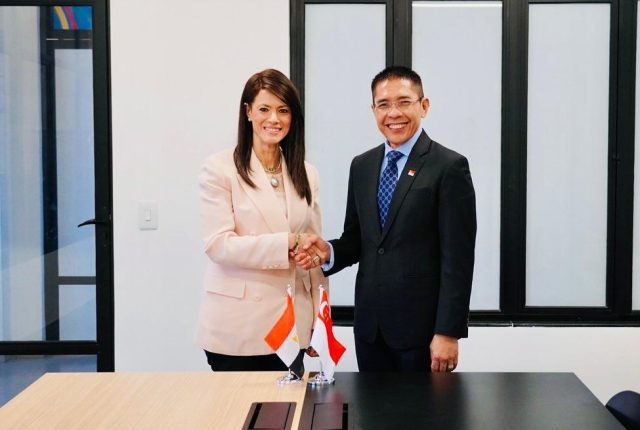
During her visit to Rio De Janeiro, Brazil, to attend the G20 Development Ministers’ Meeting, H.E. Dr. Rania A. Al-Mashat, Minister of Planning, Economic Development, and International Cooperation, met with Mr. Mohamad Maliki Osman, Second Minister for Foreign Affairs and Education of Singapore. They discussed mutual cooperation priorities for the upcoming phase in light of bilateral relations between the two countries, as well as the priorities of the new government, which emphasize human development, industrial localization, and other key agenda items.

During the meeting, H.E. Minister Al-Mashat praised the longstanding Egyptian-Singaporean relations characterized by consultation and joint coordination across all levels. Both countries share a mutual interest in developing these relations, having signed numerous partnership agreements over the past four decades that have enhanced developmental partnerships in various economic, trade, investment, and cultural sectors.

The meeting also discussed cooperation priorities for the upcoming phase, especially in light of the new government’s agenda and its program for the period (2025/2024-2027/2026), which prioritizes human capital development, healthcare, education, and industrial localization. The government’s efforts to attract investments through various incentives and steps were also highlighted, with structural reform policies aimed at enabling the private sector to lead development efforts in the coming period, thereby enhancing efforts to attract both foreign and domestic investments.

The meeting noted the improvement in Egypt’s economic indicators over the past period as a result of state efforts and measures. The government continues to consolidate the foundations of economic recovery, empower the private sector, and build a resilient economy by enhancing overall economic stability and increasing employment rates.

H.E. Minister Al-Mashat also highlighted strong partnerships with multilateral and bilateral development partners, including strategic partnerships with the European Union, the World Bank Group, and the African Development Bank, through which numerous developmental projects are being implemented and structural reform measures supported.

On his part, Second Minister for Foreign Affairs and Education of Singapore praised Egypt’s role amidst the unstable geopolitical conditions in the region and expressed his aspiration to explore investment opportunities in Egypt in light of the country’s ongoing reforms and incentives provided to the private sector, particularly within the Suez Canal Economic Zone, aiming to collaborate in priority areas for both countries.

Egypt, EU Discuss Priorities for Next Stage of Strategic Partnership

H.E. Dr. Rania A. Al-Mashat discusses with the European Union delegation the priorities for the upcoming phase within the framework of the strategic partnership between both sides


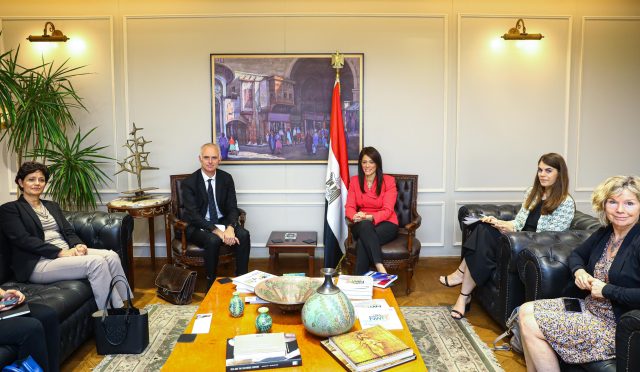
H.E. Dr. Rania A. Al-Mashat, Minister of Planning, Economic Development, and International Cooperation, convened a meeting with Ambassador/Simon Mordue, Deputy Secretary-General of the European External Action Service (EEAS), in the presence of Ms. Antonia Zafeiri, Head of the Political Section at the EU Delegation. The meeting included follow-up on the implementation of agreements from the Egyptian-European Investment Conference held last month and discussions on establishing a joint framework with the EU to activate a €1.8 billion investment guarantee mechanism to stimulate local and foreign investments in mutually beneficial sectors. Development cooperation relations were also discussed within the framework of implementing the national platform for the “NWFE” program, linking water, food, and energy projects.

At the outset of the meeting, H.E. Dr. Al-Mashat welcomed EU officials, affirming the depth of Egyptian-EU relations reflecting strong historical ties between both sides. She pointed out the recent significant developments in these relations, particularly elevating the partnership level during the Egyptian-European Summit held in March, underscoring substantial opportunities for joint work to enhance development efforts focusing on mutual areas of interest.

The meeting reviewed the successful convening of the Egyptian-EU Investment Conference, which witnessed the signing of numerous joint investment agreements involving European private sector companies. H.E. Minister Al-Mashat stressed the importance of building on this momentum and advancing Egyptian-EU partnership to meet development requirements in the coming phase, supporting Egyptian state efforts to empower the private sector, increase local and foreign investments, and proceed with economic and structural reforms. Discussions also covered cooperation with the European Union in enhancing human development efforts and implementing economic empowerment programs for youth and women, top priorities under the government’s new agenda.

In this context, H.E. Minister Al-Mashat clarified that the government, through its new program, aims to achieve several objectives enabling the Egyptian economy to confront challenges and embark on new horizons. H.E. Dr. Al-Mashat emphasized the government’s determination to govern and enhance the efficiency of investment spending to bolster macroeconomic stability, adding that the Ministry of Planning, Economic Development, and International Cooperation coordinates with development partners, including the EU, to implement structural reforms ensuring macroeconomic stability.

H.E. Dr. Al-Mashat highlighted the importance of investment guarantees provided by the European Union to encourage private sector investments in various priority projects such as renewable energy, green hydrogen, food security, digital transformation, among others. H.E. Dr. Rania Al-Mashat noted efforts to strengthen discussions with other development partners to expand investment guarantees that enhance state priorities in attracting local and foreign investments and increasing private sector participation in development efforts.

The Minister of Planning, Economic Development, and International Cooperation also affirmed the diversification of economic cooperation mechanisms with the European Union in various priority areas for both sides. H.E. Minister Al-Mashat emphasized the EU’s role as a partner in implementing the national platform for the “NWFE” program, which links water, food, and energy projects, enhancing Egypt’s efforts towards green transformation within the framework of the National Strategy for Climate Change 2050. Besides the EU, European institutions represented by the European Investment Bank and the European Bank for Reconstruction and Development play a vital role in mobilizing investments and blended finance for private sector investments across various program axes. Additionally, bilateral cooperation with several European countries, including Germany, enables debt swap programs for climate action.

H.E. Dr. Al-Mashat mentioned that over the past years, under the “Team Europe”  initiative, investments and financing totaling $12.8 billion have been mobilized from European governments and institutions for both government and private sectors. H.E. Minister Al-Mashat emphasized the potential for furthering the bilateral relationship based on developmental priorities and shared interests, particularly following the convening of the Egyptian-EU Investment Conference and the elevation of relationship levels, to support economic development efforts and increase investments.

In another context, discussions during the meeting referred to the fourth round of high-level dialogue on migration between Egypt and the EU recently hosted by the Ministry of Migration, involving representatives from the Ministry of Planning, Economic Development, and International Cooperation. The dialogue focused on Egypt’s efforts to combat illegal migration and host millions of migrants and guests. In this regard, H.E. Minister Al-Mashat highlighted the implementation of several programs supporting Egypt’s guests and migrants through various initiatives, noting the visit to Caritas Egypt Center, which was established in collaboration with the United Nations to improve living conditions and provide educational programs and social protection mechanisms for these families.


Gulf Islamic Investments finalises investment in GEMS Education

Gulf Islamic Investments finalises investment in GEMS Education

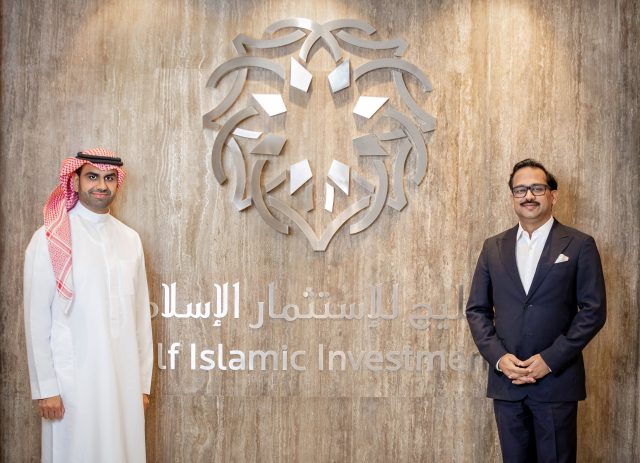
Gulf Islamic Investments group (GII) has concluded its funding arrangements in a consortium led by Brookfield Asset Management Ltd., through its Special Investments (“BSI”) and Middle East private equity programmes, to invest in the Dubai-headquartered private schools operator and service provider GEMS Education.

For GII, a leading Shari’ah-compliant global alternative investment group with over US$4.5 billion of assets under management (AUM), the completion of this investment represents the second transaction with Brookfield this year. In April 2024, GII sold its majority shareholding in its UAE logistics business for an undisclosed amount to Brookfield.  

GEMS has provided educational services in Dubai for over six decades and is the largest private schools’ operator in the Middle East. It expects to welcome more than 140,000 students across its 46 schools in the UAE and Qatar by September 2024, including two schools opening in the emirates of Dubai and Abu Dhabi this August.

Pankaj Gupta, GII’s co-founder and co-CEO, commented, “The UAE’s spectacular economic growth is founded on a strong educational base, empowered by the leadership’s support and attitude that ‘nothing is impossible’. Our investment in GEMS will allow the company to supercharge the next phase of its growth plans”.      

Mohammed Alhassan, GII’s co-founder and co-CEO, added, “As established investors, GII has a track record of investments across the GCC in several verticals, including in education, healthcare, logistics, food, education and real estate. We are very excited to develop our relationship with GEMS Education, the Gulf’s largest provider of private schooling”. 

Sunny Varkey, GEMS’ Founder, concluded, “GEMS has experienced significant growth over its recent history, becoming one of the world’s most respected education companies. These investments demonstrate the breadth of the business, the educational quality, and the critical infrastructure that we deliver collectively for the UAE”.

Bitpanda Technology Solutions annual update: Quarterly Registrations increased by over 100% YoY

Bitpanda Technology Solutions annual update: Quarterly Registrations increased by over 100% YoY

Bitpanda Technology Solutions, the leading European digital assets infrastructure provider, is now trusted by several of Europe’s biggest banks and fintechs to provide the infrastructure necessary for their users to invest and trade digital assets. Thanks to these new partnerships, the total number of end users who can access digital assets via Bitpanda’s infrastructure is now more than 25m. 

Throughout 2023, Bitpanda Technology Solutions developed its product offering to incorporate several of the innovations available as part of Bitpanda’s core offer. This means Bitpanda Technology Solutions partners now have access to a crypto asset offering of over 400 coins, crypto leverage trading, institutional HSM cold storage custody both on-premise and as a service, and operational models ranging from fully in-house hosted to fully remote. This is alongside a fully regulatory setup that includes several licences, a full range of digital assets from stocks and ETFs to commodities and precious metals, and a range of best-in-class security features. All these benefits can still be integrated by partners as part of a modular and scaled 24/7 trading infrastructure in as little as 3 months. 

Lukas Enzersdorfer-Konrad, CEO of Bitpanda Technology Solutions commented: “More and more banks and financial entities are entering this space driven by the adoption of digital assets. Our incredible growth is proof of this and that we have become the preferred digital asset infrastructure partner for institutions. As demand increases, competition also increases, and institutions face a choice: offer digital assets and benefit from new revenues or lose customers to competitors. It’s a clear case of sink or swim.”

Projected to reach a revenue of US$453.2 million in 2024, the sector is anticipated to grow at a steady 8.01% CAGR until 2028, reaching a total value of US$616.8 million.This growth is expected to be driven by a rising user base, projected to increase from 28.79% penetration in 2024 to 31.92% by 2028. While the US remains the global leader in digital assets revenue, the UAE’s market is poised for significant expansion, with average revenue per user estimated at US$164.1 in 2024

Walid BenOthman, Managing Director: “Bitpanda Technology Solutions has consistently set new standards in the digital assets industry, achieving remarkable success year after year. Our goal is to emulate this success in the MENA region, and with the UAE digital assets market expected to grow further, there is a strong appetite. Investors are eager to trade digital assets, and companies must decide whether to provide this opportunity and increase their revenue or let their competitors capture this growing market. The choice is clear.” 

In the last 12 months, Bitpanda Technology Solutions has announced both new partners and expansions to existing partnerships. Additionally, the team has made its first international expansion, opening a new office in the Middle East to serve customers in the UAE.

ADGM Announces Fee Revision for Commercial Licences Starting 2025

ADGM Announces Fee Revision for Commercial Licences Starting 2025

ADGM, the international financial centre of the UAE’s capital, has announced significant revisions to its licensing fee schedule as part of its transitional arrangements for Al Reem Island businesses.  Starting from 1st January 2025, ADGM will implement major reductions of 50% or more for obtaining non-financial and retail licences within its jurisdiction. This initiative aims to enhance ADGM’s business ecosystem, making it more attractive and accessible for various enterprises.

Under the revised fee schedule, new registrations within the non-financial category of businesses will see fees reduced from USD 10,000 to USD 5,000. In contrast, the annual licence renewal fees for the same category will decrease from USD 8,000 to USD 5,000. Fees for the retail category have also been significantly reduced, with new registration fees cut by two-thirds from USD 6,000 to USD 2,000. Licence renewals for the retail category will also see a 50% reduction, bringing the annual renewal fees down to USD 2,000.

The effective date of the revised licensing fees has been set as 1st January 2025 to align with the expiry of the current transition period, which ends on 31st December 2024. The new fee structure will be applicable across ADGM’s jurisdiction, which includes both Al Maryah and Al Reem Island.

The introduction of these fee revisions is in line with the series of consultations conducted in 2023 by ADGM with a focus group of Al Reem Island businesses to gather feedback and insights related to ADGM’s jurisdiction expansion. These discussions covered major topics such as the ease of obtaining an ADGM commercial licence and the relevant fees. Following these consultations, the Registration Authority (RA) of ADGM conducted a comprehensive review of its fee structure to meet the expectations of its newly expanded jurisdiction and commercial landscape, ensuring a smooth transition for its new business segments.

Hamad Sayah Al Mazrouei, the CEO of ADGM RA said, “To facilitate a seamless transition, ADGM and its Registration Authority have proactively introduced various initiatives, prioritising our business community at the core of every decision. We assessed the financial impact on different business categories and previously implemented a fee waiver for qualifying non-financial and retail businesses on Al Reem Island. Building on these efforts, we have now revised our fee structure to include significant reductions for the same categories starting next year. Our aim is to minimise potential disruptions for businesses transitioning to an ADGM licence, enabling them to operate efficiently within our jurisdiction.”

The cut-off date for the previously introduced fee exemption for qualifying non-financial and retail businesses located on Al Reem Island is 31st October 2024. Fee revisions for other categories include changes in the fee structure within the financial category, increasing from USD 15,000 to USD 20,000 and renewals rising from USD 13,000 to USD 15,000 for an annual ADGM licence. Additionally, there is a minor adjustment for tech and fintech startups, with fees changing from USD 1,000 to USD 1,500 for both new and existing licence renewals. The fees for the Special Purpose Vehicle (SPV) category remain unchanged at USD 1,900.

The full fee schedule that will be applicable for new business registrations as well as licence renewals from 1st January 2025, will be published in December.

Offa launches ultra-quick buy-to-let Islamic finance for British expats

Offa launches ultra-quick buy-to-let Islamic finance for British expats

Offa, the UK’s first Shari’ah-compliant bridge finance fintech, has today launched an innovative new buy-to-let finance (BTL) service providing fast funding decisions for British expats, delivered via a modern paperless process.

Powered by next-generation technological innovation, Offa’s BTL service replaces legacy  finance systems with its flexible and ethical Islamic property finance solutions, and end-to-end digital processes making it fast and easy for expats to apply and get a quick decision.

These Islamic BTL products are available to new and seasoned British landlords living in the Gulf Cooperation Council (GCC) states, Australia, the European Union, Canada, Singapore and Brunei.

Sagheer Malik, Offa’s Chief Commercial Officer and MD of Retail Finance, said: “I have met many British expats who need Islamic buy-to-let finance, but who struggle to cope with the onerous paperwork and old-style systems that they typically face. Our modern, ultra-fast, paperless buy-to-let finance solves that problem.

“With our team’s decades of industry experience and a streamlined digital application process, we are bringing 21st century Shari’ah-compliant BTL finance to our customers.”

UAE-based Gulf Islamic Investments group (GII), a leading Shari’ah-compliant global alternative investment company with over $4.5 billion of assets under management, took a majority stake in Offa in mid-2022. 

GII’s co-Founders and co-CEOs, Mohammed Alhassan and Pankaj Gupta, said: “This latest market innovation from Offa brings additional investment opportunities in UK property to Britons resident across the Arabian Gulf and further afield. We applaud Offa’s initiatives to attract further expatriate capital to the UK’s vibrant property market as an exciting alternative asset management strategy.”

Instead of using interest, Offa follows the Islamic finance principles of co-ownership-with-leasing. Customers acquire the property in partnership with Offa and make monthly payments to increase their share, over time owning it.

Another key feature of Offa’s BTL product is that where a customer’s rental income is not sufficient for the required affordability criteria for the BTL finance, Offa allows them to make up the difference with their personal monthly income (commonly known in the industry as top-slicing).

The service is available to anyone purchasing property in England and Wales aged 21 or over, either under their personal name or as a limited company, and where the property’s value is between £60,000 and £1 million. First-time landlords can also apply, and Offa’s BTL solutions are also available for houses in multiple occupancy (HMOs).

Offa provides an ethical finance model designed in accordance with Islamic finance principles, which means not charging interest and investment into sectors deemed harmful to society – such as alcohol, tobacco, and the arms trade.

In April, Offa announced a £100 million credit line for its bridge finance arm from a fund managed by GII. The credit line is the largest of its kind outside of the Gulf, creating significant capacity for the Birmingham-headquartered business to expand and diversify its financial propositions in the UK property market.

EBRD and FATEN boost support to small businesses in the West Bank

EBRD and FATEN boost support to small businesses in the West Bank

The European Bank for Reconstruction and Development (EBRD) is intensifying its support for micro, small and medium-sized enterprises (MSMEs) in the West Bank and Gaza, with a US$ 5 million (€4.7 million) loan to microfinance institution the Palestine for Credit and Development (FATEN). The facility will enable FATEN to on-lend to MSMEs based in the West Bank during the challenging operating environment.

The loan is funded by the West Bank and Gaza Net Income Allocation Trust Fund and will be accompanied by a 20 per cent first-loss risk cover, funded by the European Union under its Financial Inclusion Programme in the form of a partial portfolio guarantee.

With these new funds, FATEN will be able to scale up its lending to MSMEs in the West Bank as they struggle with the repercussions of the ongoing war in Gaza and its impact on the wider Palestinian economy. The World Bank estimates that the private sector in the West Bank and Gaza has suffered a severe negative impact valued at around US$ 1.5 billion.

The financing will also help FATEN cater to underserved economic segments such as women and borrowers in rural areas of the West Bank. Currently, women-led businesses face significant difficulties in accessing finance, and they account for less than 5 per cent of all banking sector loans as of the end of 2023.

Established in 1999 as a private non-profit company, FATEN became licensed and monitored by the Palestine Monetary Authority in 2014 and is the largest microfinance institution in the West Bank and Gaza, with a market share of 51 per cent. FATEN operates through 34 branches there, serving nearly 26,600 borrowers.

Since the start of its operations in the West Bank and Gaza in 2017, the EBRD has approved 27 projects worth a total of €142 million.The EBRD is a multilateral bank that promotes the development of the private sector and entrepreneurial initiative in 36 economies across three continents. The Bank is owned by 73 countries as well as the EU and the EIB. EBRD investments are aimed at making the economies in its regions competitive, inclusive, well-governed, green, resilient and integrated.

CIB Poised for Explosive Growth: Analysts Predict 24% Annual Net Income Increase Over Five Years

CIB Poised for Explosive Growth: Analysts Predict 24% Annual Net Income Increase Over Five Years

HC Brokerage resumes coverage on Commercial International Bank (COMI) expecting outstanding bank’s profitability in 2024 as a result of the expected NIM expansion. 

Economist and financial analyst at HC, Heba Monir commented: “The Ras El Hekma investment deal improved Egypt’s external position and outlook: The Egyptian economy restored confidence after concluding the Ras El Hekma USD35bn investment deal with the UAE in February 2024. The disbursement of the first and second cash tranches worth USD24bn, helped narrow the banking sector’s net foreign liabilities (NFLs) significantly by c85% y-o-y to USD3.64bn in April, from USD29bn in January 2024. On 6 March, the Central Bank of Egypt (CBE) hiked policy rates by 600 bps, raising them by 800 bps y-t-d and 1,900 bps since it started tightening rates in March 2022, and allowed market forces to determine the exchange rate, leading to an EGP devaluation of c35% y-t-d to EGP47.7/USD currently. Following this, and given the impact of the Gaza war on tourism and Suez Canal receipts, the International Monetary Fund (IMF) and the Egyptian authorities reached a staff-level agreement on a set of comprehensive policies and reforms needed for the Extended Fund Facility (EFF) arrangement, increasing it significantly to USD8.0bn from the previously approved USD3.0bn in December 2022, leading to the disbursement of USD820m in April and another USD820m to be disbursed in June. The European Union (EU) also pledged a EUR7.4bn (USD8.06bn) aid package for Egypt to be disbursed through 2027. All this reflected positively on Egypt’s economic and banking sector credit ratings; S&P Global Ratings and Fitch Ratings upgraded Egypt’s economic outlook to Positive from Stable and Moody’s to Positive from Negative. Despite these positive developments, we do not expect CAPEX lending growth before 2025, given the prohibitive high borrowing cost and our expectation of delayed monetary easing to late 2024 or early 2025. Yet, we expect banks to benefit in 2024 from the higher treasury yields and high deposit auction rates, leading to unusually high net interest margins (NIMs).” 

“We expect solid banking sector profitability in 2024 due to high treasury yields and real growth in loans: We forecast the banking sector’s loans to grow by c31% y-o-y to EGP7.25trn in 2024, mainly driven by EGP loans to finance working capital needs and inflated by the EGP devaluation. Given the high-interest rate environment, we do not expect CAPEX lending to materialize before 1H25. In January 2024, the state-owned National Bank of Egypt (NBE) and Banque Misr introduced a one-year certificate of deposits (CDs) at a 27.0% interest rate paid annually. Following the 6 March EGP devaluation, they introduced in March a three-year declining interest rate CDs paying interest annually of 30.0% in the first year, 25.0% in the second year, and 20.0% in the third year. In January 2024, some private banks like Commercial International Bank (COMI) followed suit and issued three-year CDs at a monthly 20–22% interest rate while setting a minimum value per CD of EGP0.1–5.0m. Therefore, we estimate market deposits to increase by c27% y-o-y to EGP13.7trn in 2024. Regarding profitability, we expect local currency NIMs to continue expanding, given the high treasury yields and high interest rates. We see room for higher treasury yields by 100–200 bps if inflation accelerates, which would represent an upside risk to our numbers. Regarding asset quality, we forecast that large to medium-cap banks will report good asset quality, as most of them increased their provisions charges during 4Q23. Meanwhile, we could see higher NPLs for small-cap banks. As for the capital adequacy ratio (CAR), most banks’ CARs are above the CBE’s minimum requirement, and if they happen to be impacted by the EGP devaluation, we expect them to recover, helped by their solid profitability.” Heba Monir added. 

HC’s economist concluded: “We forecast COMI’s net income to grow at a 5-year CAGR of c24% while maintaining its leading market share: We forecast COMI’s net income to grow at a 5-year CAGR of c24% from 2023–28e, with a c70% y-o-y growth in 2024e to EGP50.4bn on higher interest rates, the EGP devaluation, and a favorable deposit mix, as its current account savings accounts (CASA) represent c55% of its total deposits. We estimate its NIM to increase to 9.57% in 2024e from 7.75% in 2023e, with an ROE of 49.8%, up from 37.5% in the previous year. We forecast COMI to maintain its attractive deposit market share, which we estimate at 6.4% in 2024e, growing its deposits by c23% y-o-y to EGP835bn in 2024e, on our numbers, and we estimate its loan market share at 4.9% in 2024e, growing its loan portfolio by c29% y-o-y to EGP303bn in 2024e to finance corporates’ higher working capital needs, inflated by the c35% EGP devaluation. We expect COMI to report an adequate asset quality, with NPLs of 4.65% of gross loans, higher than the 3.59% it reported in 2023, due to more volatile business conditions and the precautionary measures required by the expected credit loss (ECL) model of IFRS 9. We forecast the bank to record a lower coverage ratio of 276% in 2024e from 305% in 2023 due to its good provisioning and the sound credit profile of its corporate clients. We estimate its net loan-to-deposit (L/D) ratio to increase to 36.3% in 2024e from 34.8% a year earlier. We estimate the bank’s financial investments holdings to surge by c39% y-o-y to EGP378bn, representing c45% of customer deposits in 2024e from c40% in 2023 due to the attractive treasury yields. We expect COMI’s CAR to increase to 30.3% in 2024e from 26.2% in 2023.” 

About HC Brokerage

HC Brokerage is an affiliate of HC Securities & Investment– a full-fledged investment bank providing investment banking, asset management, securities brokerage, research, and custody services. HC Brokerage is an Egyptian registered company and member of Egypt’s Financial Regulatory Authority (FRA), and its registered address is 34 Gezirat Al-Arab St., Mohandessin, Giza, Egypt, Dokki 12311