Home Blog Page 52

ADNOC Drilling Signs Turnwell Agreements and Accelerates Initial $1.7 Billion Unconventionals Campaign

ADNOC Drilling Signs Turnwell Agreements and Accelerates Initial $1.7 Billion Unconventionals Campaign

ADNOC Drilling Company PJSC (“ADNOC Drilling” or the “Company”) (ADX symbol: ADNOCDRILL / ISIN: AEA007301012)announced today the creation of the Turnwell joint venture with SLB and Patterson-
UTI and the acceleration of its 144 unconventional oil and gas well program, following the successful and efficient delivery of the first wells in the campaign.
The Company through its wholly owned subsidiary ADH RSC LTD has signed
definitive agreements for the creation of the Turnwell joint venture (JV) with SLB and
Patterson-UTI. Focused on the UAE’s world-class unconventional energy resources,
post completion of the JV, ADNOC Drilling through its wholly owned subsidiary will
hold a 55% majority equity stake, SLB a 30% equity stake and Patterson-UTI the
remaining 15% equity stake.
Turnwell was established to be the unconventionals drilling arm of ADNOC Drilling
and execute a $1.7 billion contract, awarded to ADNOC Drilling, to provide drilling
and associated services to deliver 144 unconventional oil and gas wells. Following
Turnwell’s efficient and successful start-up and operational delivery, ADNOC has
accelerated the campaign’s completion timeline. The economic impact of the
acceleration will benefit ADNOC Drilling’s 2025 earnings as well as its long-term
growth through the potential acceleration of phase two with thousands of wells.

ADNOC Classification: Public

Commenting on the acceleration of the well program, Abdulrahman Abdulla Al
Seiari, Chief Executive Officer, ADNOC Drilling, said: “Today marks a defining
moment for Turnwell and our key partners SLB, and Patterson UTI. The acceleration
of the well program, is a testament to the innovation, collaboration, and pursuit of
excellence that will define our joint venture.
“Turnwell will not only unlock the immense potential of the UAE’s world-class
unconventional energy resources but will also set new benchmarks for the global
energy industry. We are proud to lead the way in responsibly shaping the future of
energy, both in the UAE and beyond.”
To achieve this accelerated timeline, Turnwell has adopted batch drilling, a method
that improves efficiency and reduces costs. Additionally, Gordon Technologies, a
market-leading provider of Measurement While Drilling (MWD) technology and an
Enersol company, will support the delivery of these wells. MWD technology reduces
drilling time, improves well-bore quality, and increases overall drilling efficiency.
The involvement of Enersol companies in this campaign is pivotal. Enersol, a
technology-focused investment JV between ADNOC Drilling and Alpha Dhabi
Holdings, acquired a 67.2% stake in Gordon Technologies. The use of technology
from Enersol companies, by Turnwell, demonstrates the unique opportunities
Enersol companies have to penetrate and grow in the Middle East market, while
continuing to strengthen their presence in the traditional markets.

Future Food Forum 2024 to highlight UAE’s food ecosystem transformation driving future of regional food sector

Future Food Forum 2024 to highlight UAE’s food ecosystem transformation driving future of regional food sector

The UAE Food & Beverage Business Group (F&B Group), under the patronage of the UAE Ministry of Economy and in strategic partnership with the Dubai Chamber, has announced the upcoming Future Food Forum 2024, set to take place on the 2nd and 3rd of October 2024.

As the UAE continues to solidify its position as a global leader in food innovation and sustainability, this two-day event will gather key industry stakeholders, government representatives, and academia to explore cutting-edge technologies, sustainable practices, and collaborative strategies driving the future of food production. Now in its sixth year, the Future Food Forum will feature FoodTech Valley as an organising partner, with support from the Abu Dhabi Food Hub and DP World.

With the GCC food and beverage sector expected to continue growing to reach a market value of US$128.2 billion by 2029, the highly anticipated sixth edition of the Forum focuses on driving the UAE’s cluster strategy further with the theme “Future Consumer, Future Government, and Future Food”. The strategy was launched last year at the Forum by the UAE Minister of Economy, H.E. Abdullah bin Touq Al Marri, and remains at the core of country’s economic goals and key pillars of the UAE’s food and agricultural transformation roadmap that aims to increase UAE food sector contribution to GDP by US$10 billion and to create 20,000 jobs.

Over the years, the Forum has established itself as a pivotal platform for driving policy change within the food and beverage sector. Serving as a bridge between government, policymakers, and industry leaders, the Forum will facilitate meaningful dialogue on the future agenda for the food sector. The event is the culmination of several dynamic, high-level policy workshops aimed on food cluster and the pressing challenges and opportunities within the industry.

By fostering a dynamic ecosystem through cross-sector collaboration and leveraging economies of scale, the UAE seeks to position itself as a global leader in the food and beverage industry, while also addressing the growing demand for sustainable and innovative food solutions. This year’s theme aims to tackle emerging topics such as Extended Producer Responsibility (EPR) and the circular economy, sustainability and green practices in manufacturing, international trade agreements such as CEPA, digital transformation and governance, and the growing importance of “free from” products and nutrition.

In addition to shaping policy, Future Food Forum 2024 is pushing the boundaries of innovation in the F&B industry by introducing cutting-edge technologies. The event will debut the “Foodverse,” a metaverse-based virtual platform designed specifically for the food sector. This digital environment promises to revolutionise B2B meetings, product presentations, and networking opportunities, offering participants a new and immersive way to engage in the future of food.

Saleh Lootah, Chairman of F&B Group, commented, “Future Food Forum continues to serve as a platform for collaboration in the future of the food industry. This year’s edition is even bigger and hosts key stakeholders from the public and private sectors and across the food manufacturing, supply chain and food-tech sectors to build on the seven key pillars announced by the UAE government to increase the food sector’s contribution to UAE GDP and increasing Emirati participation in the sector. We strongly believe in the impact of Future Food Forum in driving transformative change in the regional food system.”

Besides being a platform for sharing market insights and evolving themes, Future Food Forum will once again feature the ‘Free From Food Dubai’ exhibition, which returns this year, showcasing innovation in the free from, organic, vegan, functional and healthy ingredient food industries, and will be co-located under the Future Food Forum.

The event features a growing list of sponsors, including Agthia, Al Ghurair Foods, Al Ain Farms, IFFCO, Almarai, BRF, and Tetra Pak, as well as industry organisations such as IFPA. The Forum set the stage for several specialised panel discussions and presentations redefining F&B sector practices and showcasing government engagement with the food and beverage sector.

World Alzheimer’s Month: Tackling Alzheimer’s in Saudi Arabia with Global and Local Efforts

World Alzheimer’s Month: Tackling Alzheimer ’s in Saudi Arabia with Global and Local Efforts

As Saudi Arabia joins the global community in observing World Alzheimer’s Month in September, the focus is on addressing the increasing prevalence of Alzheimer’s disease within the Kingdom. According to the Ministry of Health in Saudi Arabia, the number of Alzheimer’s cases in Saudi Arabia is expected to rise significantly, and emerging treatments will require the urgent development of a global framework, and close collaboration with all stakeholders – patients, specialists, pharmaceutical industry regulators – to address the challenges collaboratively.

Alzheimer’s disease is an illness that affects millions of people worldwide, with the number of people living with dementia across the world expected to increase up to 139 million in 2050, according to the World Health Organization. For World Alzheimer’s Month, Dr. Gabrielle Walcott-Bedeau, Assistant Provost, Academic & Student Affairs Associate Professor from the Department of Physiology, Neuroscience and Behavioral Science at St. George’s University (SGU), shares the importance of understanding this neurodegenerative disease and key preventative measures.

Understanding Alzheimer’s Disease

Alzheimer’s disease causes a slow decline in memory, which worsens over time, gradually destroying brain cells. The destruction is caused by the buildup of abnormal proteins, but people with Alzheimer’s may live for over a decade without obvious symptoms.

As the brain cells die, the disease attacks the area of the brain responsible for memory, so the earliest symptom often noticed is memory loss, especially recent memories.

A global health concern

Alzheimer’s disease is more common than many expect. It is responsible for up to 80% of all dementia cases in older adults, affecting over 50 million people globally. The Ministry of Health estimates that Alzheimer’s affects around 130,000 people in the Kingdom, yet awareness about early detection and care remains limited

Causes and prevention

Despite extensive research, the exact cause of Alzheimer’s disease is still not fully understood. However, scientists believe that it is likely caused by a combination of genetic, environmental, and lifestyle factors.  Several studies have highlighted the importance of a healthy lifestyle that may reduce the risk or delay the onset of the disease:

  • Healthy diet: Nutrition plays an important role in brain health. A diet rich in fruits, nuts, and fiber may help reduce the risk of Alzheimer’s.
  • Physical activity: Regular exercise is good for your body and your brain. Activities such as walking, swimming, or yoga can help maintain cognitive function and reduce the risk of memory loss.
  • Social engagement: Staying connected with others through positive and healthy social interactions benefits brain health. Whether it’s spending time with family, joining a local club, or engaging in community activities, staying socially active can help protect the brain from the risk of Alzheimer’s disease.

Alzheimer’s disease remains a critical health issue both globally and within Saudi Arabia. As part of World Alzheimer’s Month initiatives, the Kingdom continues to collaborate on international efforts to improve care, raise awareness, and advance research for this disease.

EBRD forecasts moderate growth of 2.1 per cent in the SEMED region

EBRD forecasts moderate growth of 2.1 per cent in the SEMED region
  • Growth in the SEMED region forecast at 2.1 per cent for first half of the year, picking up to 2.8 per cent for 2024 as a whole
  • Downward revision from the previous forecast reflects slower investment recovery in Egypt and the ongoing war in Gaza and Lebanon
  • Average growth is projected to pick up slightly to 3.9 per cent in 2025

Growth in the southern and eastern Mediterranean (SEMED) is forecast at 2.1 per cent for the first half of 2024, according to the latest Regional Economic Prospects report, published today by the European Bank for Reconstruction and Development (EBRD). This is slightly down on the 2.7 per cent in the same period last year. However, growth is expected to pick up to 2.8 per cent in 2024 as a whole and 3.9 per cent in 2025.

This moderation is also a downward revision on the previous forecast for 2024 owing to a slower-than-expected recovery in private and public investment and disruptions in the energy sector in Egypt, severe droughts in Morocco and Tunisia, and the impact of the war in Gaza on the economies of Jordan and Lebanon.

The SEMED economies in detail

Egypt

Growth in Egypt is estimated at 2.7 per cent for the fiscal year ending June 2024 (FY 2023-24), rising to 4 per cent in FY 2024-25 as the economy adjusts from the crisis period. On a calendar-year basis, growth is expected at 3.2 per cent in 2024 and 4.5 per cent in 2025. Inflation remains high but is moderating, having fallen to 25.7 per cent in July 2024 from a peak of 38.0 per cent in September 2023. Expansion in the retail and wholesale trade, agriculture, communications and real estate sectors counterbalanced sharp contractions in the gas and non-oil manufacturing industries.

External accounts have recovered since the devaluation of the Egyptian pound in March 2024, supported by increased financial inflows from international partners and investors. In parallel, foreign exchange reserves rose to their highest level in five years.

Downside risks relate to continued disruptions in the energy and electricity sectors and delays in implementing structural reforms as part of an International Monetary Fund (IMF) programme.

Jordan

Spillovers from a prolonged war in Gaza are weighing on the Jordanian economy and are slowing growth for 2024 as a whole to a forecast of 2.2 per cent, particularly through suppressed tourism and investment flows and with consumers holding back on large expenditures in times of increased uncertainty. A slight uptick in growth to 2.6 per cent is projected for 2025, provided geopolitical conditions improve and reforms continue to progress.

Inflation remained moderate despite a slight pick-up during the year to 1.9 per cent in July 2024. Unemployment remained high at 21.4 per cent in the second quarter of 2024, and significantly higher for women (34.7 per cent) and youth (43.7 per cent).

The Central Bank of Jordan has maintained a stable policy interest rate between July 2023 and August 2024, mirroring the decisions of the Federal Reserve as part of its effort to preserve the currency peg.

Lebanon

GDP is expected to contract in Lebanon by 1.0 per cent in 2024, amid deteriorating stability, political inaction and stalled reforms. Growth could return to 2.0 per cent in 2025, but only if the armed war is contained and there is progress on reforms and an IMF programme in place.

Exchange rate volatility eased as Lebanon’s central bank introduced several measures to unify the multiple exchange rates in the economy. This was further helped by the adoption of the 2024 budget law which aligns the exchange rate closer to the prevailing market rate.

As a result, inflation dropped significantly to 35.4 per cent in July 2024 (from a peak of 352 per cent in March 2023). Economic conditions remain dire following years of very high inflation and high unemployment of over a third of the labour force.

Morocco

Growth is projected at 2.9 per cent in 2024, rising to 3.6 per cent in 2025. While unfavourable weather conditions are expected to weigh on economic activity this year, the recovery in the manufacturing and tourism sectors, supported by a pick-up in exports and domestic demand, should provide some breathing space. Inflation continued to ease, reaching 1.3 per cent in July 2024, supported by lower food and energy prices.

The government is pursuing a path of gradual fiscal consolidation, which narrowed the deficit to 4.3 per cent of GDP and stabilised public debt at around 70 per cent of GDP in 2023, thanks to higher tax revenues and lower subsidies, despite the rise in external debt servicing costs. The current account deficit narrowed on the back of lower imports and the stronger performance of tourism, remittances, and automotive and electric exports.

Downside risks relate to Morocco’s high dependence on energy imports and seasonal agricultural production, which makes the economy vulnerable to climate and external shocks.

Tunisia

Growth is expected to remain modest at 1.2 per cent in 2024 and 1.8 per cent in 2025, supported by lower inflation, a narrowing current account deficit and continued reform efforts. Contraction in agriculture and mining was offset by an expansion in tourism, financial services, and some industrial sectors. Significant downside risks include the limited fiscal space, large external debt and the economy’s vulnerability to external and climate shocks.

Growth was supported by recovering exports of olive oil, mechanical and electrical goods, and increasing domestic demand amid easing inflation, which dropped to a 30-month low of 7.0 per cent in July 2024.

In March 2024, ratings agency Moody’s upgraded Tunisia’s outlook from negative to stable on the back of maintained access to some bilateral and multilateral external funding, despite the slow progress on an IMF-supported programme.

EBRD’s first investment in a venture capital fund in the West Bank and Gaza

EBRD’s first investment in a venture capital fund in the West Bank and Gaza

The European Bank for Reconstruction and Development (EBRD) is supporting the nascent venture-capital ecosystem of the West Bank by committing US$ 3 million to Ibtikar Fund II, the new fund raised by Ibtikar, the region’s prominent institutional-quality fund manager. The investment marks the EBRD’s first equity investment in a venture capital fund in the West Bank.

Ibtikar will seek to generate long-term capital appreciation from equity and equity-related investments in up to 25 early-stage Palestinian technology companies, with the flexibility to also invest in selected companies in neighbouring countries with a connection to the West Bank and Gaza.

The fund closed with US$ 25 million in total commitments, above its initial target of US$ 15 million and doubling the size of its maiden fund.

Micro and small businesses are central to the Palestinian economy, accounting for over 98 per cent of local enterprises and generating more than 60 per cent of gross domestic product, but they face significant economic challenges and capital shortages. Ibtikar will provide local technology startups with the necessary resources to scale up their operations, access new markets and drive sustainable development. This will help to advance digitalisation and foster job creation by supporting young entrepreneurs and the employment of women. It will also enhance economic links between the West Bank and Gaza and neighbouring countries.

Anne Fossemalle, EBRD Director for Private Equity Funds investment, said: “We are excited to support the further establishment of the early-stage innovation ecosystem in the West Bank in partnership with Ibtikar. This is our first investment in a venture-capital fund in the West Bank and we look forward to taking part in supporting local startups, particularly in these unprecedented times.”

Habib Hazzan, Managing Partner of Ibtikar, said: “We are excited to welcome the EBRD to Ibtikar Fund II, as we share a common vision for empowering Palestinian entrepreneurs. This collaboration will enhance our ability to fund innovative Palestinian startups that will become leaders in regional and global markets and prove that the startup ecosystem in the West Bank has matured and is attractive for top-tier, international investors.”

Since the launch of its activities in the West Bank and Gaza in May 2017, the EBRD has approved 27 transactions worth a total of US$ 142 million.

ADFW Unveils Top Finance Leaders Set to Speak at 2024 Edition

ADFW Unveils Top Finance Leaders Set to Speak at 2024 Edition

Under the patronage of His Highness Sheikh Khaled bin Mohamed bin Zayed Al Nahyan, the Crown Prince of Abu Dhabi, and Chairman of the Executive Council, Abu Dhabi Finance Week (ADFW), the flagship financial event of the MEASA region hosted by ADGM, has announced that its 2024 edition will gather more than 300 speakers from across the globe, including the CEOs and Chairs of 50 major global financial institutions.

Among the confirmed speakers are finance titans such as Sergio Ermotti – Group CEO of UBS, Bill Huffman – CEO of Nuveen, David Hunt – President & CEO of PGIM, Isabelle Scemama – Global Head of AXA IM, Bill Ford – Chairman & CEO of General Atlantic, Shayne Nelson – Group CEO of Emirates NBD, Ray Dalio – Founder of Bridgewater, Rajiv Jain – Chairman and CIO of GQG Partners, Mohammed Alaradhi – Executive Chairman of Investcorp, His Excellency Ambassador Majid AlSuwaidi – CEO of Alterra, Jeremy Allaire –Co-Founder, Chairman and CEO of Circle and Mohamed Abdelbary – CEO of ADIB. 

His Excellency Ahmed Jasim Al Zaabi, Chairman of ADGM, said: “As Abu Dhabi continues to solidify its position as a global financial powerhouse, ADFW 2024 will be a pivotal moment for the financial industry. The rapidly increasing participation of CEOs from globally significant financial institutions underscores ADFW’s rising prominence and influence as a leading platform. At ADGM, we are committed to driving meaningful dialogue, fostering innovation, and reinforcing Abu Dhabi’s role as the Capital of Capital.”

Local and regional government and government-affiliated leaders will also take centre stage at this year’s ADFW with prominent names such as Sheikha Shamma bint Sultan Bin Khalifa Al Nahyan – President & CEO of the UAE Independent Climate Change Accelerators (UICCA), H.R.H. Prince Khaled bin Alwaleed bin Talal Al Saud – Founder and CEO of KBW Ventures, H.E. Abdulla Bin Touq AlMarri – Minister of Economy of the UAE, H.E. Dr. Thani bin Ahmed Al Zeyoudi – Minister of State for Foreign Trade and Minister in charge of Talent Attraction and Retention at Ministry Of Economy of the UAE, H.E. Dr. Amna bint Abdullah Al Dahak – Minister of Climate Change & Environment of the UAE, H.E. Mohammed Ali Al Shorafa Al Hammadi –Chairman of the Department of Municipalities and Transport (DMT).

Other speakers from world-renowned organisations include Robert Salomon – Dean of Stern at NYUAD, Chi-Man Kwan – Group CEO and Founder of Raffles Family Office, Kim Fournais – CEO, Saxo Bank, Christian Angermeyer – Founder, Aperion Investments, Hatem Dowidar – Group CEO of E&, Rishi Khosla – Co-Founder & CEO of Oaknorth, Javier Carranza – Global Head of Wealth of Grupo Santander, Shamsir Vayalil – Founder and Non-Executive Chairman & CEO of Burjeel Holdings and Andrew Sullivan – EVP & Head of International Businesses of Prudential.


ADFW is currently registering interests and will be open for registration in the coming weeks. For more information please visit:  www.adfw.com


The Ministry of Finance Organises First Dialogue with Senior Officials of National Companies Operating in the GCC

The Ministry of Finance Organises First Dialogue with Senior Officials of National Companies Operating in the GCC

The Ministry of Finance today organised its first dialogue in Dubai with senior officials from national companies operating in the GCC states. The meeting discussed the progress of joint Gulf economic efforts as well as ways to enhance economic and financial integration among GCC countries. 

It also shed light on the opportunities and challenges within the Gulf Common Market and Customs Union and the role of national companies in strengthening the Gulf economy.

The event was attended by H.E. Mohamed bin Hadi Al Hussaini, Minister of State for Financial Affairs; H.E. Younis Haji Al Khoori, Undersecretary of the Ministry of Finance; His Excellency Saeed Rashid Al Yateem, Assistant Undersecretary for Resources and Budget Sector at the Ministry of Finance; H.E. Maria Hanif Al Qassim, Assistant Undersecretary for Policies and Economic Studies at the Ministry of Economy; H.E. Humaid Mohammed bin Salem, Secretary-General of the Federation of UAE Chambers; and HE Mohammed Ali Rashed Lutah, President & CEO of Dubai Chambers.

Also present were H.E. Dr. Ahmed Rashid Al Shemaili, Acting Director General of Ras Al Khaimah Chamber of Commerce and Industry; H.E. Safeya Hashem Al Safi, Acting Assistant Undersecretary for the Commercial Control and Governance Sector at the Ministry of Economy;  Fatima Yousif Alnaqbi Acting Assistant Undersecretary for Support Services; Ali Abdullah Sharafi, Assistant Undersecretary of the International Financial Relationship Sector at the MoF; and senior officials from more than 80 national companies.
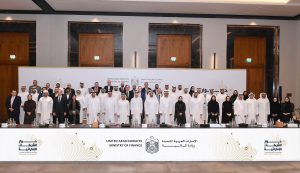
Representatives from the Ministries of Finance, Economy, Industry, and Advanced Technology and the Federal Authority for Identity, Citizenship, Customs, & Port Security participated in the presentations during the sessions.

The dialogue aims to strengthen communication between the Ministry of Finance and officials from national companies operating in GCC countries, raise awareness of the importance of GCC economic integration, and share experiences and updates on the progress of the Customs Union and Gulf Common Market. 

The sessions also focused on outlining future steps for implementing these initiatives, contributing to achieving full economic integration.

Driving Development

HE Mohamed bin Hadi Al Hussaini stated: “This dialogue reflects the Ministry of Finance’s ongoing efforts to open new avenues for cooperation and expand partnerships with all relevant stakeholders, supporting the Gulf economic integration.

“Through its role in the joint GCC economic framework, the Ministry firmly believes that economic and financial integration among the GCC countries is a key pillar for achieving shared progress and prosperity.

As part of our work under the Unified Economic Agreement, we are committed to advancing the GCC’s vision of strengthening the Gulf Common Market, which provides a valuable opportunity to drive economic development across the GCC countries,” Al Hussaini said. 

Combined efforts

His Excellency added: “The Ministry of Finance will spare no effort to provide a transparent and open platform for dialogue, where economic and financial issues of mutual interest can be discussed, and constructive ideas and initiatives can be shared.”

“In today’s rapidly evolving economic landscape, it is more important than ever before that we join efforts and work collaboratively. National companies operating within the GCC play a pivotal role in driving economic development, showcasing the strength and diversity of our economies through joint initiatives, building a robust economic infrastructure, and diversifying income sources.”

Al Hussaini emphasised that highlighting the successes of joint GCC economic efforts, exploring future cooperation opportunities, and supporting national companies in the GCC to achieve their ambitious goals are key steps toward deeper integration in various economic sectors.

He also noted that the Customs Union and Gulf Common Market, which are built on the principles of joint economic cooperation, offer national companies and investors significant opportunities to expand their operations and benefit from enhanced economic and financial integration.

Key discussions 

The event commenced with a presentation by the Ministry outlining the process of Gulf economic cooperation and the various stages of economic integration. This journey began with the signing of the economic agreement, progressing through the stages of free trade and customs union, leading to the establishment of the Gulf Common Market.

The presentation also highlighted key projects currently being followed up on within the framework of the Financial and Economic Cooperation Committee, as well as decisions made at the GCC level related to the customs union and Gulf Common Market. 

Discussions also tounched on completing the remaining steps to fully establish the customs union and implementing the Gulf Common Market’s tracks according to a specified timeline.

Additionally, the dialogue featured a detailed presentation on the Gulf Customs Union, highlighting the progress of the Customs Union Authority, the decisions made by its Board of Directors, and the latest developments on 20 projects necessary for establishing the Customs Union, with 18 currently underway and an average completion rate of 67%.

Key projects include the implementation of a unified detailed list for the description and coding of goods, the adoption of unified customs procedures for security and safety at all primary entry points, the creation of a customs data model aligned with World Customs Organisation standards, and the establishment of uniform information collection standards across GCC countries.

Additionally, efforts are being made to develop a unified mechanism for the movement of goods, standardise the list of restricted and prohibited items, harmonise non-tariff restrictions across GCC countries, and agree on a temporary mechanism for handling national goods until a unified tariff and trade policies are established within the Customs Union.

The dialogue also addressed various challenges facing the GCC Common Market, such as differences in economic regulations and legislation between member states, and the need to unify monetary and financial policies to achieve a more integrated market. Discussions highlighted the importance of harmonising non-tariff restrictions and agreeing on a temporary mechanism for national goods.

Furthermore, participants stressed the need to enhance transparency and facilitate the movement of capital and goods between GCC countries, which would help create an attractive investment environment for companies and investors across the region.

Private sector role

The event addressed the private sector’s role in advancing economic integration among GCC countries, emphasising that the private sector can serve as a powerful driver of economic growth by investing in infrastructure projects, fostering innovation, and launching entrepreneurial initiatives that boost the competitiveness of GCC economies.

Speakers highlighted the importance of strengthening public-private partnerships to achieve the strategic objectives of the GCC Common Market. This can be done by removing trade barriers and facilitating regular economic dialogues to share experiences and best practices across GCC member states.


Saudi Film Confex Returns for Its Second Edition This October

Saudi Film Confex Returns for Its Second Edition This October

The Saudi Film Commission will launch the second edition of Saudi Film Confex from October 9-12 in Riyadh. The event will be held under the patronage of His Highness Prince Badr bin Abdullah bin Farhan, Minister of Culture and Chairman of the Board of Directors of the Film Commission.

The event will bring together a group of specialists, decision-makers, industry leaders, and both Arab and international producers to strengthen and advance the film industry in Saudi Arabia. It also aims to align with Saudi Vision 2030 by enhancing investment and partnership opportunities within the sector. It seeks to create a vibrant future for the film and arts industry in the Kingdom by uniting all aspects of the film value chain, including production companies, technology providers, and more. Saudi Film Confex will provide opportunities for filming and production, build connections with global entities, enhance the industry’s infrastructure, support startups, and initiate innovative projects that add significant value.

Over the course of four days, Saudi Film Confex will feature 30 engaging panel discussions and workshops that delve into critical topics such as film financing and industry regulation. The event will include an exhibition featuring over 130 local, regional, and international entities specializing in production, smart studio construction, and cinematic technologies, highlighting the latest opportunities and innovations in the industry. Additional activities will enrich attendees’ experiences, highlighting various essential facets of the film industry.

The second edition of Saudi Film Confex 2024 builds on the success of the previous edition, reflecting the Film Commission’s ongoing commitment to emphasizing the economic significance of the expanding film industry in Saudi Arabia. The event seeks to attract global filmmakers and producers, encouraging an exchange of expertise with their Saudi counterparts to advance the local industry and strengthen its presence on the global cinematic stage. This initiative aligns with the ambitious cultural and artistic objectives set forth in Vision 2030.

Digital Cooperation Organization launches Digital Economy Navigator to bridge the digital economy gap

Digital Cooperation Organization launches Digital Economy Navigator to bridge the digital economy gap in countries worldwide

The Digital Cooperation Organization (DCO), a global multilateral organization committed to enabling digital prosperity for all by accelerating the inclusive growth of the digital economy, has launched its inaugural Digital Economy Navigator (DEN) that enables countries to better navigate the paths to digital economy maturity, find opportunities for growth, benchmark progress, and bridge the gap in digital economy maturity. The DEN was unveiled at the SDG Digital 2024, held during the 79th Session of the United Nations General Assembly in New York, from September 10 to September 27.

Drawing upon officially disseminated statistics, secondary data, and unique proprietary data from a DCO large survey, the DEN is a unifying framework that addresses digital economy maturity across 50 countries, including the DCO Member States. The framework provides a platform for nations, stakeholders, and decision-makers to harmonize efforts in advancing the global digital economy, enabling accessibility, sustainability, and shared prosperity across borders.

The Navigator evaluates the extent to which the factors contribute to economic prosperity, sustainability, and enhanced quality of life for people. This provides a common understanding for different stakeholder groups to work together in developing digital economy strategies to bridge gaps and allows for progress to be tracked over time.

Deemah AlYahya, Secretary-General of the DCO, said: “The Digital Economy Navigator aims to enhance accessibility, sustainability, and economic prosperity, ensuring that countries are not just keeping pace but leading in the digital era. As the first global framework to comprehensively address digital economy maturity from a user-centric perspective, DEN plays a pivotal role in advancing the Digital Cooperation Organization’s mission of supporting evidence-based policies and impactful outcomes in the digital economy. By providing reliable and detailed data, insights into current trends and emerging technologies, and strategic foresight into future challenges, DEN equips countries to achieve higher levels of prosperity, inclusion, and sustainability. We at the DCO are committed to empowering stakeholders with the knowledge they need to navigate and thrive in the ever-evolving digital landscape”.

The DEN holds relevance for policymakers, business executives, and other experts in aspects of the digital economy. Decision-makers are equipped with the research, data, and analysis necessary to cultivate a more inclusive digital economy and society, enhance digital innovation, spur job creation, accelerate GDP growth, amplify sustainability through digital technologies, and enhance overall wellbeing.

Uniquely among global tools, the DEN assesses the digital economy through the lens of three intersecting dimensions: Digital Enablers, Digital Business, and Digital Society. Within the three dimensions, 10 pillars synthesize and summarize key aspects of countries’ digital economy and use of digital technology application from 102 indicators gathered from respected secondary data sources, as well as primary data from a novel survey of more than 27,000 people across the 50 countries.

The DEN introduces a comprehensive maturity classification system with five categories based on pillars’ scores from 0 to 100, that can be used by stakeholders to better target and focus initiatives to drive digital advancement and innovation in their quest for sustainable and inclusive growth of their digital economy.

The DEN reveals a diverse picture of maturity across regions. North America for example leads in digital innovation, followed by ‘Europe and Central Asia’ and ‘East Asia and Pacific’. South Asia leads in digital work and training, followed by the Middle East and North Africa region. The ‘Sub-Saharan Africa’ and ‘Latin America and the Caribbean’ regions are advanced in the Digital education and health services. This pillar particularly “Digital for education and health” demonstrate substantial global maturity, with moderate variability in scores indicating a trend toward global convergence.

Audiences can access the DEN report, infographic, methodology, and data in Excel format by visiting the DEN online platform at https://den.dco.org/. The report provides an in-depth analysis of digital economy maturity from multiple perspectives. Additionally, users have the option to download the report for offline access.

The DEN will continue to evolve over time to capture the rapidly changing nature of the digital economy. While DEN’s overall objective will remain in future editions, technologies and applications will evolve and be measured by how they contribute to the digital economy.

Qalaa Delivers Strong 1Q24 Results, Net Profit Up 45% YoY to EGP 7.2 Billion

Qalaa Delivers Strong 1Q24 Results, Net Profit Up 45% YoY to EGP 7.2 Billion

Qalaa Holdings, a leader in energy and infrastructure (CCAP.CA on the Egyptian Exchange), released today its consolidated financial results for the three-month period ending 31 March 2024. During the quarter, Qalaa recorded revenue of EGP 37.6 billion, a 45% y-o-y expansion, mainly driven by ERC’s USD-denominated revenue, and was further boosted by broad-based growth across most subsidiaries. On the profitability front, the Group’s EBITDA stood at EGP 7.7 billion, down from the EGP 9.7 billion reported in 1Q23. Meanwhile, net income reached EGP 7.2 billion compared to the EGP 73.0 million achieved during the same period last year. 1Q24 operating profitability was down mainly because of the normalized margins at ERC, as well as the negative impact of the war in Sudan on the operations of Al Takamol Cement. Meanwhile, the year-on-year increase in the Group’s bottom-line was a result of the substantial gains associated with the FHI settlement.

Excluding ERC, Qalaa’s 1Q24 revenue rose by 26% y-o-y to EGP 3.2 billion, driven by strong performances across most subsidiaries. ASEC Holdings recorded revenue of EGP 1.1 billion in 1Q24, a 10% y-o-y decline owing to the negative impact of the war in Sudan on the operations of its subsidiary Al Takamol Cement. Meanwhile, the rest of ASEC Holdings’ subsidiaries witnessed remarkable growth at both the revenue and profitability levels.

Dina Farms Holding Company recorded a 79% y-o-y increase in revenue to EGP 734.0 million in 1Q24, driven by improved operations at Dina Farms, as well as ICDP’s revenue benefiting from an uptick in sales volumes combined with higher selling prices and new product launches. In 1Q24, ASCOM recorded a 53% y-o-y increase in revenue to EGP 760.0 million, as the improved performance of ASCOM’s two largest USD-denominated revenue generators: ACCM and GlassRock was further augmented by the EGP devaluation.

CCTO’s transportation and logistics business delivered a 25% y-o-y revenue increase to EGP 163.4 million, on the back of improvements in the coal storage service of its Egyptian arm NRPMC. Finally, TAQA Arabia’s revenue grew 22% y-o-y to EGP 3.6 billion in 1Q24. Revenue growth for the quarter was primarily driven by a strong performance at TAQA Gas, fueled by an expansion in CNG volume sold due to additional CNG stations becoming operational, and further boosted by the company’s new operations in Africa, which have recently come online. Positive contributions from foreign currency-linked power generation prices and the implementation of new photovoltaic projects under TAQA Power, in addition to increases in fuel and lube prices and volumes at TAQA Petroleum, further supported growth. TAQA Arabia is accounted for as an investment in associate using the equity method and revenues are not included in Qalaa’s consolidated revenues.

“I am proud of the strong performance reported by Qalaa during the first quarter of the year, which saw the Group deliver impressive top- and bottom-line growth,” said Qalaa Holding Chairman and Founder Ahmed Heikal. “During the quarter, Qalaa’s revenue expanded by 45% y-o-y, with top-line growth coming largely on the back of the solid results achieved at the Egyptian Refining Company, and further supported by broad-based growth across most subsidiaries. Additionally, despite the year-on-year decline in EBITDA witnessed during the quarter, Qalaa achieved an exponential year-on-year increase in its bottom-line to EGP 7.2 billion during the quarter. Qalaa’s results during 1Q24 are a testament to the Group’s strength and resilience and reflect the considerable efforts undertaken to reduce the Group’s outstanding debts through several settlement and restructuring agreements.”

“Throughout 2023 and during the first half of 2024 we have taken huge strides and concluded a number of agreements aimed at bringing down the Group’s senior debt through various settlement and restructuring agreements. On that front, and with regards to our Egyptian lenders, we have successfully closed an in-kind settlement agreement with a group of four Egyptian banks to which Qalaa was indebted for the settlement of the entirety of Qalaa’s debt. Additionally, we were able to reach a 10-year restructure and settlement plan with another Egyptian bank (AIB), further bolstering our debt settlement and restructuring efforts. As for our debt to foreign lenders, we have established Qalaa Holding Restructuring I Ltd. (QHRI), a company set up by Qalaa’s shareholders for the purpose of purchasing that debt. The purchased debt will be extinguished in the form of a capital increase by Qalaa, where shareholders who purchased a share of Qalaa’s debt will be able to swap their debt for an equity stake in Qalaa. Our continued efforts in bringing down the Group’s debt levels have seen our overall liabilities come down during the quarter, placing Qalaa in a stronger and more favorable financial position,” Heikal added.

“While the domestic economy continues to go through a challenging period, where the difficulties faced at home are further exacerbated by the current state of global macroeconomic uncertainty as well as the armed conflicts taking place around us, Qalaa remains well-positioned to overcome these challenges, thanks to our resilience, flexibility, and efficiency, which are ingrained into the core of our DNA. Additionally, and despite the challenges, Egypt remains an attractive destination for both local and regional investors, and I am confident that the country’s long-term economic prospects remain positive,” Heikal stated.

“Across the board, our portfolio companies have continued to showcase their strength and resilience, with all but one of our business segments reporting top-line growth during the quarter. Supported by Qalaa’s carefully executed growth strategy, our portfolio companies continue to successfully take advantage of the new macroeconomic dynamics in play, capitalizing on a portfolio structure that shields against devaluation pressures, as well as the increased focus on local manufacturing and import substitution. While the positive performances of our portfolio companies remain dampened by the effects of extenuating events, such as the effect of the war in Sudan on Al-Takamol Cement’s performance, I am positive that once those effects start to wane, the true strength of our portfolio companies will be on full display,” Heikal continued.

“With this quarter setting the tone for what we expect to be a positive year, we will continue pushing ahead with our growth strategies across our platforms over the coming months. Despite the challenging market conditions, I am confident that the Group’s outlook remains bright, and going forward we will continue making small, incremental investments with the aim of continuously enhancing the Group’s overall investments portfolio,” Heikal noted.

“Finally, I would like to reiterate that the true value of Qalaa’s performing assets is masked due to holding them at their historical cost and, in some cases, adjusting for impairments, while not taking into consideration any revaluation adjustments,” Heikal concluded.

“The past period has seen us sign and complete a number of milestone settlement and restructuring transactions with Qalaa’s bank and non-bank creditors,” said Hisham El-Khazindar, Qalaa Holdings Co-Founder and Managing Director. “These include the settlement with FHI, reflected in our 1Q24 results, in addition to the purchase of Qalaa’s foreign bank debt, as well as the settlement and restructuring of its Egyptian bank debt, both of which will be reflected in subsequent quarters. Beyond the short term one-off gains resulting from these settlements, it is important to highlight the significant long term positive impact of deleveraging and derisking Qalaa’s balance sheet.”

“On the operational front, Qalaa kicked off the new year with a strong and promising performance, delivering impressive results across the board,” added El-Khazindar. “Over the past quarter, the Group’s results continued to be heavily driven by ERC’s USD-denominated revenue, which expanded strongly year-on-year despite the decline in refining margins witnessed during the quarter. Similarly, our position as an import substitute and export player across our mining business continued to generate strong consolidated growth, as well as valuable USD proceeds for the Group. Finally, our agriculture and logistics segments have continued to record strong top- and bottom-line growth owing to their robust investment fundamentals.”

“Our performance during the first quarter of the year is a testament to our continued ability to push ahead during difficult times. We look forward to other quarters of gains, growth, and strong results across our operations and markets,” concluded El-Khazindar.