
Home Blog Page 27

NCUB welcomes long-term research budget commitment as foundation for innovation and economic growth
NCUB welcomes long-term research budget commitment as foundation for innovation and economic growth

The National Centre for Universities and Business warmly welcomes today’s announcement from DSIT outlining plans for 10-year research budgets—an important step toward long-term stability and innovation in the UK’s research ecosystem.

Dr Joe Marshall, CEO at NCUB says: “This is something NCUB has long advocated for, recognising that it will allow businesses to plan collaborative work with universities on a more stable footing—unlocking more strategic research planning and driving greater innovation. We’re pleased to see this acknowledged through the inclusion of partnerships and business collaboration as one of the four selection criteria announced today.”

DSIT must now ensure this vital mechanism is backed with the sustained funding it needs to deliver impact.

“As technologies that underpin our economy evolve at pace, it is vital that the UK leads this transformation rather than follows it. We have the foundations to do so—but leadership won’t happen without sustained support. Now is a pivotal moment to invest in both talent and research and development (R&D), the twin pillars of success in a rapidly changing world.”

NCUB acknowledges that the government will be faced with difficult spending decisions in the upcoming review.

Dr Marshall adds: “It is important that government prioritises the kind of investment that will create jobs, stimulate economic growth, and bolster the UK’s competitiveness and global leadership. NCUB economists estimate that every £1 of public investment in research and innovation unlocks between £3.09 and £4.02 in private investment over time”.

“Today’s announcement of 10-year budgets sends a strong signal to business partners that the UK is committed to long-term innovation and progress. It builds confidence for businesses to invest in their own programmes that align with this national mission. However, it is essential that this signal of intent is backed by robust and sustained funding commitments

19th IsDB Global Forum to Explore Digital Transformation and Financial Inclusion in Islamic Finance

19th IsDB Global Forum to Explore Digital Transformation and Financial Inclusion in Islamic Finance

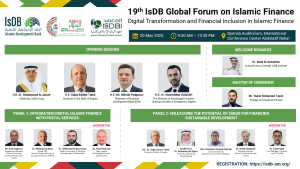
The Islamic Development Bank Institute (IsDBI) is pleased to announce the 19th edition of the IsDB Global Forum on Islamic Finance to be held in Algiers, Algeria, on 20 May 2025, in conjunction with the IsDB Group Annual Meetings.

Organized annually as a flagship side event of the Annual Meetings, this year’s Forum will bring together thought leaders, policymakers, financial experts, and other stakeholders in the Islamic finance industry to deliberate on innovative tools to foster sustainable development.

Under the theme “Digital Transformation and Financial Inclusion in Islamic Finance”, this year’s forum is jointly organized by IsDB Institute, Kuala Lumpur Center of Excellence, Resilience and Climate Action Department, and Treasury Department.

The forum will have keynote speeches by H.E. Dr. Muhammad Al Jasser, Chairman of the IsDB Group; H.E. Salah Eddine Taleb, Governor of the Bank of Algeria; H.E. Mr. Nikolai Podguzov, Chairman of Eurasian Development Bank (EDB); and H.E. Dr. Noureddine Ouadah, Minister of Knowledge Economy, Startups and Micro Enterprises, Algeria.

Subsequently, the Forum will have two sessions. The first is a panel discussion on leveraging the potential of postal services and digital Islamic finance tools. The second session will showcase IsDB’s leadership in sustainable finance and explore the integration of Islamic finance principles in existing sustainable finance frameworks.

GLOBAL SHIPYARDS UNITE TO ACCELERATE MARITIME SUSTAINABILITY

GLOBAL SHIPYARDS UNITE TO ACCELERATE MARITIME SUSTAINABILITY

Drydocks World has co-founded the Global Green Shipyard Alliance (GGSA), an international coalition of leading shipyards committed to accelerating the maritime industry’s sustainability transition. 

The alliance aims to fast-track clean technology adoption, improve environmental performance, and set unified ESG standards across their global operations. 

As a founding member, Drydocks World will play a central role in shaping the alliance’s efforts while strengthening Dubai’s position as a global hub for responsible maritime services.

Drydocks World is one of five founding members of the GGSA, alongside Astilleros Shipyard Group (Spain), BREDO Dry Docks GmbH (Germany), and IMC Shipyard Services Group (Singapore, China, Thailand).  Together, the group spans key maritime hubs across Europe, the Middle East, and Asia. 

The alliance comes at a pivotal time for the maritime sector, which is under growing pressure to decarbonise in line with global climate goals. By creating a platform for knowledge sharing, joint development and scalable innovation, the GGSA seeks to deliver practical solutions, from hybrid propulsion and energy efficient retrofits to digital optimization and emissions compliance.

Captain Rado Antolovic, PhD, CEO of Drydocks World, said: “The formation of the Global Green Shipyard Alliance reflects our shared responsibility to accelerate the maritime industry’s decarbonisation journey. At Drydocks World, we are proud to be a founding member of this important initiative and to collaborate with our global counterparts to advance more sustainable, efficient practices across the sector. The alliance marks a significant step forward for our industry, reinforcing our commitment to delivering long-term environmental value by adopting cleaner technologies and collective innovation.”

Imran Inamdar, Chief Operating Officer at Drydocks World, added:

“Drydocks World has long championed innovation and sustainability in ship repair. Through the Global Green Shipyard Alliance, we have an opportunity to work alongside our peers to drive measurable improvements across shipbuilding and retrofitting practices. This collaboration enables us to raise performance standards, improve operational outcomes and bring practical solutions to market faster. By aligning expertise and sharing lessons learned, we can move from intent to implementation and support the maritime sector’s transition in a way that is both effective and scalable.”

The GSSA marks the third major global coalition championed by DP World. It follows the Zero Emission Port Alliance (ZEPA), which aims to make battery-electric container handling equipment affordable and scalable, and the First Movers Coalition, where members aggregate their purchasing power to accelerate investments in zero-emission solutions.

HC expects the CBE to cut interest rates by 200 bps at its upcoming

HC expects the CBE to cut interest rates by 200 bps at its upcoming

In light of Egypt’s macro economy developments and the geopolitical conditions, HC Securities & Investment expects the CBE to cut interest rates by 200 bps at its upcoming May 22, 2025 meeting.

HC expects the CBE to cut interest rates by 200 bps at its upcoming

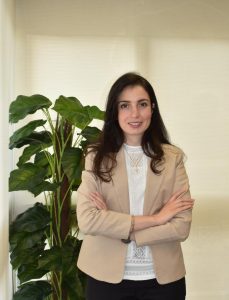
Financials analyst and economist at HC, Heba Monir commented:We see Egypt’s external position stabilizing as per the following indicators: (1) the 2Q24/25 BoP recorded a surplus of USD489m, reversing a deficit of USD638m in 2Q23/24 and USD991m in 1Q24/25, due to mainly reporting positive net errors and omissions of USD1.52bn, although we don’t have clarity on the nature of these net errors and omissions, (2) the banking sector’s net foreign asset (NFA) position widening significantly by USD4.86bn m-o-m to USD15.0bn in March from USD10.2bn in February, reversing a net foreign liability (NFL) position of USD4.19bn a year earlier, which we attribute to Egypt attracting USD2.70bn in foreign direct investments (FDIs) in 1Q25 (a c15% y-o-y increase), receiving from the International Monetary Fund (IMF) the USD1.2bn tranche of the USD8.0bn Extended Fund Facility (EFF), and improved FX liquidity at banks, (3) net international reserves (NIR) increasing by USD387m m-o-m in April to USD48.144bn from USD47.757bn in March, mainly due to a c8% m-o-m increase in gold, and a c12% m-o-m increase in Special Drawing Rights (SDRs), after receiving the IMF’s USD1.2bn tranche of the USD8.0bn EFF and deposits not included in official reserves also increasing by USD554m m-o-m to USD11.619bn in April, (4) Egypt 1-year CDS stabilizing at 354 bps since its record of 379 at the beginning of the year. However, the PMI index dropped further below the 50.0 neutral threshold to 48.5 in April from 49.2 in March on lower consumer spending. With regards to inflation, April’s inflation came close to our estimate of 13.8% y-o-y and 1.5% m-o-m, and also in line with the Reuters poll median estimate of 13.9%, mainly due to the hike in gasoline and diesel prices on 11 April by c12-–15%. As for the T-bills auctions, yields are fluctuating, with the latest 12M T-bills auction of 24.833% reflecting a positive yield of 9.32% on the 12M inflation estimate of 11.8% (after deducting a 15% tax rate for European and US investors), while the estimated average required rate of return by foreign investors on the 12M T-bills declined to 26.3% from 28.0% in the previous month, based on our calculations, considering a lower inflation differential between Egypt and its trading partners. We believe that the attractiveness of the yields on Egyptian treasuries has led to more Carry Trade inflows, which justify the recent 3% EGP appreciation against the USD since Trump and China reached an agreement on a 90-day pause and substantially moved down the tariff levels. From the above, we conclude that the Egyptian economy was able to contain the inflationary pressures (albeit still above the CBE’s targets; however, on a downward trend mainly due to base effect), our carry trade is still attractive, and there is a noticeable improvement in the NFA position of the banking sector, facilitating the FX liquidity and availability. Therefore, we expect the MPC to cut interest rates by 200 bps at its upcoming 22 May meeting, mainly to stimulate economic growth, given a relative stability in the domestic and international economic conditions compared to the previous month.” It is worth mentioning that, in its 17 April meeting, the Monetary Policy Committee (MPC) of the Central Bank of Egypt (CBE) cut the benchmark overnight deposit and lending rates by 225 bps to 25.0% and 26.0%, respectively, for the first time, after it hiked them by 1,900 bps since it started its tightening policy in 2022. Egypt’s annual headline inflation accelerated to 13.9% in April from 13.6% y-o-y in March, according to the Central Agency for Public Mobilization and Statistics (CAPMAS) data. Monthly prices increased 1.3% m-o-m compared to a 1.6% m-o-m increase in March. On the global front, on 7 May, the U.S. Federal Reserve maintained the target range for the federal funds rate at 4.25-4.50%, leaving the total cuts at 100 bps after it hiked rates by 525 bps since it started tightening policy in 2022, while the European Central Bank (ECB) lowered the key ECB interest rates for the deposit facility, the main refinancing operations and the marginal lending facility by 25 bps on 17 April to 2.25%, 2.40% and 2.65%, respectively, bringing total cuts to 175 bps, since it started cutting rates in June 2024 after it hiked rates by 450 bps since it started its tightening policy in 2022.

Google Backs STV’s $100 Million AI Fund to Enable AI-Native Startups in the Middle East & North Africa

Google Backs STV’s $100 Million AI Fund to Enable AI-Native Startups in the Middle East & North Africa

STV announced that Google has backed its new AI Fund. The fund is established to enable the growth of AI-native startups across the Middle East and North Africa. This commitment signals a transformative step towards enabling AI startups at their early stage, and accelerates their growth beyond the region.

The global momentum around artificial intelligence continues to accelerate, with state-of-the-art models and the infrastructure to train them improving at a fast pace. Regional governments and technology companies are actively embracing the opportunity, as efforts to localize AI models and infrastructure have picked up significantly recently.

According to STV research, 1.5% of the region’s VC funding went to AI in 2024 – a stark contrast to 38% in the U.S. and 13% in India. This discrepancy represents a substantial untapped opportunity for innovation, economic growth, and efficiency gains, with immediate AI-driven cost savings in the GCC estimated at $23b+, with the long-term opportunity being orders of magnitude higher.

Ahmad AlNaimi, General Partner at STV, mentions, “We believe that most of the AI value will accrue at the application layer. As such, our AI Fund will focus on investing in ventures that specialize in application-layer AI, localized AI models, and the necessary supporting infrastructure. By combining our regional expertise with Google’s global AI leadership, we will be able to scale regional startups that can compete on a global level.”

Najeeb Jarrar, Regional Marketing Director for Google in the Middle East & Africa, adds, “At Google, we have always been committed to providing access to the AI opportunity for everyone. This includes work like the MENA AI Opportunity Initiative, announced last year, alongside valuable programs such as our flagship Google for Startups programs. Our commitment to the STV AI Fund allows us to continue supporting entrepreneurs, who are building the future of AI in the region.

Forbes Middle East Reveals The Top 100 Arab Family Businesses 2025

Forbes Middle East Reveals The Top 100 Arab Family Businesses 2025

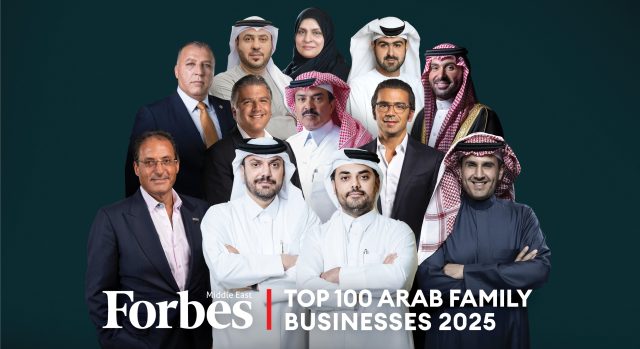
 Forbes Middle East has unveiled its annual ranking of the Top 100 Arab Family Businesses for 2025, spotlighting the region’s most influential dynasties navigating transformation and innovation while preserving generational wealth. To compile this ranking, Forbes Middle East evaluated companies that are owned or managed by Arab families. The selection was based on several factors, including the size and value of their assets, business performance, recent activity, company age and legacy, and the breadth of their geographic and sector diversification.

GCC-based families continue to dominate the Arab family business landscape. This year, Saudi Arabia leads with 33 entries, followed closely by the UAE with 32, and Qatar with eight. Collectively, these countries account for over 73% of the ranking.

The Al Muhaidib Group, headquartered in Saudi Arabia and led by Group Chairman Sulaiman Al Muhaidib, takes the top spot, rising from eighth place last year. The group made headlines in February 2025 when the Public Investment Fund acquired a 30% stake in its subsidiary, Masdar Building Materials. Returning to second place is Abdul Latif Jameel, spearheaded by Chairman Mohammed Abdul Latif Jameel, while the Al-Futtaim, helmed by Vice Chairman and CEO Omar Al Futtaim, rounds out the top three. Notably, Egypt’s Mansour Group remains the only non-GCC-based conglomerate in the top 10.

Two newcomers have entered the top 10 elite cohort this year: Power International Holding and Al Faisal Holding, both based in Qatar, reflecting the growing economic influence of Qatari family businesses.

While many listees were founded before the 1950s—including some with 19th-century origins—others are newer entities born of strategic mergers or spin-offs. Morocco’s O Capital Group and Saudi Arabia’s Sultan Holding Company exemplify this trend, showcasing how legacy families continue to evolve and consolidate to meet modern demands.

Sustainability and innovation are at the heart of several family firms’ strategies. Alghanim Industries introduced electric vehicles to Kuwait, and AW Rostamani Group brought EVs to the UAE, signaling a regional shift toward cleaner energy solutions.

Click here to view the complete list of the Top 100 Arab Family Businesses 2025.

Top 10 Arab Family Businesses In The Middle East 2025

1| Al Muhaidib Group 

Country: Saudi Arabia 

Established: 1946

2| Abdul Latif Jameel

Country: Saudi Arabia 

Established: 1945

3| Al-Futtaim 

Country: U.A.E. 

Established: 1930

4| Mansour Group 

Country: Egypt 

Established: 1952

5| DAMAC Group 

Country: U.A.E.  

Established: 1982

6| Olayan Financing Company (OFC)  

Country: Saudi Arabia 

Established: 1947

7| Majid Al Futtaim-Holding

Country: U.A.E. 

Established: 1992

8| Al Ghurair

Country: U.A.E. 

Established: 1960

9| Al Faisal Holding

Country: Qatar

Established: 1964

10 | Power International Holding (PIH)

Country: Qatar  

Established: 2011

Future Hospitality Summit Saudi Arabia officially opens in Riyadh

Future Hospitality Summit Saudi Arabia officially opens in Riyadh

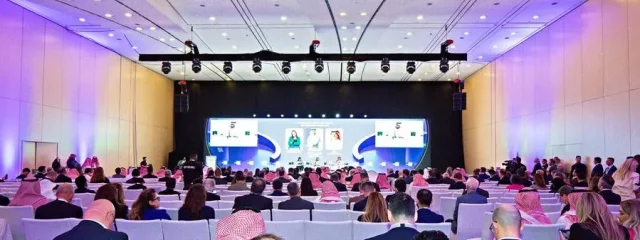
The Future Hospitality Summit (FHS) Saudi Arabia 2025 is officially underway at the Mandarin Oriental Al Faisaliah, Riyadh, taking place from 11-13 May.

Under the theme “Where Vision Shapes Opportunity,”  FHS Saudi Arabia, the Kingdom’s most influential hospitality investment conference, brings together hospitality leaders, investors and decision-makers to discuss hotel performance and development, the outlook for hospitality investment in the Kingdom and the key market trends driving the sector.

The official opening remarks were delivered this morning by His Highness Prince Bandar bin Saud bin Khalid Al Saud, Secretary General, King Faisal Foundation (KFF) and Chairman of the Board of Directors, Al Khozama Investment Company.

“Hospitality in Saudi Arabia is no longer just about infrastructure or service – it’s about identity, culture, talent, and future leadership. It is about creating opportunities for the people of this country to tell their story, and to shape the experience of those who come to discover it.” HH Prince Bandar bin Saud bin Khalid, Secretary General, King Faisal Foundation. 

The address was delivered in the distinguished presence of Mahmoud Abdulhadi, Deputy minister of tourism for destination enablement, Ministry of Tourism of Saudi Arabia, who also took to the stage to discuss “Where Vision Shapes Opportunity”.

The FHS Saudi Arabia program, which covers everything from start-ups to staffing and innovation to investment over three days, features 150+ speakers across 80 sessions in 18 different content tracks, covering key themes including Investment, Financing & Real Estate, Destination Development, Technology & Innovation, Sustainability & ESG, and Luxury, F&B and Experiential Hospitality.

Jonathan Worsley, Chairman of The Bench, organizer of FHS Saudi Arabia, said: “We are delighted to be back at the Mandarin Oriental Al Faisaliah, Riyadh, thanks to our host sponsor Al Khozama Investment and look forward to a very exciting few days of strong debate and valuable insights from the region’s most respected and experienced leaders to help shape the future of our industry.”

Khalid Saud AbuHaimed, Chief Executive Officer, Al Khozama Investment, commented: “Our partnership with FHS reflects our belief in the power of hospitality to drive opportunity and excellence.”

The event kicked off yesterday with the launch of the NextGen: Investment Forum, a brand new, first-of-its-kind event that tackled the key issues and opportunities surrounding education, training, and talent retention in Saudi Arabia’s hospitality industry. With 1 million new tourism jobs predicted by 2030 and 320,000 new hotel rooms, investing in the next generation of leaders in hospitality is fundamental to delivering KSA’s Vision 2030 goals.

The action-packed agenda features a wide variety of session formats from main stage keynotes, panel discussions and exclusive leadership conversations, master classes, roundtable discussions and networking sessions. In addition to the main conference programme a record number of signing ceremonies for new projects and partnerships are set to take place this year, following USD$ 1.1 billion in business opportunities announced at FHS Saudi Arabia in 2024.

WWE® RETURNS TO RIYADH FOR NIGHT OF CHAMPIONS AT KINGDOM ARENA ON SATURDAY, JUNE 28

WWE® RETURNS TO RIYADH FOR NIGHT OF CHAMPIONS AT KINGDOM ARENA ON SATURDAY, JUNE 28

 The General Entertainment Authority, in cooperation with WWE, part of TKO Group Holdings (NYSE: TKO), has announced that Night of Champions will be held at Kingdom Arena in Riyadh, Saudi Arabia, on Saturday, June 28, 2025.

Additionally, Friday Night SmackDown will emanate from Kingdom Arena the night before on Friday, June 27. This marks the first time SmackDown will be held in Saudi Arabia’s capital. 

Friday Night SmackDown airs on USA Network and Night of Champions will stream on Peacock in the United States. Both will stream live in Saudi Arabia, and in most markets around the world, on Netflix. Information regarding general ticket onsale and further event updates will be available in the coming weeks. 

Over 40% of UK universities in deficit, sparking warnings of closures and cuts to vital economic partnerships

Over 40% of UK universities in deficit, sparking warnings of closures and cuts to vital economic partnerships

The Office for Students (OfS) today reveals that financial pressures continue to mount across UK universities, with more than 40% now operating in deficit. The new report, which examines the sector’s fiscal outlook for 2024–25, outlines serious challenges that threaten the long-term viability of institutions.

The National Centre for Universities and Business (NCUB) has previously raised concerns about the risks now confirmed in the OfS report. Today, NCUB is calling for urgent action to develop a sustainable funding solution to protect the future of the sector.

Dr Joe Marshall, Chief Executive of NCUB, commented:

“Universities play a pivotal role in driving economic growth by connecting new knowledge and ideas with businesses that can turn them into new products and services. They ensure graduates are equipped with the skills to power innovation needed to drive economic growth. These outcomes require deliberate investment in time, relationships and infrastructure – they don’t happen by accident.”

Recent NCUB analysis of university-business collaboration data shows a significant drop in the value of interactions, particularly with SMEs. Faced with mounting financial pressures, universities may be forced to reduce collaboration activities such as consultancy and contract research – precisely the types of partnerships that underpin the UK’s ambitions as a global innovation leader.

Dr Marshall added:

“Forcing universities into short-term cost-cutting measures, as highlighted by the OfS, without regard for their broader economic contribution, risks irreparably damaging their ability to support national growth. This would be a grave mistake for any government committed to economic progress.”

Mubadala Investment Company Reports 2024 Financial Results

Mubadala Investment Company Reports 2024 Financial Results

Mubadala Investment Company (“Mubadala”), the Abu Dhabi–based sovereign investor, today reported strong performance in its 2024 financial results, reinforcing the focus and resilience of its strategy. Assets under management grew 9.1% year-on-year to AED 1.2 trillion, with annualized returns of 10.1% over five years. 

This year marked two decades of disciplined financial performance as an investor central to the UAE’s long-term competitiveness. Our 2024 results and portfolio growth reflect Mubadala’s focused and resilient strategy, with risk-adjusted returns in sectors where we have conviction,” said Khaldoon Khalifa Al Mubarak, Managing Director and Group CEO.  “Our portfolio has been constructed to navigate market cycles and scale future-focused sectors—from AI and clean energy to life sciences, semiconductors, and advanced manufacturing—all aligned with our national priorities.

Al Mubarak further commented: “A highlight of 2024 was the creation of MGX by the Artificial Intelligence and Advanced Technology Council – the new AI investment champion for Abu Dhabi – with G42 and Mubadala as co-founding partners.

A growing number of best-in-class investors also continued to partner with Mubadala across key geographies and sectors, reflecting confidence in our approach and long-term strategy. We will work to deepen these partnerships, invest in advancing innovation and create new entities in Abu Dhabi and around the world.”

Key Financial Highlights: 

Mubadala’s 2024 results underscore its continued success as a trusted guardian of the nation’s wealth:

  • Delivered a five-year rate of return of 10.1%
  • Assets under management grew 9.1% year-over-year to AED 1.2 trillion
  • Capital deployed grew 33.7% year-over-year to AED 119 billion
  • Proceeds, including monetizations, grew 10% year-over-year to AED 109 billion
  • Portfolio mix remained broadly consistent year-over-year: 40% in private equity, 23% in public markets, and 17% in infrastructure and real estate  
  • Raised AED 30.5 billion through a range of capital market instruments, including:
  • The world’s first AA-rated sovereign Sukuk
  • A bond with the tightest credit spread ever issued in emerging markets
  • Mubadala’s first dirham-denominated global Sukuk
  • The first Euro-denominated 6- and 7-year corporate facilities in the EMEA region

“Mubadala’s 10.1% return over the last five years reflects our disciplined capital allocation strategy, resilient execution and consistent focus on long-term value creation,” said Carlos Obeid, Group Chief Financial Officer. 

We continue to grow and diversify across sectors and geographies, supported by a strong balance sheet, a low cost of debt, and a conservative gearing ratio of 7.8%, which positions us well for future investments.”

UAE Value Creation Highlights:

In 2024, Mubadala continued to be a key driver of innovation, economic diversification, and job creation in the UAE, reinforcing the country’s position as a global hub for capital and future-focused industries.

  • The establishment of MGX, alongside G42, was transformational for the UAE’s emergence as a global leader in artificial intelligence and advanced technologies.
  • The creation of Space42, the MENA region’s largest publicly listed space technology company, formed through the merger of Yahsat and Bayanat.
  • Mubadala supported the growth of the life sciences industry in the UAE through acquisitions along the value chain focusing on manufacturing and distribution to support national drug security and address the global need for essential medicines.
  • Emirates Global Aluminium (EGA) expanded its global aluminum recycling capacity to 140,000 tonnes, with another 225,000 tonnes under construction, through the acquisition of 80% of Spectro Alloys Corporation in the United States, the acquisition of Leichtmetall in Europe and the ongoing development of the UAE’s largest recycling plant.
  • Mubadala and Aldar extended their long-standing strategic partnership to support the sustainable economic growth and transformation of Abu Dhabi by developing and managing joint ventures in prime residential, commercial, retail and logistics assets with a combined value of more than AED 30 billion (US$8.2 billion).

Global Portfolio Highlights:

Mubadala’s portfolio continued to expand across North America, Europe, and Asia, guided by long-term investment horizons and aligned with global growth trends and Abu Dhabi’s economic vision.

  • Operating as Mubadala’s indirect investments arm and working alongside the best-in-class asset managers globally, Abu Dhabi Investment Council (ADIC) continued to invest through funds and co-investments that supported the diversification of our portfolio.
  • Mubadala Capital, now managing US$30 billion (AED 110.2 billion), two-thirds on behalf of global investors, grew its international footprint by acquiring Fortress Investment Group and establishing a US$1 billion (AED 3.6 billion) partnership with Silver Rock Financial.
  • Mubadala Capital closed Private Equity Fund IV with total commitments of US$3.1 billion (AED 11.4 billion), surpassing its original target by more than US$1 billion (AED 3.6 billion).
  • Mubadala’s private credit portfolio grew to US$20 billion (AED 73.5 billion), supported by deep, trusted partnerships with institutions including Apollo, Ares, Carlyle, Goldman Sachs, and KKR.
  • Masdar, the UAE’s clean energy champion, doubled its portfolio capacity during 2024 from 16.5 gigawatts to 32.6 gigawatts, including through a partnership with Greece’s TERNA to develop one of Europe’s most ambitious renewable energy projects, pioneering 3 gigawatts of clean energy capacity and supporting the EU’s energy transition.
  • A significant investment was made in Manipal Health Enterprises, one of India’s largest multi-specialty hospital networks.
  • A strategic investment in Zelis, a leading U.S. healthcare payments platform, reinforced Mubadala’s commitment to technology-driven businesses transforming essential services.
  • Mubadala made a cornerstone investment in PAG REN I, PAG’s Asia-Pacific renewable energy platform—its first renewable energy investment in Japan.
  • MGX co-led the US$30 billion (AED 110.2 billion) AI Infrastructure Partnership alongside Microsoft, BlackRock, GIP, NVIDIA and xAI and invested in companies such as OpenAI, Anthropic, and Databricks.

Financial Reporting

Mubadala focuses on long-term value creation and, in line with its sovereign investment mandate, reports multi-year performance metrics that reflect the nature of its strategy. Since 2021 the company has not disclosed annual financial figures such as revenue or net income but has disclosed its rolling 5-year IRR and, in 2024, has begun publishing its 10-year rolling IRR which in 2024 was 8.7%.

The Annual Review 2024 can be viewed here.