
Home Blog Page 25

DHL Group to Invest more than EUR 500 million in Fast-Growing Markets in the Middle East
DHL Group to Invest more than EUR 500 million in Fast-Growing Markets in the Middle East

DHL Group (“DHL”), the world’s leading logistics provider, has announced plans to invest more than EUR 500 million in the Middle East, with a strategic focus on the rapidly expanding Gulf markets of Saudi Arabia (KSA) and the United Arab Emirates (UAE). This investment, set to take place between 2024 and 2030, underscores DHL’s commitment to the region and its importance for the future of global trade. DHL Group’s Strategy 2030, launched in 2024, prioritizes growth regions and geographic tailwinds generated by shifts in global trade. 

The investment spans all four DHL divisions – DHL Express, DHL Global Forwarding, DHL Supply Chain, and DHL eCommerce – and will significantly strengthen the region’s logistics backbone.  By enhancing infrastructure, expanding networks and capacity, and elevating service capabilities, DHL aims to empower businesses operating across and with the Middle East to capitalize on growth opportunities from trade, ensuring support and resilience for customers as they navigate evolving market demands. The company’s divisions provide a broad portfolio of logistics and transportation services to customers in the Middle East, including express parcel delivery, air, ocean and overland freight, warehousing, fulfilment and distribution, customs brokerage and specialized operations for sectors such as life sciences, healthcare, e-commerce and battery logistics. 

John Pearson, CEO of DHL Express

“The region of the Gulf Cooperation Council (GCC) is rapidly emerging as a global logistics and innovation hub,” said John Pearson, CEO of DHL Express. “Our investment reflects the region’s increasing strategic importance in connecting Asia, Europe, and Africa, and our commitment to supporting its transformation into a catalyst for regional and global trade. DHL Express is seeing dynamic growth and export potential in the region’s e-commerce sector, for example, which is providing opportunities for entrepreneurs and smaller businesses to expand their offering to global markets.” 


Supporting FDI, exports and building supply chain resilience 

The Middle East is emerging as a vital trade hub, facilitating commerce between Asia, Europe, and the US while serving as a gateway to Africa. The region is witnessing growth not only due to attracting investments from multinationals expanding their operations but also because Gulf- and Middle East-based businesses are growing and increasing their exports. DHL’s services, the local and global expertise of its team, and the flexibility offered by the company’s extensive transportation and warehousing network and digital platforms, automation and technologies help businesses build supply chain resilience at a time of heightened volatility and uncertainty in global trade. 

Hendrik Venter, CEO of DHL Supply Chain, Europe, Middle East & Africa,

Hendrik Venter, CEO of DHL Supply Chain, Europe, Middle East & Africa, added, “DHL Supply Chain has actively expanded in Saudi Arabia and UAE in recent years, recognizing the positive economic development, the increasing maturity and sophistication of supply chain operations in the region and the growing demand for specialized, outsourced logistics support. With a strong focus on the energy sector, life sciences, healthcare, and technology, we are poised to take advantage of our contract logistics expertise to meet the unique needs of our customers and drive innovation in these critical areas.”


Amadou Diallo, CEO of DHL Global Forwarding, Middle East & Africa

Amadou Diallo, CEO of DHL Global Forwarding, Middle East & Africa, remarked, “This investment underscores our confidence in the Middle East’s economic trajectory and our continued commitment to be ahead of the curve in digital capabilities and sustainable transportation for our customers. We also consistently aim to find entrepreneurial freight forwarding solutions that build supply chain resilience, keep their goods flowing and help them to uncover growth opportunities in a world that is characterized by uncertainty and volatility. By expanding our operations, we will be even better positioned to support our clients in navigating the complexities of international trade and logistics.” 

DHL Group recognizes the growing opportunities in the energy sector, encompassing traditional oil and gas as well as renewables and electrification. The company also sees potential in the life sciences and healthcare markets, alongside the burgeoning e-commerce landscape. For example, The Kingdom of Saudi Arabia (KSA) is experiencing a strong inbound market for B2C, especially with high-end goods, driven by ongoing tourism initiatives and events. 

Targeted investments in quality, capacity and efficiency 

The investments will focus on the following areas across DHL’s business units: 

– DHL Express: Investments will be made in hub and gateway facilities, as well as enhancing aviation capacity to improve service efficiency and delivery speed. 

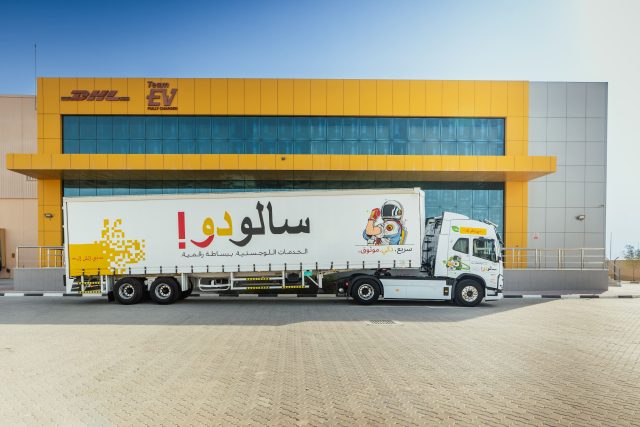
– DHL Global Forwarding: The company will expand its overall presence in the region, invest in its fleet – including electric trucks – and pursue joint venture initiatives such as the recent joint venture with Etihad Rail to enhance connectivity and logistics capabilities. 

– DHL Supply Chain: There will be an expansion of the contract logistics offering in both the UAE and KSA, which includes increasing warehousing capacity, upgrading equipment, and integrating advanced technology to optimize operations. 

– DHL eCommerce: The acquisition of the delivery provider AJEX in Saudi Arabia will enhance DHL’s e-commerce capabilities, facilitating better last-mile delivery services in a rapidly growing market. 

DHL is also committed to sustainability, investing in alternative fuel, and electric delivery vehicles, aviation fuels in air freight and biofuels for road and ocean freight, as well as solar energy and clean power for facilities. This commitment ensures that supply chains become more sustainable, and customers achieve their net zero ambitions. This is aligned with the agenda of governments in the region to lead on environmental sustainability.  DHL aims to implement best practices in logistics and innovation, strengthening its longstanding position as a leader and investor in the talent and economic potential of the Middle East.

WHO calls for urgent protection of Nasser Medical Complex and Al-Amal Hospital in the Gaza Strip

WHO calls for urgent protection of Nasser Medical Complex and Al-Amal Hospital in the Gaza Strip

WHO warns that the Gaza Strip’s health system is collapsing, with Nasser Medical Complex, the most important referral hospital left in Gaza, and Al-Amal Hospital at risk of becoming non-functional. There are already no hospitals functioning in the north of Gaza.

Nasser and Amal are the last two functioning public hospitals in Khan Younis, where currently most of the population is living. Without them, people will lose access to critical health services.

While these hospitals have not received orders to evacuate patients or staff, they lie within or just outside the evacuation zone announced on 2 June. Israeli authorities have informed the Ministry of Health that access routes leading to both hospitals will be obstructed. As a result, safe access for new patients and staff will be difficult, if not impossible. If the situation further deteriorates, both hospitals are at high risk of becoming non-functional, due to movement restrictions, insecurity, and the inability of WHO and partners to resupply or transfer patients.

Nasser and Al Amal hospitals are operating above their capacity, while people with life-threatening injuries continue to arrive to seek urgent care amid a dire shortage of essential medicines and medical supplies. The hospitals going out of service would have dire consequences for patients in need of surgical care, intensive care, blood bank and transfusion services, cancer care, and dialysis.

Losing the two hospitals would cut 490 beds, reducing the Gaza Strip’s overall hospital bed availability to less than 1400 hospital beds (40% less hospital beds available in the Gaza Strip than before the start of the conflict), for the entire population of 2 million people.

The relentless and systematic decimation of hospitals in Gaza has been going on for too long. It must end immediately. For over 20 months, health workers, WHO, and partners have managed to keep health services partly running despite extreme conditions. But repeated attacks, escalating hostilities, denial of aid, and restricted access have systematically dismantled the health system.

WHO calls for urgent protection of Nasser Medical Complex and Al-Amal Hospital to ensure they remain accessible, functional and safe from attacks and hostilities. Patients seeking refuge and care to save their lives must not risk losing them trying to reach hospitals. Hospitals must never be militarized or targeted.

WHO calls for the delivery of essential medicines and medical supplies into Gaza to be immediately expedited safely and facilitated through all possible routes.

WHO calls for an immediate and lasting ceasefire.

Notes to editors

Only 17 of Gaza’s 36 hospitals are currently partially functional. Of these, just five, including Nasser Medical Complex and Al-Amal Hospital, are major referral facilities, accounting for 75% of all the Gaza Strip’s hospital beds.

Nasser Medical Complex is operating at 180% over bed capacity and Al Amal Hospital is at 100%.

Currently, one national and four international Emergency Medical Teams are deployed at Al-Amal and Nasser hospitals as part of efforts to provide specialized care and strengthen hospital capacity.

Acute shortages of essential medicines and medical supplies are severely disrupting health services in all hospitals, while about 50 WHO trucks of supplies await at Al-Arish and in the West Bank.

EBRD supports Egypt with first private-to-private electricity contracts

EBRD supports Egypt with first private-to-private electricity contracts

Energy market reform is taking a major step forward in Egypt as the government approves the first bilateral power purchase agreements between private generators and consumers. As part of a pilot of the private-to-private (P2P) rules, developed with technical support from the EBRD to the Egyptian Electric Utility and Consumer Protection Regulatory Agency (Egypt ERA) and approved last year, four renewable energy projects with a combined capacity of 400 MW have been approved to contract directly with end-consumers of electricity.

The four approved projects are:

  • KarmSolar, which will develop a 100 MW solar plant to supply electricity to Suez Steel.
  • AMEA Power, which is building a solar facility of the same size to serve BEFAR Group and the Suez Canal Container Terminal.
    • TAQA PV, which will install 100 MW of hybrid capacity (solar and wind) to power operations at Ezz Steel.
    • Enara, developing a hybrid plant to deliver 100 MW to the El Alamein Silicone Products Company and Helwan Fertilizers.

The P2P rules set out the conditions under which generators can use the power grid to sell electricity directly to consumers, a major departure from the existing single-buyer model and a significant step forward in Egypt’s efforts to liberalise its electricity market – a goal set out in the 2015 Electricity Law.

This approach introduces competition into the electricity sector, expands consumer choice and promotes private investments in renewable energy. It also introduces a path for Egyptian businesses, especially those that are energy-intensive and focused on the export market, to sign agreements directly with renewable energy producers that are increasingly required to prove their low carbon product credentials, for example green hydrogen destined for the European market.

Furthermore, given the electricity generation under these contracts will be entirely privately financed, the P2P scheme represents an important route for Egypt to scale up electricity production without the need for government contracts.

Mark Davis, the EBRD’s managing director for the southern and eastern Mediterranean region, said: “This milestone shows how the right regulatory framework can unlock private investment and drive the energy transition. By enabling companies to procure green electricity directly from producers, Egypt is opening new opportunities for industry and enhancing its competitiveness. We are proud to have supported EgyptERA in designing this pioneering scheme and will continue working closely as projects move towards implementation.”

Dr Mohamed Mousa Omran, the chairman of EgyptERA, said: “This pilot marks an important step towards a more competitive electricity market in Egypt. By enabling direct agreements between producers and consumers, we are creating space for the private sector to play a greater role in meeting the growing demand for clean energy in Egypt. This is essential for accelerating the deployment of renewables at scale and achieving our long-term energy goals.”

The EBRD’s technical support is generously funded by the Swiss State Secretariat for Economic Affairs (SECO), a key partner for the Bank in many of its ongoing policy engagements that aim to decarbonise the energy sectors of its countries of operation.

This work is being delivered under the EBRD’s Renewable Energy Programme, which is currently supporting 16 countries in their development of market-based mechanisms to mobilise private investments. To date, activities under this programme have delivered over 8,500 MW of renewable energy capacity being awarded in 8 countries.

Specialized Medical Company Announces the Final Offer Price for its Initial Public Offering

Specialized Medical Company Announces the Final Offer Price for its Initial Public Offering

Specialized Medical Company (“Company” or “SMC”), one of the leading healthcare providers in the Kingdom of Saudi Arabia (“Kingdom”), recognized as a center of excellence delivering comprehensive and integrated healthcare services across a wide range of specialties, announces the successful completion of the book-building process for institutional investors (“Participating Parties”) and the final offer price (the “Final Offer Price”) for its initial public offering (the “IPO” or the “Offering”) on the Main Market of the Saudi Exchange.

The Final Offer Price has been set at SAR 25.00 per share, which is at the top end of the previously announced price range for the IPO, implying a total offering size of around SAR 1,875 million (USD 500 million) and a market capitalization at listing of SAR 6,250 million (USD 1,667 million). The orders recorded during the institutional book-building exceeded SAR 121.3 billion (approximately more than USD 32.4 billion), representing a coverage of 64.7 times.

In line with regulatory requirements, SMC issued a Second Supplementary Prospectus reflecting a shareholder decision to revoke previously distributed interim dividends. Following this, the institutional book-building was reopened exclusively to existing institutional participants, offering them the opportunity to amend or rescind their bids.

SMC received strong level of investor engagement since the publication of the Second Supplementary Prospectus. The deliberate and strategic decision taken by SMC’s shareholders reinforces their confidence in the IPO and their belief in the Company’s long-term value creation potential for both current and future shareholders.

The subscription period for Individual Subscribers will commence on Sunday, 15/06/2025G (corresponding to 19/12/1446H), and ends at 2:00 PM (KSA time) of Monday, 16/06/2025G (corresponding to 20/12/1446H).

Bassam Chahine, Chief Executive Officer of Specialized Medical Company (SMC), commented: “Reaching the top end of the price range is a clear vote of confidence in SMC’s performance, vision, and growth strategy. It marks a significant milestone in our journey from a single day-surgery center to one of Riyadh’s leading private healthcare providers. This IPO sets the stage for our next phase of expansion as we double our capacity, deepen our presence in high-growth areas like Northern Riyadh, and continue to redefine healthcare delivery in the Kingdom.”

HIGHLIGHTS OF THE OFFER

The Company has appointed EFG Hermes KSA and SNB Capital Company (“SNB Capital”) as the joint financial advisors (hereinafter referred to as the “Financial Advisors”), bookrunners (the “Bookrunners”), and underwriters (the “Underwriters”) and appointed SNB Capital as the lead manager (hereinafter referred to as the “Lead Manager”) in respect to the Offering described herein.

The Company has also appointed SNB Capital, SAB Invest, Al Rajhi Capital, BSF Capital, Alinma Investment, Riyad Capital, Al Jazira Capital, Alistithmar Capital, ANB Capital, Derayah Financial Company, Yaqeen Capital, Al Khabeer Capital, Albilad Capital, GIB Capital and Sahm Capital to act as receiving agents (collectively, the “Receiving Agents”) for retail investors.
The Offering will consist of 75,000,000 ordinary shares (the “Offer Shares”), representing 30% of the Company’s total issued share capital.

100% of the Offer Shares have been initially allocated to the Participating Parties that took part in the institutional book building process. In the event that Individual Subscribers subscribe in full for the Offer Shares allocated thereto, the Financial Advisors shall have the right to reduce the number of Offer Shares allocated to Participating Parties to a minimum of sixty million (60,000,000) Offer Shares, representing 80% of the total Offer Shares, provided that such reduction shall not apply to the Cornerstone Investor and the final allocation to the Cornerstone Investor shall be five million eight hundred seventy-five thousand (5,875,000) shares of the Offer Shares (representing 2.35% of the Company’s share capital after the Offering) in all cases. Accordingly, fifty-four million one hundred and twenty-five thousand (54,125,000) shares of the Offer Shares will be allocated to the Participating Parties other than the Offer Shares allocated to the Cornerstone Investor and individual shareholders.

The Company for Cooperative Insurance (Tawuniya) committed to subscribe, as Cornerstone Investor, for 5,875,000 shares of the Offer Shares (representing 2.35% of the Company’s share capital after the Offering). The Company for Cooperative Insurance (Tawuniya) is considered a major investor in the Saudi markets. The Company believes that the contribution of the Company for Cooperative Insurance (Tawuniya) will provide an essential drive for achieving growth and long-term strategic goals.

The Offer Shares will be offered for subscription to individual and institutional investors, including institutional investors outside the United States in accordance with Regulation S under the US Securities Act of 1933G, as amended (“US Securities Act”). The Offering’s net proceeds will be distributed to the Selling Shareholders. The Company will not receive any part of the Offering Proceeds.

The Offer Shares will be listed and traded on the Saudi Exchange’s Main Market following the completion of the Offering and listing formalities with both the Capital Market Authority (CMA) and the Saudi Exchange.

To view the full Prospectus and information on the IPO, please visit www.ipo.smc.com.sa

Forbes Middle East and Beltone Holding to Launch the Top Advisors & Investors Summit in Egypt

Forbes Middle East and Beltone Holding to Launch the Top Advisors & Investors Summit in Egypt

Forbes Middle East, in partnership with Beltone Holding, has announced the launch of the inaugural Top Advisors & Investors Summit, set to take place in Cairo during the second half of 2025.

Held against a backdrop of rapid economic and financial transformation across MENA, the summit is poised to play a pivotal role in redefining investment strategies and channeling capital toward high-growth sectors of the future. The summit will bring together global investors, Beltone’s financial advisers, and top regional companies to explore emerging trends and unlock promising opportunities within a dynamic investment landscape.

Through panel discussions, exclusive interviews, and interactive workshops, the Top Advisors & Investors Summit will serve as a dynamic platform for participants to explore strategies for diversifying investment portfolios, promising Fintech opportunities, and the integration of innovation with traditional investment approaches. Discussions will also spotlight emerging asset classes, the impact of digital transformation, and the growing role of AI in reshaping the business and investment landscape.

“Launching this initiative, in collaboration with Beltone Holding, presents a strategic opportunity for leading economic advisors and investors to gather, exchange insights on evolving market dynamics, and uncover high-potential opportunities across sectors including finance, technology, services, healthcare, real estate, and tourism,” said Khuloud Al Omian, CEO and Editor-in-Chief at Forbes Middle East. “This summit serves as a vital platform for shaping the future of investment across the region.

The summit will carve out a position as a premier platform for shaping the future of investment across MENA. Beyond spotlighting emerging opportunities, it seeks to redefine strategic thinking in a rapidly shifting landscape, where financial innovation, cross-sector collaboration, and long-term foresight are driving more resilient and sustainable investment approaches.

For more details and information about the summit, please visit the website here.

e& enterprise and Exeed Industries team up to fast-track UAE’s Industry 4.0 shift

e& enterprise and Exeed Industries team up to fast-track UAE’s Industry 4.0 shift

e& enterprise, the digital transformation arm of e&, and Exeed Industries, a leading UAE industrial group and a subsidiary of National Holding, have signed a strategic Memorandum of Understanding (MoU), the partnership is a multi-year programme set to accelerate digital transformation across Exeed Industries’ UAE-based factories.

Together, both entities will develop a comprehensive Industry 4.0 roadmap – a strategic plan that guides manufacturers in adopting smart, connected technologies to boost efficiency and competitiveness – underpinned by AI and sustainability. The goal is to strengthen the resilience and global standing of UAE manufacturing.

e& enterprise will lead the development of the Exeed Industries technology blueprint for Industry 4.0 strategy, working closely with each manufacturing unit and the Group. This roadmap will be key in enabling Exeed Industries to access funding opportunities from Abu Dhabi Investment Office through the Smart Manufacturing Accelerator Programme (SMAP), to implement transformative projects at scale.

The scope covers conducting maturity assessments across five Exeed plants, developing tailored smart manufacturing roadmaps, and Deployment of Industrial IoT (IIoT) technologies integrated with AI and GenAI engines, digital twins (which use IIoT data to mirror the real-time performance and condition of physical assets), predictive maintenance and automation. It also includes deploying AI for functions like demand forecasting, quality control, and energy optimisation, as well as integrating ESG-driven platforms to monitor and reduce carbon impact.

Majd Coussa, Acting Chief Revenue Officer, e& enterprise, said: “This partnership represents a model for how we aim to work with forward-looking manufacturers. By combining Exeed’s industrial leadership with our deep expertise in digital transformation, we will co-develop scalable solutions that align with the UAE’s goals for innovation, sustainability and economic diversification.”

Mohammed AlAmeer, Group CEO, Exeed Industries, added: “At Exeed Industries, we are committed to evolving our manufacturing capabilities to meet the demands of a future-ready industrial sector. This MoU with e& enterprise allows us to reimagine our operations through the lens of digital innovation, contributing directly to national goals under Make it in the Emirates.”

As part of the collaboration, e& enterprise will bring its wider climate commitment to the table. After setting ambitious environmental targets for 2030, e& launched its Climate Transition Plan, titled “Ambition to Action”, which sets out a clear roadmap to Net Zero. One of the first companies in the region to publish such a detailed approach, e& is working to decarbonise its operations and support partners like Exeed in embedding sustainable practices across value chains.

Sustainability is embedded in e&’s transformation journey, aligned with national and global priorities such as the UAE Net Zero by 2050 strategic initiative, We The UAE 2031 Vision, and the Sustainable Development Goals. The partnership with Exeed will further strengthen ESG-led manufacturing, with the aim of building resilient, resource-efficient industrial models that are future-fit and climate-aligned.

The collaboration supports the UAE’s broader ambitions to become a global hub for advanced manufacturing, in line with its Industry 4.0 strategy and net zero goals. It will also serve as a replicable framework for other manufacturers in the UAE and the wider region, demonstrating how digital transformation can enhance industrial productivity, energy efficiency and competitiveness.

Dollar could fall 10%, investors to prepare for major shift

Dollar could fall 10%, investors to prepare for major shift


The US dollar could slide by as much as 10% over the next 12 months, according to analysts at deVere Group, one of the world’s largest independent financial advisory and asset management organizations.

The analysis joins a growing chorus of major financial institutions forecasting a deeper downturn for the greenback amid slowing growth, aggressive rate cuts, and global trade disruption.

The US Dollar Index, already down nearly 10% from its February highs, is forecast by deVere to tumble further, potentially hitting levels not seen since the early stages of the pandemic.

The fall, if realised, would mark one of the most significant annual declines in over a decade.

“Investors need to brace for a pronounced decline in the dollar’s value,” said Nigel Green, CEO of deVere Group.

“The combination of a shifting interest rate landscape, intensifying trade headwinds, and the recalibration of global capital flows is likely to weigh heavily on the currency. The US no longer holds the same interest rate advantage it once did, and that gap is only going to widen as cuts accelerate.”

deVere’s projection aligns with recent warnings from top-tier US banks and other international financial institutions, though its 10% forecast is among the most bearish.

The anticipated rate cuts from the Federal Reserve — as much as 175 basis points in total over the next year — are central to the outlook.

“This policy shift is expected to compress yields and erode the dollar’s attractiveness relative to its major peers,” notes Nigel Green.

“While 10-year Treasury yields remain elevated for now, we believe they’re nearing a peak, with a sharp descent on the horizon as the Fed pivots more decisively.”

He continues: “With a slowing domestic economy and growing political unpredictability, especially on the trade front, global investors are increasingly questioning the dollar’s dominance.

“This is a moment of reassessment — not only of US economic resilience but also of the role the dollar plays in the world’s financial architecture.”

Sentiment toward the dollar has already deteriorated markedly. Commodity Futures Trading Commission data show speculative positioning on the dollar remains far from bullish extremes, leaving room for a more aggressive unwind. Meanwhile, a Bloomberg gauge of the currency slipped again on Monday, continuing a trend that reflects a broader rethink of exposure to US-denominated assets.

As the dollar weakens, investors are already pivoting. deVere notes increased demand for traditional safe-haven currencies — including the yen, euro, and Swiss franc — all of which stand to gain as the dollar retreats.

“The winners in this shift will be those who position now,” said Green. “Foreign exchange markets are forward-looking, and many of the tailwinds that propped up the dollar are now becoming headwinds.

“A passive stance could mean missed opportunities — or worse, significant losses.”

For companies and investors with international exposure, this shift is already influencing strategy.

Exporters and multinationals are hedging more actively, while portfolio managers are reassessing allocations to non-dollar assets and emerging markets that could benefit from a weaker US currency.

“The world is watching the US not just for monetary signals but also for stability,” adds Green. “When confidence erodes — as it is now — the consequences extend beyond FX charts. Investors should prepare accordingly.”

He concludes: “The dollar is facing a tougher 12 months ahead, and those who act early will be best placed to seize the inevitable opportunities.

Al Baraka Group Continues Outstanding Performance in Q1 2025 with Net Income Surging by 19% and Total Assets Exceeding USD27 Billion

Al Baraka Group Continues Outstanding Performance in Q1 2025 with Net Income Surging by 19% and Total Assets Exceeding USD27 Billion

Al Baraka Group B.S.C. (c) (“the Group”) continued to achieve strong financial results, recording significant growth in profitability and operational metrics during the first quarter of 2025. The net income attributable to the parent company’s shareholders rose by 19% to reach USD 46 million, compared to USD 39 million in Q1 2024. Basic earnings per share stood at 3.84 US cents in Q1 2025, up from 3.23 US cents in the same quarter of 2024. This substantial improvement is attributed mainly to the growth in financing volumes and business expansion in key markets such as Turkey, Jordan, and Egypt, which positively impacted the Group’s operating income.

The Group also announced a notable increase in total comprehensive income attributable to Al Baraka shareholders, registering profits of USD 34 million by the end of Q1 2025, compared to a loss of USD 60 million during the same period last year. This improvement was primarily due to a reduction in the foreign currency translation reserve.

Additionally, the Group recorded a significant 19% upsurge in total net income, which reached USD 91 million in Q1 2025, up from USD 77 million in the same period of 2024. This was mainly driven by increased profits from financing and investments in the Group’s key banking subsidiaries (“Units”), along with a reduction in provisions despite the continued rise in funding costs.

The transfer of 2024’s net income to retained earnings, combined with the recorded net income for Q1 2025, led to a 2% rise in total equity attributable to the parent company’s shareholders and sukuk holders, reaching USD 1.28 billion by the end of March 2025, compared to USD 1.24 billion as of the end of December 2024. Total equity reached USD 2.03 billion at the end of March 2025, up from USD 2.00 billion in December 2024, marking a 1% increase for the same reasons.

Driven by business growth and an expanding customer base, the Group saw an increase in both financing and deposits, particularly in its main markets. As a result, total assets grew to USD 27.24 billion by the end of March 2025, compared to USD 26.19 billion at the end of 2024, reflecting a 4% growth.

Commenting on these results, Sheikh Abdullah Saleh Kamel, Chairman of the Board, said:

“In the first quarter of 2025 Al Baraka Group successfully built upon the strong financial performance achieved last year. The Group continued to strengthen its presence and expand its market share in the key countries where it operates, remaining vigilant against adverse global economic and financial conditions while steadily advancing business growth, financing, and deposits. This has significantly boosted income and net profits. We shall continue leveraging our strong financial resources and broad network to enhance our business and customer base and maximize investment returns, while remaining committed to serving the communities where we operate.”

Mr. Houssem Ben Haj Amor, Board Member and Group CEO, added:

“Despite the volatile investment climate and uncertainty stemming from regional and global geopolitical and economic developments, the Group and its Units have acquired deep experience in adapting to such conditions. Meanwhile, the Group continues to focus on its core objectives of strengthening financial resilience and increasing returns from financing and investment portfolios through building market confidence in our products and services, and leveraging our banking competencies that continuously work on innovative solutions, which boost our competitiveness. Such innovations include the ‘Trade Finance Platform’ and the ‘Borderless Banking’ initiatives, which we launched last year. We also continue to maintain comprehensive oversight of risks, compliance, and governance controls.

Tires Recycled into New Heat-Resistant Roads for Pilgrims

Tires Recycled into New Heat-Resistant Roads for Pilgrims

Eco-conscious walkways made from recycled tyres offer cooler, softer routes in Mecca

Saudi local authorities inaugurated an expanded, climate-controlled pedestrian walkway to prepare for the Hajj, which starts Wednesday, June 4th. This initiative aims to improve the comfort and accessibility of millions of pilgrims, including those with disabilities. Additionally, environmentalists commend the project for its innovative employment of recycled materials and dedication to sustainable infrastructure in a significant global religious hub.

According to the Roads General Authority, the cooled roads initiative has grown 82% since its launch in 2023. More than 84,000 square metres of roads in Arafat have been resurfaced using heat-reflective and recycled materials that lower surface temperatures by approximately 12°C and reflect 30–40% more sunlight during morning hours. These features help reduce urban heat island effects and provide a cooler, more comfortable experience for pilgrims in peak summer conditions.

A key aspect of the project is the use of rubberised asphalt made from recycled car tyres obtained from local landfills. Saudi Arabia discards more than 23 million used tyres each year. Transforming these tyres into road materials mitigates environmental risks, prevents the release of toxic leachates, and lowers emissions from both incineration and prolonged degradation.

The coverage of flexible rubber surfaces has increased by 33%, now totaling 16,000 square metres. The latest section stretches from Namira Mosque to Arafat Train Station, offering a softer walking surface that enhances comfort and safety, particularly for elderly pilgrims.

Additional features include a green corridor along a 1,200-metre stretch, with tree planting, air-cooling mist systems, and water fountains installed in collaboration with the local charities to improve air quality and heat relief.

A 4,000-metre pedestrian path leading to Mount Arafat has also been completed. It uses the same cooled, low-vibration paving to support individuals with disabilities and their companions.

HE Al Zeyoudi welcomes EU Trade Commissioner Maroš Šefčovič to the UAE for CEPA Talks

HE Al Zeyoudi welcomes EU Trade Commissioner Maroš Šefčovič to the UAE for CEPA Talks

In 2024, non-oil trade between the UAE and the EU reached US$67.6 billion, representing a growth of 3.6% over 2023.

HE Al Zeyoudi: “Our negotiations toward a UAE-EU CEPA is of great importance to both the UAE and the EU and represents an extraordinary opportunity for us both to enhance trade and investment ties that will foster greater collaboration and create mutual benefits and prosperity.”

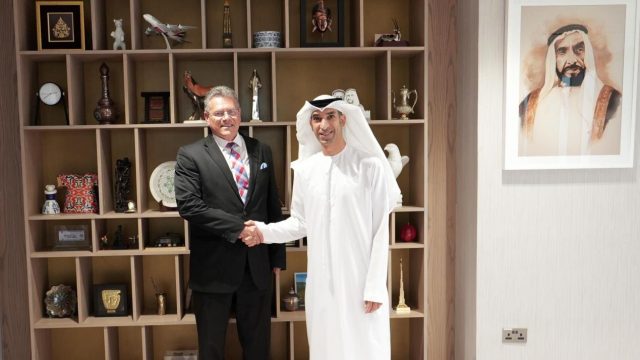
His Excellency Dr. Thani Al Zeyoudi, UAE Minister of State for Foreign Trade, welcomed His Excellency Maroš Šefčovič, EU Commissioner for Trade and Economic Security, to the United Arab Emirates for ongoing talks regarding the Comprehensive Economic Partnership Agreement (CEPA) between the UAE and the EU. The visit also included an investment roundtable with representatives from leading private sector companies aimed at exploring opportunities for increased collaboration and investment flows between the EU and UAE.

The UAE-EU CEPA is poised to be a significant milestone in strengthening economic ties and unlocking new avenues for trade and cooperation. The agreement will pave the way for the removal of trade barriers, enhance market access for goods and services, and stimulate investment in key sectors. By consolidating access to the EU market, the second largest economic bloc in the world, the CEPA will reinforce the UAE’s status as a global trade and logistics hub.

The EU is already one of the UAE’s key trading partners, accounting for 8.3% of non-oil trade. In 2024, non-oil trade between the two reached US$67.6 billion, representing a growth of 3.6% over 2023.

HE Al Zeyoudi emphasized the importance of the CEPA with the EU, stating, “Our negotiations toward a UAE-EU Comprehensive Economic Partnership Agreement is of great importance to both the UAE and the EU and represents an extraordinary opportunity for us both to enhance trade and investment ties that will foster greater collaboration and create mutual benefits and prosperity. By working together, we will strengthen our supply chains, drive innovation, and create jobs that will benefit our communities and economies for many years to come.”

HE Maroš Šefčovič commented: “Europe continues to be a reliable trading partner, which respects the deals it makes. And it is natural to seek to grow our relations with long-standing and trusted partners like the United Arab Emirates. A bilateral FTA would unlock tremendous business opportunities for European and Emirati businesses alike. Our aim is therefore to reach an ambitious deal that is commercially meaningful on both sides – one that brings tangible, lasting benefits, along with predictability, so essential to any successful business. This would add strength to our regional cooperation with the Gulf Cooperation Council countries.”

During the investment roundtable, representatives from the UAE and the European private sectors, engaged in discussions to identify mutual investment opportunities that can drive innovation and sustainable economic development. FDI flows between the UAE and EU are strong and robust, with recent partnerships in data centers in Italy, solar plants in Spain, and neighbourhood redevelopment in Budapest. A UAE-EU CEPA has the potential to unlock further opportunities, including a US$50 billion AI data center deal with France and a US$40 billion commitment in Italy’s energy and defense sectors.

The CEPA program is a key pillar of the UAE’s foreign trade agenda, reflecting the nation’s commitment to open, rules-based trade to drive economic growth and diversify its economy. By enhancing access to global markets and establishing stronger trade and investment flows with partners around the world, the CEPA program has contributed to a record non-oil trade of US$816 billion in 2024, marking a 14.6% increase over 2023.