Home Blog Page 21

Al Baraka Group Reinforce its Performance in H1 2025, with 17% Growth in Net Income to USD 185 Million and Total Assets Surpassing USD 28 Billion

Al Baraka Group Reinforce its Performance in H1 2025, with 17% Growth in Net Income to USD 185 Million and Total Assets Surpassing USD 28 Billion

Al Baraka Group B.S.C. (c) (“the Group”) continued to deliver strong financial performance in Q2 and H1 2025, achieving solid results across profitability, business growth, and financial position indicators.

Net income attributable to the parent company’s shareholders rose by 32% to USD 53 million in Q2 2025, compared to USD 40 million in Q2 2024; while basic earnings per share increased to 2.89 US cents in Q2 2025 from 1.84 US cents in Q2 2024.

This significant improvement was primarily driven by higher financing volumes and business growth in the Group’s key units in Turkey, Jordan, and Egypt, which positively impacted the Group’s operating income.

The Group also reported a 15% increase in total net income, reaching USD 94 million in Q2 2025, compared to USD 82 million in the same period of 2024. This growth was mainly attributed to increased revenues from financing and investments in core markets, despite being partially offset by rising funding costs.

In addition, the Group announced a 39% growth in total comprehensive income attributable to the shareholders of Al Baraka Group, reaching USD 50 million in Q2 2025, compared to USD 36 million in Q2 2024. This was mainly due to higher income from financing and fee and commission income during the period.

As for the Group’s H1 2025 performance, net income attributable to the shareholders of the parent increased by 25% to USD 99 million, up from USD 79 million in the first half of 2024. This reflects continued growth in the Group’s business units, with a focus on enhancing returns from investments and financing, and maintaining asset quality amid rising funding costs. Basic earnings per share reached 6.73 US cents in H1 2025, compared to 5.07 US cents in H1 2024.

Total net income for H1 2025 rose by 17% to USD 185 million, compared to USD 158 million in the same period of the previous year, driven by the same afore-mentioned factors.

Moreover, total comprehensive income attributable to the shareholders of Al Baraka Group reached USD 84 million at the end of H1 2025, compared to a loss of USD 24 million in H1 2024. This improvement was mainly related to foreign currency translation reserves.

As a result of ongoing business expansion and a growing customer base, financing and deposits increased, pushing the Group’s total assets to USD 28.34 billion as of end-June 2025, up from USD 26.19 billion at the end of 2024, reflecting an 8% growth.

The transfer of net income to retained earnings also led to a 5% increase in total equity attributable to the parent’s shareholders and sukuk holders, reaching USD 1.31 billion at the end of June 2025, compared to USD 1.24 billion as of December 2024. Total equity amounted to USD 2.07 billion at the end of June 2025, versus USD 2.00 billion as of December 2024, marking a 4% increase for the same afore-mentioned reasons.

Commenting on the results, Shaikh Abdullah Saleh Kamel, Chairman of the Board of Directors, stated:

“Despite escalating geopolitical challenges and their impact on the regional business environment, we are proud to report exceptional financial results that reflect the strength of our financial position, the quality of our assets, and the diversification of our business across an extensive geographic network. These results underscore the success of our strategy in navigating challenges. We remain committed to implementing all necessary risk-mitigation measures while focusing on expanding our business base, maximizing returns on investments, and contributing responsibly to the communities we serve.”

Mr. Houssem Ben Haj Amor, Board Member and Group CEO, added:

“We are pleased with the solid financial results achieved during H1 2025, which clearly reflect the strength of our financial resources and the depth of our expertise. These factors reinforce our ability to adapt to the economic challenges faced in some of the markets in which we operate. We continue to pursue our strategic priorities focused on strengthening our financial position, enhancing returns from financing and investment portfolios, and increasing our market share, particularly in trade finance activities.”

“As part of our ongoing commitment to enabling our clients to expand in global trade finance markets, we have launched several strategic initiatives that leverage our broad geographic footprint, such as the ‘Trade Finance Platform’ and the ‘Borderless Banking’ initiatives. We also hosted a pioneering virtual event that brought together over 70 suppliers of sport’s goods and sportswear with importers from 13 countries across our international network, further reaffirming our commitment to supporting our clients and expanding their business horizons.

Week Ahead: Markets steady as rate cut bets drive sentiment ahead of Jackson Hole

Week Ahead: Markets steady as rate cut bets drive sentiment ahead of Jackson Hole

By Daniela Sabin Hathorn, senior market analyst at Capital.com

As global investors prepare for the Federal Reserve’s annual Jackson Hole Economic Symposium, market sentiment appears to be shifting in response to evolving macroeconomic data, robust corporate earnings, and speculation over the depth and timing of interest rate cuts.

Equity markets supported by strong earnings and softer data

The equity landscape remains constructive, with indices such as the S&P 500 and Nasdaq (US 100) reaching new highs, while cyclical indices like the Russell 2000 have begun to outperform. This broad-based strength reflects a market narrative focused on a resilient U.S. economy, despite softening macro data and geopolitical noise.

Recent earnings have largely surprised to the upside, reinforcing investor confidence in corporate fundamentals. Meanwhile, economic data—particularly from the labour market—has shown signs of cooling. This combination has meant markets have remained resilient as  on monetary policy easing increase, with investors now pricing in a high probability of a 25 basis point rate cut in September.

Rates expectations: A moving target

Market expectations for Federal Reserve action have been volatile. Earlier in the month, weak labour market data had pushed expectations briefly toward a 50 basis point cut, but hotter-than-expected PPI data quickly reversed this outlook. Now, the base case has normalized to a 25 bps cut, with a smaller portion of the market hedging against no cut at all.

This constant repricing underscores the Fed’s data dependency. Inflation remains sticky in places—potentially exacerbated by tariff pass-through effects—making the upcoming Jackson Hole Symposium a critical moment for policy guidance.

As ever, the key issue remains the Federal Reserve’s reaction function. Markets are now looking for clarity on two fronts:

  1. Will the Fed prioritize labour market support over residual inflation concerns?
  2. How much weight will the central bank place on recent data shifts, particularly weaker employment figures?

Fed Chair Jerome Powell’s speech at Jackson Hole will be instrumental in answering these questions. If Powell maintains a “wait and see” tone, as he has in previous meetings, markets may interpret that as a sign the Fed remains behind the curve. However, should he signal a more dovish shift in response to labour market concerns, this could further fuel the current rally in equities and sustain downward pressure on the U.S. dollar.

Rotation signals a healthy bull market

A notable rotation has emerged in recent sessions. While the tech-heavy Nasdaq has shown some signs of exhaustion, indices like the Dow and Russell 2000 have gained traction, benefiting from their exposure to cyclical and domestic sectors. This rotation is often seen as a hallmark of a healthy bull market, where leadership shifts across sectors rather than collapsing altogether.

The rotation also reflects the repricing of the U.S. rates curve. As expectations of imminent and aggressive rate cuts fade, more economically sensitive areas of the market have come into favour, indicating investor confidence in the underlying strength of the economy.

Dollar outlook and global implications

The dollar has weakened in recent weeks amid narrowing rate differentials and declining U.S. economic exceptionalism. While sticky inflation prints have temporarily steadied the greenback, sentiment is now aligned with the view that rate cuts are imminent and likely to continue through the end of the year.

This undermines the dollar’s strength relative to other currencies and also diminishes its appeal as a safe haven in the current macro environment, particularly given risk appetite has remained resilient in equity markets.

Palm Hills Development.. Positioned for expansion

Palm Hills Development.. Positioned for expansion

HC Brokerage issued their update about Egypt’s real estate sector through shedding the light on Palm Hills Development performance focusing on the company’s strategic decisions.

Mariam Elsaadany, real estate analyst at HC Brokerage commented that: “Strategic business decisions justify a more positive view: PHDC’s expansions extended beyond the Egyptian real estate market with a new focus on the GCC, including the newly announced Abu Dhabi project, along with potential expansions in Saudi Arabia’s real estate, commercial, and educational sectors and Egypt’s educational and hospitality sectors. These new opportunities offer value and act as stock price catalysts, in our view, as the company joins other Egyptian real estate developers in capturing a share of a lucrative GCC market. Additionally, PHDC’s Egyptian real estate business grew significantly with its launch of Hacienda Heneish and Hacienda Waters on the North Coast in 2024, and a management agreement for Jirian on the Nile Delta extension in 2025. Of the company’s EGP151bn of FY24 sales, c63% were generated from the North Coast (EGP95.1bn), with some EGP82.4bn of inventory remaining in the two projects, on our numbers. The success builds on increased demand for the North Coast following the Ras El Hekma investment deal announced in February 2024 and strengthens PHDC’s position as a major North Coast developer. PHDC expanded its hospitality exposure in 2024 to 1,262 rooms by adding around 200 rooms through an agreement with Marriott International to launch the 150-room Ritz Carlton Residences Hotel in West Cairo and increasing its stake in Maccor Hotels to c70% and targets adding 4,000 new rooms over the coming five years. Also, PHDC increased its exposure to Egypt’s education sector with the acquisition of c33% of Taaleem Management Services (TALM EY), diversifying its revenue stream and increasing its recurring income businesses. The company’s announcement to develop a 1.87m sqm plot in Abu Dhabi with Wave Seven triggers a rerating in our view, due to the project’s location, expected selling price, exposure to a USD-pegged currency, and low tax rate. The project directly faces the iconic Saadiyat Island near Yas Island and Al Reem Island and will be executed through PHD North Jubail Property Development Company, a fully owned subsidiary of Palm Hills Developments. Additionally, PHDC’s announced partnership with Saudi Dallah Al-Baraka Holding Company (DBHC) includes establishing a company with a 60%/40% ownership structure to develop several integrated mixed-use urban projects in different regions of the Kingdom is a major step. PHDC also plans to invest around USD300m in Saudi education developments in 2025 with local partners, USD300m in residential and commercial projects, and is working with a local joint venture (JV) to open 15 schools in cities including Riyadh and Jeddah, its CEO said.

“Despite lower affordability in Egypt, we still expect a decent sector performance on North Coast sales, price increases, relaxed payment terms, and regional expansion: We believe developer sales in 2025e will be driven by North Coast sales, and relaxed payment terms, while ventures into the hospitality segment, along with GCC expansions, should bode well for Egyptian real estate players. We expect developers to start reaping the benefits of Ras El Hekma as early as this year with Modon Holding’s announcement of launching the first 12,000-feddan phase of the mega-project. We see little concern of construction cost overruns during the short-medium term, provided limited currency shocks, coupled with significant price increases. A declining interest rate environment should improve real demand and open new opportunities for developers, especially those with ambitious recurring income projects that are capital-intensive. Interest savings should also boost profitability to highly leveraged developers. We expect 2025e deliveries to be somewhat impacted by higher construction costs but remain at healthy levels.” Mariam El Saadany added. 

The real estate analyst concluded:We expect strong real estate cash collections of EGP588bn over our 2Q25–38e forecast horizon: We estimate EGP588bn in collections over 2Q25–38e, including collections from existing receivables, new sales in the launched projects in the North Coast, Alexandria, and Eastern and Western Cairo, capturing sales from Badya, P/X, Hacienda Heneish, Hacienda Waters, Hacienda Blue, PHNC, Bamboo III, among other projects. We forecast total sales of EGP679bn over 2Q25–2032e, including EGP506bn from West Cairo, EGP131bn from the North Coast and Alexandria sales, and EGP41.9bn from East Cairo. We estimate EGP552bn of real-estate revenue recognition over 2Q25–2032e, accounting for the outstanding backlog of EGP68.9bn and new sales from launched projects’ phases, and all of Badya. We assume a total real estate cost recognition of EGP310bn over 2Q25–2032e, implying an average future gross profit margin of c44% for the launched projects. We expect interest rate easing to reflect positively on PHDC’s profitability throughout 2025e, as we forecast interest expense to drop to EGP2.09bn in 2025e from EGP2.31bn in 2024e. Management’s guidance is EGP160m in interest savings for every 100 bps rate cut. Given the declining cost of debt, management could seize the opportunity to increase its leverage; however, given the high sales levels we expect going forward, we expect the high collections to be sufficient to finance construction costs. Accordingly, we expect net debt-to-equity to drop to 0.55x in 2025e from 0.75x in 2024. Given the company’s expansion plans, we expect it to withhold dividends going forward. We expect revenue to grow at a 2025-28e CAGR of c7%, EBITDA at c13%, and net income at c23%.

Saudi Arabia’s Facility Management Sector Poised to Reach USD 52.5 Billion by 2029

Saudi Arabia’s Facility Management Sector Poised to Reach USD 52.5 Billion by 2029

The Middle East Facility Management Association (MEFMA), in collaboration with global research and consulting firm Frost & Sullivan, is set to unveil a new comprehensive white paper that offers deep insight into the current and future outlook of Saudi Arabia’s Facility Management (FM) sector. The launch comes as the Kingdom accelerates its Vision 2030 transformation, highlighting FM’s growing role in shaping sustainable, world-class infrastructure and services.

The white paper will launch during an exclusive online webinar on August 20, and will offer policymakers, developers, and FM professionals early insight into the trends, innovations, and disruptions shaping the future of the industry across Saudi Arabia. Highlights include:

  • Saudi FM market expected to grow to USD 52.5 billion by 2029 from USD 39.4 billion in 2024 at a CAGR of 5.9%
  • USD 54 billion allocated for education in 2025 to improve infrastructure, develop relevant curriculums training teachers, and support for research and innovation
  • USD 2.1 trillion construction pipeline from giga and mega projects including NEOM, Red Sea, Qiddiya, AlUla, Diriyah Gate, Amaala, Al Widyan, and Jabal Omar, set to transform tourism, hospitality, residential, commercial, entertainment, utilities, and other sectors in line with Saudi Vision 2030
  • Expo 2030 expected to significantly boost FM demand.
  • Launch of King Salman International Airport in 2030, targeting up to 120 million passengers, set to drive significant FM demand in KSA across operations, maintenance, and specialized service contracts.
  • Healthcare and education are the leading end-user segments, accounting for nearly 60% of outsourced FM demand
  • Healthcare boom fueled by rising hospital infrastructure needs, with demand projected for over 44,000 new industrial jobs and thousands of additional hospital beds by 2035
  • Increase for outsourced FM services has grown to 37% in 2024 valued at USD 14.3 billion

Jamal Lootah, President of MEFMA, said: “This white paper marks a critical milestone in the development of Saudi Arabia’s facilities management industry, which is playing an increasingly vital role in the success of the Kingdom’s ambitious transformation. As FM becomes more integrated into national infrastructure, sustainability, and service delivery goals, access to accurate, forward-looking insights is essential. This publication reinforces MEFMA’s commitment to providing knowledge-driven content that enables smarter decision-making, promotes sustainable best practices, and aligns closely with the priorities of Vision 2030. Our aim is to empower both public and private sector stakeholders with the strategic foresight needed to plan for long-term impact.”

Eng. Mohannad AlMadhi, MEFMA Board member (KSA) said: “Saudi Arabia’s facilities management sector stands at the heart of the Kingdom’s transformation, underpinning the success of mega projects, urban development, and quality-of-life initiatives. As demand grows in scale and complexity, with all the upcoming PIF led projects, operational excellence is becoming a national imperative. This white paper captures the realities on the ground and charts a path forward that equips industry players with the insights needed to innovate, adapt, and build a world-class FM ecosystem that reflects the ambitions of Vision 2030.”

This report is part of MEFMA’s mission to elevate the facilities management industry through professional education, research, and regional engagement, and is one of several in-depth studies paving the way for MEFMA CONFEX 2025, the region’s flagship FM conference later this year in the UAE.

To join the webinar and gain early access to the report’s findings, register here: https://mefma.org/mevents/mefma-webinar/

Egypt Kuwait Holding Delivers Revenue and Profit Growth in H1 2025, while Strategic Transformation Continues to Gain Pace

Egypt Kuwait Holding Delivers Revenue and Profit Growth in H1 2025, while Strategic Transformation Continues to Gain Pace

Egypt Kuwait Holding Company (EKHO.CA and EKHOA.CA on the Egyptian Exchange and EKHK.KW on Boursa Kuwait), one of the MENA region’s leading investment companies, reported today its consolidated results for the quarter and period ended 30 June 2025.

EKH recorded revenues of USD 397 million in 1H25, up 32% year-on-year (y-o-y), driven by strong top-line performance across the portfolio, reflecting strong operational momentum. Profitability remained healthy, with gross profit and EBITDA margins of 43% and 42%, respectively, supported by robust top-line performance and operational strength across core segments. Net profit came in at USD 101 million, up 1% y-o-y from USD 100 million in 1H24, representing a healthy net profit margin of 26%. The year-on-year comparison is skewed by a one-off FX gain of USD 49 million recorded in 1H24; excluding this, net profit would have more than doubled year-on-year. Net profit attributable to equity holders stabilised at USD 90.4 million. On a quarterly basis, revenues surged by 75% y-o-y and 18% q-o-q to land at USD 215 million in 2Q25. Top-line growth translated into net profit more than doubling y-o-y and rising 57% q-o-q to USD 61.9 million, backed by solid operational performance as well as gains from the ongoing portfolio review and optimization.

Commenting on the Group’s performance and business outlook, EKH Chairman Loay Jassim Al-Kharafi: “Our focus remains on implementing a disciplined and adaptive strategy, one that focuses on diversifying our portfolio across sectors and geographies, while rationalising and rebalancing our asset base to unlock value as well as ensure resilience and sustainable growth.

In Saudi Arabia, we have commenced commercial operations, supplying natural gas to industrial customers while serving the rapidly growing Dammam Industrial City 3. This achievement marks a significant milestone for EKH, positioning us as a contributor to the Kingdom’s industrial base expansion plans and Vision 2030. Meanwhile, our greenfield project in the United Kingdom is nearing financial close, with full details to be disclosed shortly thereafter. The project represents a compelling clean energy opportunity with strong foreign currency earning potential and long-term scalability.

We have also made meaningful progress on our exit strategy from Delta Insurance, with the divestment process moving ahead as planned and anticipated to close in the second half of 2025, pending the necessary regulatory approvals.

We remain on track with our corporate identity transformation, with the Board having resolved to call for a General Assembly meeting to vote on changing the company’s name to “Valmore Holding.” This new identity builds on the success we have achieved as Egypt Kuwait Holding, while aligning our positioning with our future growth plans and international expansion strategy. It reflects our ambition to transform EKH from a leading regional investment platform into a world-class global investment company.

As we look ahead to the remainder of the year, our focus remains on optimising our portfolio to deliver shareholder value, while driving sustainable, long-term growth across our platform.”

Commenting on the Group’s 1H25 results, EKH CEO, Jon Rokk: “We are pleased to report a strong first half of 2025 marked by solid operational performance, growth across key subsidiaries and meaningful progress on our strategic roadmap.

At AlexFert, while feedstock interruptions during 2Q weighed on utilisation, the impact on performance was far softer relative to last year, with double-digit y-o-y growth recorded across both revenue and net profit. At Sprea, management continues to execute on its market share expansion strategy, with 1H25 sales rising 21% y-o-y in USD terms. Meanwhile, Nilewood produced its first MDF wood board in June. With final commissioning underway, we look forward to launching full commercial operations in the fourth quarter. NatEnergy continues to expand gas connections within its concession areas, delivering sustained growth and reinforcing management’s focus on margin-accretive activities. Our upstream asset, ONS, delivered 9% y-o-y revenue growth in 1H25 following the ramp up of production at the two newly commissioned wells.

We also made good progress on our portfolio optimisation plans. The signing of the agreement to manage the sale of Delta Insurance and the subsequent offer made by Wafa Assurance, mark key milestones in our ongoing divestment program. In addition, we continue to unlock value from our balance sheet through monetisation of either non-core, or underperforming assets or investments. To this end, we’ve divested Shield Gas in the UAE during the first quarter and other investments in the second quarter, generating over USD 35 million during 1H25.

As we enter the second half of the year, our focus remains on disciplined strategy execution, portfolio and balance sheet optimisation, and sustainable value creation. In line with this vision, the Board has resolved to call for a General Assembly meeting to vote on amending the company’s name to “Valmore Holding.” This is a significant milestone in our broader corporate identity transformation, aligning our market presence with our ambitions for future growth and international expansion.”

AlexFert booked USD 118 million in revenues in 1H25, reflecting a solid 11% y-o-y increase, driven by a 19% y-o-y increase in export urea prices, which averaged USD396/ton (vs. USD333/ton in 1H24). Both gross profit and EBITDA margins expanded by 2pp y-o-y in 1H25, recording 40% and 47%, respectively. 1H25 net profit came in at USD 40.3 million, translating into a 2pp y-o-y expansion in net profit margin to reach 34% in 1H25.

AlexFert is poised for an improved operational trajectory, with management demonstrating greater agility in navigating feedstock supply challenges. The favorable price environment is expected to persist through year-end, as export urea prices maintain strong momentum, surpassing the USD 400/ton mark in June and climbing further to USD 476/ton in July.

Sprea Misr reported revenues of USD 89.6 million in 1H25, up 21% y-o-y, driven by higher sales volumes as a result of management’s strategy to grow market share. Gross profit and EBITDA margins landed at 21% and 20%, respectively, in 1H25. Net profit recorded USD 18.2 million in 1H25, with net profit margin coming in at 20%. 

Sprea’s medium-term outlook remains favorable, as local prices continue to stabilise at current inflationary levels, as demand continues to benefit from the ongoing recovery in construction activity, and on management’s efforts to expand footprint both locally and abroad, with export sales rising to represent c21% of total sales in 2Q25, up from c17% in 1Q25.

NatEnergy’s revenues rose 43% y-o-y in EGP terms and 15% y-o-y in USD terms in 1H25, driven by higher installations and increased connections to margin-accretive households. Margins remained robust with gross and EBITDA margins at 30% and 29%, respectively. 1H25 net profit came in at USD 10.7 million, with net profit margin landing at 32%.

NatEnergy’s outlook remains positive, underpinned by several anticipated developments expected to support blended margin expansion, including potential connection price hikes, revisions to government-set commission fees, and increasing margin-accretive household connections, complemented by a further enhanced revenue mix as well as ongoing strategic cost-efficiency measures.

Kahraba’s revenues rose y-o-y in both USD and EGP terms in 1H25, fueled by sustained strong momentum in its electricity distribution business, with distribution volumes growing 40% y-o-y. Gross and EBITDA margins came in at 17% and 19%, respectively, in 1H25. 1H25 net profit landed at USD 2.93 million, with net profit margin at 11%.

Kahraba is currently investing in a second substation within its 10th of Ramadan concession area to meet rising demand, driven by accelerating industrial activity within the zone, and as management continues to pursue strategic concession acquisitions in 10th of Ramadan and other high-potential areas.

ONS recorded revenues of USD 31.2 million in 1H25, up 9% y-o-y, supported by higher production capacity following the reopening of old shut-in wells and the ramp-up of two new wells commissioned by 2024-end. The company maintained healthy margins, with gross and EBITDA margins at 54% and 82%, respectively, in 1H25. Meanwhile, 1H25 net profit reached USD 15.3 million, reflecting a healthy net profit margin of 49%.

ONS’s outlook remains promising, supported by stable production volumes from recently commissioned wells and enhanced operational efficiency. Long-term operational continuity and growth prospects are further supported by the 10-year extension to ONS’ Concession Agreement and the awarding of the strategically located Fayrouz Onshore Concession, which boasts minimal tie-in costs and rapid monetisation potential.

The diversified segment delivered revenues of USD 96.7 million in 1H25, boosted by the gain from the sale of Shield Gas during the first quarter and other investments during the second quarter as part of management’s ongoing portfolio optimisation efforts. Net profit from Mohandes Insurance grew 20.5% y-o-y in 1H25, reflecting the sustained growth of Egypt’s insurance sector. Meanwhile, Bedayti posted an attributable net profit of EGP 41.9 million in 1H25, up 42% y-o-y, demonstrating continued growth within a fast-growing sector, despite elevated interest rates.

The segment’s overall outlook is supported by progress on Delta Insurance’s sale process, which advances EKH’s capital recycling strategy and reduces EGP exposure, the planned ramp-up of Nilewood to full commercial operations in 4Q25 following first MDF production in June, and the continued early-stage expansion of commercial operations in Saudi Arabia supplying natural gas to industrial customers.

EKH’s standalone and consolidated financial statements and full earnings release for the period ended 30 June 2025 are available for download at ir.ekholding.com


Saudi Arabia leaps from 104th to 23rd globally in the Mining Investment Attractiveness Index

Saudi Arabia leaps from 104th to 23rd globally in the Mining Investment Attractiveness Index

Saudi Arabia’s mining sector has achieved an unprecedented global milestone, jumping from 104th place in 2013 to 23rd in 2024 in the Fraser Institute’s Mining Investment Attractiveness Index, according to the Institute’s 2024 Annual Survey of Mining Companies. The Kingdom surpassed mining jurisdictions in prominent destinations across Asia and Latin America, further cementing its position as one of the world’s fastest-rising powers in the mining sector.

The Kingdom also made notable progress in the Policy Perception Index (PPI), rising from 82nd globally in 2013 to 20th in 2024, reflecting growing international confidence in its stable regulatory environment. The Mineral Potential Index (MPI) saw an unprecedented leap, moving from 58th in 2013 to 24th in 2024, underscoring the scale of the Kingdom’s vast and untapped mineral wealth—supported by ongoing geological surveys, new discoveries, and widely attended mining licensing rounds.

“This outstanding performance reflects the structural transformation and holistic efforts being driven across the mining and mineral sector under Vision 2030,” said His Excellency Eng. Khalid Al-Mudaifer, Vice Minister for Mining Affairs.

Over the past few years, Saudi Arabia has built a globally competitive investment environment, underpinned by clear regulations, accessible geological data – including one of the most extensive geological surveys of the Arabian Shield, competitive incentives, and world-class infrastructure. “Our focus remains on maximizing the economic value of our mineral resources, creating jobs for citizens, and localizing supply chains. Mining is no longer a traditional sector; rather, it has become a key driver of industrial and economic growth, and we are committed to building on this momentum to ensure sustainable success,” Al-Mudaifer added. 

The Fraser Institute noted that the Kingdom’s success was driven by broad regulatory transformations covering security of tenure, taxation, environmental legislation, infrastructure, and community engagement. These efforts enabled Saudi Arabia to enter the top quartile of the index for the first time. The report also highlighted that investors expressed no concerns regarding political stability—one of the Kingdom’s key strengths—and praised the Mining Exploration Enablement Program as an effective tool for reducing investment risks and increasing confidence in early-stage projects. 

According to the report’s data, the Kingdom achieved exceptional improvements in key indicators between 2013 and 2024, including:

  • 305.8% improvement in the clarity and effectiveness of mining administration, from 17% in 2013 to 69% in 2024, ranking 11th globally.
  • 82.2% improvement in clarity of land use for mining activities, from 45% in 2013 to 82% in 2024, ranking 7th globally.
  • 102.2% improvement in labor regulations, from 45% in 2013 to 91% in 2024.
  • 81.8% improvement in the quality of geological databases, from 33% in 2013 to 60% in 2024.

The report praised the Kingdom’s stable regulatory environment and ambitious reforms, which have strengthened international investor confidence and solidified Saudi Arabia’s status as a world-class mining investment destination—fully aligned with Vision 2030’s goal of diversifying the economy and developing strategic sectors. 

The Fraser Institute’s Annual Survey of Mining Companies is one of the world’s most trusted benchmarks for evaluating mining investment environments and is widely used by investors, governments, and financial institutions worldwide.

talabat reports strong results for Q2 2025 and revises guidance upwards for the full year

talabat reports strong results for Q2 2025 and revises guidance upwards for the full year

Talabat Holding plc (“talabat” or the “Company”), the leading on-demand online ordering and delivery platform in the MENA region, today announces its pro forma financial results for the three-month and six-month period ended 30 June 2025.

GMV grew 32% for the period versus the prior year to reach USD 2.4 billion. On a constant currency basis, GMV grew at a faster rate of 33%. Revenue grew 35% to reach USD 982 million for the period and, at constant currency, grew 36%. Adjusted EBITDA grew 31% to USD 166 million, or 6.8% of GMV, and net income grew 33% to USD 119 million or 4.9% of GMV. On a normalised basis, adjusting for material non-recurring items to allow for a like-for-like comparison, net income grew 25% to USD 116 million or 4.8% of GMV.

This strong performance was driven by top line growth across both GCC markets (UAE, Kuwait, Qatar, Bahrain and Oman) and non-GCC markets (Egypt, Jordan and Iraq) as well as across both the Food and Grocery & Retail (“G&R”) verticals. Demand growth reflected accelerated customer acquisition and increased average order frequency. The strong results were supported by the unwind of Ramadan’s impact seen in the first quarter versus the prior-year comparison period. Looking ahead, the Company is confident of continued growth and has revised guidance upwards for the full year. GMV growth is now expected to be in the 27-29% range on a constant currency basis (previously 17-18%), revenue growth of 29-32% on a constant currency basis (previously 18-20%), Adjusted EBITDA margin of 6.5% (previously 6.5%-7.0%), net income margin at 5.0% (previously 5.0-5.5%) and Adjusted Free Cash Flow at 6.0% (previously 6.0-6.5%).

Highlights for the period include:

  • GMV of USD 2.4 billion, up 32% year-on-year and 33% at constant currency.
    • Strong double digit growth in the core GCC segment and Food vertical, and even faster growth in non-GCC markets and the G&R vertical, albeit from a lower base.
    • Driven by customer acquisition and increased order frequency with a surge in talabat pro adoption.
    • GMV geographical mix was 83% GCC and 17% non-GCC (prior year: 86% and 14%).
  • Management Revenue of USD 982 million, up 35% year-on-year and 36% at constant currency, representing a GMV-to-revenue conversion ratio of 40% (prior year: 39%). 
    • The higher conversion ratio mainly reflected a higher share of tMart and subscription revenues that more than offset lower commission rates (which were lower due to the higher G&R share of GMV).
  • Adjusted EBITDA of USD 166 million, up 31% year-on-year and equivalent to 6.8% of GMV (prior year: 6.8%).
    • This mainly reflected lower gross profit margins, driven by the ongoing shift in the GMV product mix, that were offset by improved cost margins.
  • Net income of USD 119 million, 33% higher than the prior year and equivalent to 4.9% of GMV (prior year: 4.9%), absorbing the impact of increased corporate income tax rates of 15% in the GCC markets.
  • Adjusted Net Income of USD 116 million, up 25% year-on-year and equivalent to 4.8% of GMV (prior year: 5.0%), when neutralising the effects of net finance costs and foreign currency impacts.
  • Strong cash generation with Adjusted Free Cash Flow of USD 190 million, up 47% year-on-year, and equivalent to 7.8% of GMV (prior year: 7.0%) and a Cash Conversion Ratio of 115% (prior year: 103%). 

Tomaso Rodriguez, Chief Executive Officer of talabat, commented: “We have achieved another strong quarter of financial and operational results, fueled by significant customer acquisition and increased order frequency. Our ongoing commitment to enhancing the consumer value proposition, expanding our Groceries and Retail vertical and fostering deeper customer loyalty is clearly yielding results. We are particularly pleased with the strong uptake of talabat pro, our premium subscription loyalty programme, across all markets, alongside strong growth in demand within our non-GCC markets.

“This growth complements the continued strength of our core GCC markets and the strong performance of our Food vertical. The UAE, our largest market, maintained its robust growth trajectory in line with the overall pace of the Group. Kuwait, our most established market, delivered impressive growth of over 20% for both the quarter and the first half of the year. Likewise, our Food vertical grew more than 20% year-on-year, reinforcing its strong contribution to our overall growth. With this momentum, we are confident in our outlook and are pleased to raise our full-year guidance across all metrics.”

Q2 and H1 2025 pro forma financial information:

USD millions Q2 2025 Q2 2024 %Δ y/y 6M 2025 6M 2024 %Δ y/y
GMV 2,439 1,852 32% 4,523 3,455  31%
o/w GCC 2,024 1,601 26% 3,775 2,978 27%
o/w non-GCC 415 251 66% 749 477 57%
GMV at cFX 2,461 1,852 33% 4,591 3,455 33%
Management Revenue 982 727 35% 1,828 1,360 34%
Management Revenue at cFX 986 727 36% 1,859 1,360 37%
Adjusted EBITDA 166 126 31% 305 231 32%
margin (% of GMV) 6.8% 6.8% -0.03pp 6.8% 6.7% 0.1pp
Net income 119 90 33% 222 117 90%
margin (% of GMV) 4.9% 4.9% 0.04pp 4.9% 3.4% 1.5pp
Adjusted Net Income 116 93 25% 215 173 24%
margin (% of GMV) 4.8% 5.0% -0.3pp 4.8% 5.0% -0.3pp
Adjusted Free Cash Flow 190 129 47% 325 226 44%
margin (% of GMV) 7.8% 7.0% 0.8pp 7.2% 6.5% 0.6pp
Cash Conversion Ratio 115% 103% 12pp 106% 98% 8pp

The full set of disclosures today can be found within the Investor Relations section on talabat’s website.

Forbes Middle East Reveals The Region’s Top Travel & Tourism Leaders Meet The 101 Leaders Driving The Middle East’s Tourism Transformation

Forbes Middle East Reveals The Region’s Top Travel & Tourism Leaders Meet The 101 Leaders Driving The Middle East’s Tourism Transformation
  • Emiratis lead with 15 entries, followed by 14 Saudis and nine British executives.
  • The top three leaders are from Emirates Airline & Group, the Saudi Tourism Authority, and Qatar Airways Group.
  • U.A.E.-based listees dominate with 49 entries, followed by 24 in Saudi Arabia and seven in Egypt.

Forbes Middle East has released the 2025 edition of its signature list spotlighting the Middle East’s Top 100 Travel and Tourism Leaders, highlighting the individuals spearheading the region’s most ambitious destinations, hotels, airlines, airports, and tourism initiatives. This year’s ranking reflects the powerful momentum building across the sector, driven by bold vision, government strategy, and record-breaking investments.

To curate the list, Forbes Middle East evaluated leaders across the public and private sectors based on the scale of their organizations—measured by revenues, asset values, hotel keys, and number of passengers—as well as their experience, achievements, and overall impact on the tourism landscape. All ranked individuals are based in the MENA region.

H.H. Sheikh Ahmed bin Saeed Al Maktoum, Chairman & Chief Executive of Emirates Airline & Group, tops the 2025 list for the fourth consecutive year. In the 2024/25 financial year, the group recorded $39.6 billion in revenues—a 6% increase compared to the previous year—and holds $49.7 billion in assets. He is followed by Fahd Hamidaddin, CEO of the Saudi Tourism Authority, and Badr Mohammed Al-Meer, Group CEO of Qatar Airways Group, who round off the top three.

Executives on this year’s list represent 10 countries across the region. The U.A.E. is home to 49 leaders, followed by 24 in Saudi Arabia, seven in Egypt, and five in Oman. Jordan and Morocco each have four representatives, while Qatar and Bahrain have three each. Kuwait and Tunisia are represented by one leader each: Kuwait Airways and the Tunisian National Tourist Office (ONTT), respectively.

Among the 101 listees, 15 are Emiratis, 14 are Saudis, and nine are British, making up the top three nationalities.

Tourism leaders across the region have helped usher in a new era of historic firsts. In June 2025, Bander Almohanna, CEO and Managing Director of flynas, led the company to complete a $1.1 billion IPO, becoming the first airline to list on the Saudi Exchange (Tadawul). In April 2024, Fernando Eiroa, CEO of Dubai Holding Entertainment, launched the world’s first Real Madrid-themed park, Real Madrid World. In May 2025, Mohamed Abdalla Al Zaabi, Group CEO of Miral, announced the development of the region’s first Disney theme park and resort in collaboration with The Walt Disney Company; marking the seventh Disney resort globally. In Morocco, Fatim-Zahra Ammor, Minister of Tourism, Handicrafts, and Social and Solidarity Economy, oversaw the creation of the country’s first tourism project bank, featuring 200 investment-ready templates.

Top 10 Travel & Tourism Leaders In The Middle East 2025

  • H.H. Sheikh Ahmed bin Saeed Al Maktoum 

Country: U.A.E. 

Nationality: Emirati 

Chairman & Chief Executive, 

Emirates Airline & Group 

  • Fahd Hamidaddin

Country: Saudi Arabia

Nationality: Saudi 

CEO, Saudi Tourism Authority (STA)

  • Badr Mohammed Al-Meer

Country: Qatar

Nationality: Qatari 

Group CEO, Qatar Airways Group

  • Saleh Mohamed Al Geziry 

Country: U.A.E. 

Nationality: Emirati 

Director General for Tourism, Department of Culture and Tourism – Abu Dhabi (DCT Abu Dhabi) 

  • Fatim-Zahra Ammor

Country: Morocco

Nationality: Moroccan 

Chair, MNTO; SMIT

  • Raed bin Hassan Alidrissi

Country: Saudi Arabia

Nationality: Saudi 

CEO, MATARAT Holding 

  • Hesham Al Qassim

Country: U.A.E. 

Nationality: Emirati 

CEO, Wasl Group

  • Humaid Matar Al Dhaheri

Country: U.A.E. 

Nationality: Emirati 

Managing Director & Group CEO, ADNEC Group 

  • Mohamed Abdallah Al Zaabi

Country: U.A.E. 

Nationality: Emirati 

Group CEO, Miral 

  • Paul Griffiths

Country: U.A.E. 

Nationality: British 

CEO, Dubai Airports

Click here for the complete list of The Middle East’s Top 100 Travel & Tourism Leaders 2025.

Orascom Development Egypt has released its consolidated results for the first half of 2025

Orascom Development Egypt has released its consolidated results for the first half of 2025

ODE continues to demonstrate strong financial performance across all key metrics, with revenues and Adj. EBITDA rose by 13% and 19%, respectively. Meanwhile, net profit saw an impressive increase of 222%, reaching EGP 3.0 billion.

1H 2025:

The 1H of 2025 has been marked by substantial growth for ODE, as evidenced by various performance metrics and operational milestones. These achievements illustrate the strong discipline that guides our team in executing strategic plans, the agility with which we respond to market changes and challenges, and the long-term vision that informs our decision-making processes. Together, these elements contribute to a resilient business structure that can sustain progress and achieve future objectives.

  • Revenue growth: ODE achieved revenue of EGP 11.5 billion, representing a 12.9% increase, demonstrating remarkable resilience in a challenging economic landscape.
  • Recurring income segments (Hotels + Commercial Assets): This contributed EGP 4.6 billion to total revenue, representing an impressive 44.3% increase compared to 1H 2024. 
  • Gross profit: Increased by 24.0% to EGP 5.2 billion, boasting a healthy margin of 45.0% vs. 40.9% in 1H 2024. This improved performance underscores our operational excellence, resilience in the face of inflation, and the positive impact of key strategic initiatives. 
  • Strong Adj. EBITDA: Adj. EBITDA increased by 19.3% to a record EGP 5.4 billion, with a margin of 47.2%. 
  • Other gains and losses: The other gains and losses reported a gain of EGP 46.7 million, compared to a loss of EGP 2.3 billion in 1H 2024. This improvement is primarily attributed to the appreciation of the EGP following the devaluation in 2024, which adversely impacted our financial outcomes in the prior period. 
  • Finance costs: Up by 6.5% to EGP 912.4 million, due to the increase in the amount withdrawn related to O West.
  • Tremendous net income performance: As a result of these positive developments, ODE’s net income increased by 222.1% from EGP 942.7 million in 1H 2024 to EGP 3.0 billion in 1H 2025. 
  • Strong cash balance: On the balance sheet side, the company continued to preserve a healthy balance sheet and monitor its cash balances and liquidity. Our cash balance reached EGP 8.1 billion during 1H 2025, up 6.5% from Q1 2025, and our foreign currency cash stood at USD 107.1 million. Our net debt reached EGP 2.2 billion by the end of 1H 2025, and our net debt to Adj. EBITDA ratio stood at 0.21x as of 1H 2025.

Q2 2025:

In Q2 2025, our results were affected by the absence of land sales, particularly in comparison to the EGP 1.5 billion in sales recorded in Q2 2024. This situation naturally had an impact on both our revenue and net income figures during the period. 

  • Revenue: In Q2 2025, revenue declined by 15.7% year-on-year to EGP 5.1 billion. When normalizing land sales, our revenues would have increased by 8.2% compared to Q2 2024.
  • Gross profit: The quarter’s gross profit reached EGP 1.9 billion, with a gross margin of 37.8%.
  • Adj. EBITDA: Adjusted EBITDA also reached EGP 2.0 billion, boasting a 40.1% margin.
  • Net income: Our net income during the quarter reached EGP 1.1 billion.

Group Real Estate: Q2 2025, real estate sales demonstrated a positive increase, with total sales reaching EGP 7.5 billion, representing a 9% rise from Q2 2024, which included EGP 1.5 billion from land sales. 

In Q2 2025, real estate sales showed a notable increase compared to the same quarter in 2024, with total sales reaching EGP 7.5 billion, representing a 9.2% rise. This figure includes EGP 1.5 billion from land sales. When excluding land sales, our real estate performance for this quarter demonstrates a substantial 40.5% increase compared to Q2 2024. Our 1H 2025 sales reached EGP 11.7 billion, representing a 26% year-over-year decline. Our international sales continue to represent a critical aspect of our operations, comprising nearly 46% of our total real estate sales compared to 39% in 1H 2024. This growth is indicative of ODE’s strong market presence and the confidence that our customers place in our offerings. El Gouna remains the leader in new sales, accounting for 54%, followed by O West at 31% and Makadi Heights at 15%, providing us with targeted opportunities for growth. We have successfully raised our average real estate selling prices per square meter across all destinations, with El Gouna increasing by 45%, Makadi by 77%, and O West by 27%. On the other hand, real estate revenue decreased by 5.5% compared to 1H 2024, reaching EGP 5.4 billion, primarily due to strategic adjustments in the O West project aimed at ensuring the timely delivery of the first phase of apartments. This focus underscores our commitment to client satisfaction. Additionally, we observed a 7.0% decrease in Adj. EBITDA, which stands at EGP 2.2 billion in 1H 2025, yielding a margin of 40%. However, our real estate cash collections experienced a 6.2% increase, amounting to EGP 7.8 billion in 1H 2025, demonstrating our ability to enhance cash flow. Moreover, the total deferred revenue from real estate, which will be recognized until 2029, rose by 40% to EGP 42.4 billion. This increase provides us with strong visibility on projected revenue across all destinations over the next four years, positioning us well for continued growth and sustainable success.

Group Hotels: The hotel segment showed remarkable financial strength, generating revenues of EGP 2.7 billion and an impressive Adj. EBITDA margin of 50%.

ODE Hotels’ established business model has once again yielded remarkable quarterly results, successfully navigating various macroeconomic and geopolitical challenges. In Q2 2025, our hotels generated revenues of EGP 1.5 billion, representing a 31.7% increase over Q2 2024. This revenue growth resulted in a GOP of EGP 891.8 million, representing an impressive 76.6% increase from the same quarter last year. Key factors driving this growth include our hotels’ ability to maintain high occupancy rates alongside a strategic increase in room rates. Despite ongoing conflicts in Gaza, we have maintained solid margins, achieving an Adj. EBITDA of EGP 800.2 million, representing a notable 38.3% increase from Q2 2024, with a margin improvement to 53%, up from 50% in Q2 2024. In 1H 2025, total hotel revenues surged by 45.5% to EGP 2.7 billion, with GOP escalating by 71% to EGP 1.5 billion year-on-year. Furthermore, Adj. EBITDA experienced a significant 56.6% uptick to EGP 1.35 billion in 1H 2025, reflecting an enhanced margin of 50% compared to 47% previously, driven by ongoing improvements in operational efficiencies. This impressive performance underscores the resilience and agility of our hotels in navigating and overcoming significant industry challenges. It solidifies our position as a leader in the hospitality sector, reflecting our ongoing commitment to operational excellence, strategic innovation, and sustainable growth.

Group recurring income assets: Strong recurring income growth, with revenues up 42.6% to EGP 1.9 billion.

The commercial assets segment continues to serve as a reliable source of cash flow, playing a critical role in financing the group’s expansion and mitigating the effects of economic downturns resulting from unforeseen circumstances. In Q2 2025, we reported a notable revenue increase of 37.0%, reaching EGP 941.7 million alongside our Adj. EBITDA increased by 33.5%, reaching EGP 322.9 million compared to Q2 2024. As a result, the revenue for our commercial assets segment increased to EGP 1.9 billion during 1H 2025, representing a significant 42.6% increase compared to the same period in the previous year—additionally, the Adj. EBITDA achieved a commendable growth of 42.8%, to EGP 684.3 million, thereby resulting in a margin of 36.2%. This performance reflects the segment’s ongoing resilience and adaptability in a dynamic market environment.

Dubai’s AI Accelerator Calls on Tech Innovators to Engineer the Future of Government

Dubai’s AI Accelerator Calls on Tech Innovators to Engineer the Future of Government

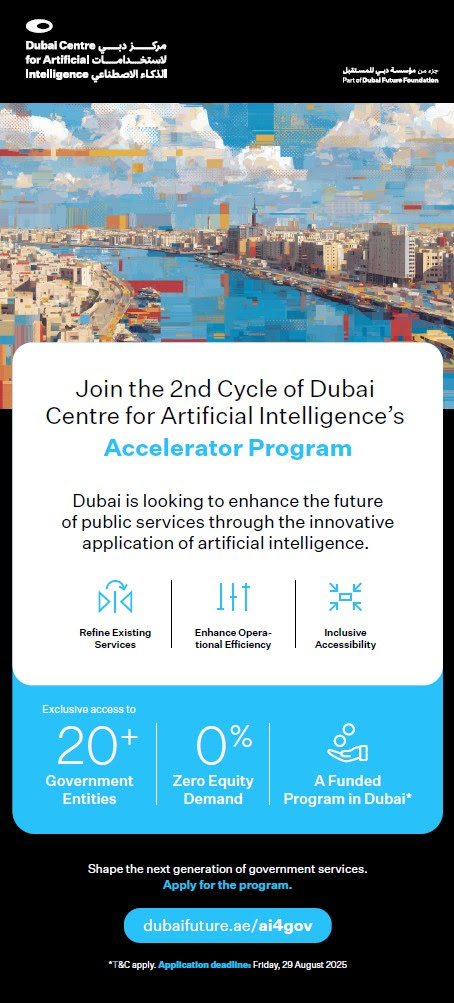
Dubai Centre for Artificial Intelligence (DCAI) is now accepting applications for the second cycle of its “Future of AI in Government Services Accelerator” program, inviting both local and international tech innovators and AI companies to collaborate with government entities on innovative solutions that harness AI to enhance public services across Dubai.

Launched by DCAI in partnership with Dubai Future Accelerators, an initiative of the Dubai Future Foundation, the program seeks to attract groundbreaking ideas that address both today’s challenges and those on the horizon for government services. It aligns closely with the ‘Dubai Universal Blueprint for Artificial Intelligence’, reinforcing Dubai’s vision to become the world’s largest hub for AI-driven innovation across key sectors.

Through this second cycle, participating companies will have the chance to work alongside over 20 government entities, focusing on four key areas. These include refining existing services by applying AI to improve personalisation and efficiency; creating entirely new services to tackle challenges once seen as an obstacle; boosting operational efficiency by embedding AI into everyday government processes; and ensuring inclusive accessibility by developing solutions that remove barriers and make services more widely available to all.

Participants in the program will gain a host of valuable benefits. They will collaborate directly with experts to tackle real-world challenges and shape the future of public services. They will also enjoy direct access to senior decision-makers, opening doors to implement their solutions at scale. Importantly, the program requires no equity stake, ensuring participants retain full ownership of their innovations. With strong backing and support, AI companies will be able to explore exciting growth opportunities, both locally and internationally. Additionally, the program offers fully sponsored accommodation and travel for eight weeks in Dubai, enabling participants to focus entirely on developing and deploying their projects.

Registration for the “Future of AI in Government Services Accelerator” program is open until 28 August 2025. Selected companies will be invited to Dubai for an intensive eight-week program running from 6 October to 28 November 2025, working on-site alongside government teams.

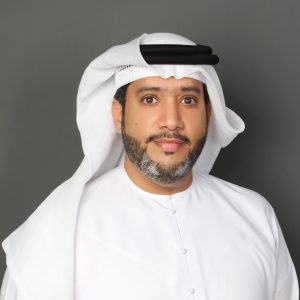
Saeed Al Falasi

Saeed Al Falasi, Executive Director of the Dubai Centre for Artificial Intelligence, noted that the DCAI launched under the directives of His Highness Sheikh Hamdan bin Mohammed bin Rashid Al Maktoum, Crown Prince of Dubai, Deputy Prime Minister, and Minister of Defence, and Chairman of the Board of Trustees of Dubai Future Foundation, continue to propel Dubai’s ambition to become the leading global city for deploying AI technologies to anticipate and shape future transformations across all sectors.

Al Falasi commented: “The Future of AI in Government Services Accelerator” program is designed to spark innovative uses of AI, helping government entities position Dubai among the world’s top cities for delivering agile, AI-powered public services defined by speed, quality, and efficiency. Our goal is to create seamless, intelligent experiences that save time and effort while enhancing quality of life, all in service of making Dubai the happiest city in the world.”

The program’s first cycle drew strong global interest, with 615 AI companies from 55 countries taking part, 183 AI use cases have been defined of which 75 have been piloted, underscoring Dubai’s leadership in transforming government services through AI and its steadfast commitment to improving community well-being.

For more information about the DCAI and the application process, please visit:  https://www.dubaifuture.ae/ai-in-government-services