Home Blog Page 20

Nasdaq Dubai Welcomes Binghatti Holding’s USD 500 Million Sukuk Listing

Nasdaq Dubai Welcomes Binghatti Holding’s USD 500 Million Sukuk Listing

Nasdaq Dubai, the region’s international financial exchange, today welcomed the listing of a USD 500 million Sukuk by Binghatti Holding, a leading Dubai-based property developer.

Issued under Binghatti’s USD 1.5 billion Trust Certificate Issuance Programme, the Sukuk matures in 2030 and was oversubscribed five times, attracting more than USD 2.5 billion in orders from regional and international investors. Reflecting this strong demand, the issuance was priced at a profit rate of 8.125%, significantly tightening from initial guidance.

To mark the occasion, Muhammad BinGhatti, Chairman of Binghatti Holding, rang the market opening bell at Nasdaq Dubai in the presence of Hamed Ali, CEO of Nasdaq Dubai and Dubai Financial Market (DFM). The sukuk are also listed on the London Stock Exchange. 

Muhammad BinGhatti, Chairman of Binghatti Holding said: “The successful listing of our USD 500 million Sukuk on Nasdaq Dubai marks another important milestone in Binghatti’s growth journey. The strong demand for our latest sukuk underscores the confidence that regional and international investors place in our financial strength and vision.” 

Hamed Ali, CEO of Nasdaq Dubai and DFM said: “We are pleased to welcome Binghatti’s latest Sukuk listing on Nasdaq Dubai, which highlights the sustained global demand for Islamic finance instruments and the strong appeal of Dubai as a capital markets hub. At Nasdaq Dubai, we remain committed to providing the issuers with a platform to connect with a diverse investor base.”

With this listing, Binghatti’s total Sukuk listings on Nasdaq Dubai have reached USD 1 billion, underscoring the company’s confidence in the exchange.

Nasdaq Dubai continues to strengthen its role as a global hub for Islamic finance, with total Sukuk listings amounting to USD 98.6 billion, across 108 listings, reaffirming its position as one of the world’s leading venues for Sukuk.

Emirates Glass and ClearVue Sign Deal to Manufacture Solar Glazing Solutions in the UAE and GCC

Emirates Glass and ClearVue Sign Deal to Manufacture Solar Glazing Solutions in the UAE and GCC

Emirates Glass, a leading glass processing company in the region and a subsidiary of Dubai Investments PJSC, has signed a five-year Manufacturing and Distribution Agreement with Australia-based ClearVue Technologies Limited (ASX:CPV) to bring cutting-edge solar glazing solutions to the UAE and wider GCC market. The agreement was formalized, with production expected to commence later this year.

The agreement enables Emirates Glass to locally manufacture ClearVue’s advanced solar-integrated glass – a next-generation technology that allows glass to generate electricity from sunlight while maintaining clarity and high-performance insulation. Emirates Glass will also hold non-exclusive distribution rights across the UAE and the broader GCC region, supporting the increasing demand for sustainable building materials in sun-rich environments.

This partnership underscores the growing market appetite for clean, renewable energy solutions embedded into building materials. The solar glazing, spandrel and cladding technology is designed for use in commercial, residential, and institutional developments and is suitable for façades, skylights, windows, canopies, and even greenhouses – offering a blend of function, energy efficiency, and design flexibility.

ClearVue’s Integrated Solar Façade maximizes on-site renewable energy generation for a sustainable building envelope. This allows buildings to reduce reliance on conventional power sources while enhancing natural light and thermal performance – a particularly valuable solution in climates like the UAE’s. ClearVue Solar Façade solutions are engineered to seamlessly deploy standard curtainwall and framing systems while meeting the most stringent fire rating requirements for high rise buildings. 

Rizwanulla Khan, Executive President of Emirates Glass, said, “We are excited to partner with ClearVue and introduce this innovative technology to our customers across the region. As the construction sector continues to evolve, the need for energy-efficient, high-performance building materials is more urgent than ever. This collaboration aligns with our commitment to sustainable innovation and reinforces our position at the forefront of the regional glass industry.”

Doug Hunt, Global CEO of ClearVue Technologies, commented, “Emirates Glass is a recognised leader in the Middle East’s glass manufacturing sector, and we are pleased to collaborate with them as we expand our global footprint. The UAE and GCC are ideal markets for our solar facade solutions, given the region’s focus on sustainability and abundance of sunlight.”

The partnership supports the UAE’s broader sustainability ambitions, including the Net Zero by 2050 strategic initiative, and positions Emirates Glass and Dubai Investments at the intersection of industrial innovation and environmental responsibility.

TAQA Distribution and Aldar Partner to Build Societal Value Through Vibrant and Connected Neighborhoods

TAQA Distribution and Aldar Partner to Build Societal Value Through Vibrant and Connected Neighborhoods

TAQA Distribution, a subsidiary of Abu Dhabi National Energy Company (TAQA) and Aldar have entered a strategic partnership to support the development of sustainable, integrated communities in Abu Dhabi. The agreement was signed by Omar Al Hashmi, CEO of TAQA Distribution, and Adel Abdulla Albreiki, CEO of Aldar Projects.

Under the agreement, TAQA Distribution and Aldar will assess areas of cooperation across Aldar’s infrastructure portfolio, with a focus on enhancing utility delivery and long-term operational efficiency for the benefit of Abu Dhabi.

TAQA Distribution will contribute its deep expertise in planning, implementing, and operating utility networks across various phases of infrastructure development. This includes providing interim and permanent electricity and water supply solutions, evaluating infrastructure designs, supporting the implementation of private utility networks, and identifying opportunities to integrate innovative, sustainable, and energy-efficient technologies. The partnership also aims to enhance cost-efficiency and improve the overall management of utility services through the deployment of advanced digital tools and analytics.

Omar Al Hashmi, CEO of TAQA Distribution, said: “This agreement enables us to align with a key development partner in Abu Dhabi to deliver reliable, future-ready infrastructure that meets the evolving needs of the emirate’s growing population. By leveraging our operational excellence, sustainable practices, and customer-centric utility services – we aim to support Aldar in building high-quality, connected communities. This collaboration reflects our ongoing commitment to supporting national priorities and delivering tangible value to the communities we serve across the Emirate of Abu Dhabi.”

Adel Abdulla Albreiki, CEO of Aldar Projects, added: “As a key partner of the Abu Dhabi government, Aldar is committed to ensuring the emirate retains its position as one of the world’s most desirable locations to live, work, and visit. The delivery of key infrastructure is critical and with TAQA’s partnership we will be able to deliver projects that are more integrated, efficient, and sustainable, serving the best interests of all those who call Abu Dhabi home.”

The agreement also opens the door to the adoption of digital innovations in utility services, including condition monitoring, predictive maintenance, and data-driven performance management. These capabilities will be instrumental in achieving long-term infrastructure reliability, cost optimization, and customer satisfaction across Aldar’s upcoming developments aimed at creating inclusive, vibrant, and connected neighbourhoods.

Ajman NuVentures Centre Free Zone (ANCFZ) Marks Strategic Expansion with Office Opening in Dubai

Ajman NuVentures Centre Free Zone (ANCFZ) Marks Strategic Expansion with Office Opening in Dubai

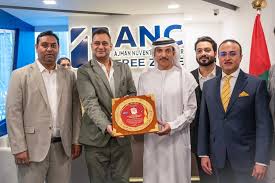
Ajman NuVentures Centre Free Zone (ANCFZ), one of the UAE’s most dynamic and digitally driven business setups destinations, has announced the opening of its representative office in Dubai in collaboration with FDI Zone to attract entrepreneurs. This strategic expansion enhances the range of investment services, making them easier to access and more attractive to investors. It enables entrepreneurs to establish and register their companies in Ajman directly from Dubai through a fully integrated digital platform, in line with the highest standards of efficiency and transparency.

H.E. Sheikh Dr. Mohamed bin Abdullah Al Nuaimi, Chairman of Ajman NuVentures Centre Free Zone, emphasized during the inauguration ceremony, the Centre’s ongoing commitment to providing a modern, enabling business environment that supports the aspirations of investors and entrepreneurs and enhance the emirate of Ajman’s growing position as a leading business hub in the United Arab Emirates. His Excellency welcomed the initiative, which represents a successful model of economic cooperation with the private sector and a cornerstone for building strategic partnerships that keep pace with global economic transformations.

Mr. Rishi Somaiya, CEO of Ajman NuVentures Centre Free Zone, stated that the representative office, located on the 9th floor of Aspin Tower on Sheikh Zayed Road in Dubai, will serve as a hub for promoting services and supporting the Centre’s growing custumer base. He added that this step reflects the Centre’s accelerated growth, which has attracted investors from more than 150 countries worldwide within just one year of its launch, with total investments exceeding AED 250 million.

Representatives from FDI Zone, the partner in this initiative, explained that the representative office is not a service outlet, but a strategic platform designed to empower investors to engage an investment environment with global standards affirming the full commitment for providing comprehensive technical and legal support for entrepreneurs wishing to establish their businesses within Ajman NuVentures Centre – Free Zone.

The event also witnessed the signing of a cooperation agreement, along with an exchange of plaques and commemorative gifts, a step that reflects both parties’ commitment to building a long-term institutional partnership that contributes to enhancing economic integration between the public and private sectors while supporting efforts to simplify investment procedures and drive expansion through fast, smart platforms.

For more information about Ajman NuVentures Centre Free Zone or to kick-start your entrepreneurial journey, contact us at +97168088888, email: info@ancfz.ae  or visit https://ancfz.ae/

GROWING INVESTMENT SOPHISTICATION AT FAMILY OFFICES DRIVES RISK APPETITE

GROWING INVESTMENT SOPHISTICATION AT FAMILY OFFICES DRIVES RISK APPETITE

Growing investment sophistication is helping to drive a rise in risk appetite at family offices and an increased focus on alternative assets, new global research* from Ocorian, the specialist global provider of services to high-net-worth individuals and family offices, financial institutions, asset managers and corporates, shows.

More than three out of four (76%) questioned believe increasing sophistication at family offices is leading to more staff carrying out more sophisticated deals and having to strengthen their operational infrastructure.

That is contributing to an increased risk appetite – around 66% questioned say their organisation’s risk appetite will increase in the next 12 months, Ocorian’s study among family members, senior family office employees and intermediaries working for family offices with total wealth of $68.26 billion found. Just 7% believe their organisation’s risk appetite will decrease while 27% say it will stay the same. European equities, emerging market equities and private equity are the most popular asset classes that family office fund managers expect to increase allocations to in the next 12 months.

There is a growing appetite for increasing family office exposure to alternative assets – all of those questioned agreed it is a long-term trend – with 65% saying the UK is leading the way on exposure to alternatives based on where assets or where family offices are based. More than half (54%) point to the Middle East while 48% highlight the European Union. Around a third (31%) say Africa but only 24% the Americas.

The study in 13 countries or territories including the UK, UAE, Singapore, Switzerland, Hong Kong, South Africa, Saudi Arabia, Mauritius and Bahrain found increased regulation around riskier and more specialist asset classes is the main reason for increased risk appetites ahead of any investment views.

Around three quarters (73%) pointed to improved regulation while 60% point to increased transparency. Just half (53%) say they believe markets are ready to recover while 39% say family offices have been in cash too long.

There is however a need for regulatory support – just one in six (16%) questioned believe they are in a strong position to meet regulatory demands amid rising complexity while 56% say they are in quite a strong position. More than a quarter (27%) believe their ability to meet regulatory requirements is average.

That transformation is visible in markets such as Singapore, where tax incentive schemes for single family offices under Sections 13O and 13U of the Income Tax Act require the employment of at least two or three investment professionals to qualify. These conditions encourage family offices to expand their teams, deepen investment expertise, and strengthen operational infrastructure in line with their increasingly sophisticated strategies.

Andrew Ho, Regional Head, Private Clients, APAC, at Ocorian said: ““Family offices have significantly strengthened their operations recently, recruiting more staff and improving infrastructure as they become more sophisticated organisations carrying out more complex trades. 

“In Singapore, this trend is reinforced by the government’s tax incentive schemes for single family offices, which require the employment of at least two or three investment professionals as part of qualifying for the incentives. These policies not only encourage greater professionalisation but also ensure that family offices have the in-house expertise to manage increasingly sophisticated investments.

“Improvements in regulation around riskier assets are a key factor in this transformation, but at the same time, family offices appreciate they need more regulatory support if they are to make the most of the potential opportunities.”

Ocorian’s award winning dedicated family office team provides a seamless and holistic approach to the challenges and opportunities families face. Its service is built on long-term personal relationships that are founded on a deep understanding of what matters to family office clients. Its global presence means Ocorian can provide bespoke structures and services for international families no matter where they live.

Key services include formation and administration of family offices, HR support services, support with lifestyle and luxury assets, family governance, resident and relocation services and specialist support with immigration, visas, payroll, marine and aircraft crew management and financial reporting.

GUINNESS WORLD RECORDS CELEBRATES 70 YEARS OF RECORD-BREAKING ACHIEVEMENTS

GUINNESS WORLD RECORDS CELEBRATES 70 YEARS OF RECORD-BREAKING ACHIEVEMENTS

Guinness World Records (GWR), the official authority for record-breaking achievements, today unveiled the scale of Arab world contributions to record-breaking as it celebrates its Platinum Jubilee, marking 70 years of chronicling the extraordinary.

GWR is celebrating 70 years as the global authority on record-breaking achievements. It all started with a pub question “What’s the fastest game bird in Europe?”, a query that inspired the very first Guinness World Records book, compiled in a room above a London gym and published on 27th August 1955. That single volume sparked worldwide curiosity about extraordinary feats, and GWR has since authenticated thousands of records in sport, technology, the human body, super skills and collections.

To mark the moment, GWR are celebrating record holder achievements and milestone moments over the last 70 years, including a handful of record holders who have been positively impacted by record breaking in their lives. 

Guinness World Records Editor-in-Chief, Craig Glenday said: “As we mark the 70th anniversary of the release of our first edition back in the 1950s, we’re proud to be building on 70 amazing years as the global curator of superlative facts and achievements. We’ve seen so many iconic moments, the most amazing feats of strength and skill and endurance from talent across the globe and long may it continue. We’re now looking forward and celebrating the current – and next! – generation of record breakers. We want everyone to be part of it, whether that’s using our new record selector tool or having a go at one of our 70 unclaimed records, they are there for the taking!” 

Regional Highlights: Arab Achievements for the 70th Anniversary

  • UAE: In Abu Dhabi, Italian stuntman Niccolò Fava broke two fiery new records – the Greatest distance covered wakeboarding while lit on fire and the Fastest 100 m wakeboarding while lit on fire – in a spectacular celebration of the 70th anniversary. Known for his roles in major Hollywood productions including Mission: Impossible, Fava has combined acting with extreme stunt mastery to become a global face of action sports. (Download Video Here).


  • Saudi Arabia: In Jeddah, Ahmad Othman achieved the world record for the Greatest distance motorcycle wheelie held by mouth, showcasing extraordinary determination and daring. (Download Video Here)


  • Egypt: Former naval special forces captain Walaa Hafez defied quadriplegia to set a world record for the Longest SCUBA dive in a controlled environment (male) (CI1) with (6 hours 4 minutes) (Download Video Here). Egyptian swimmer Omar Shaaban also broke his own record with the Highest jump out of water wearing monofin at 2.32m, extending his dominance in a feat first set in 2020. (Download Video Here).

1,600 Arab Records in 70 Years

Since its founding in 1955 by Sir Hugh Beaver, Guinness World Records™ has awarded nearly 1,600 enduring Arab world records across multiple fields. To mark the anniversary, GWR has produced a short film showcasing some of the most iconic achievements from the region.

  • UAE leads the Arab world with 680 records, including Burj Khalifa (world’s tallest building), the Dubai Mall (largest shopping center by total area), the world’s longest fireworks waterfall in Ras Al Khaimah, and One Za’abeel (world’s longest cantilevered building).
  • Saudi Arabia follows with 300 records, from the first Arab astronaut Prince Sultan bin Salman Al Saud in 1985, to the first Arab woman in space Rayyanah Barnawi in 2023, alongside global sporting, cultural, and entertainment milestones.
  • Egypt holds 130 records, from the widest suspension bridge to the dominance of Al Ahly football club in African championships.
  • Qatar counts 108 records, including the fastest crossing of the country on foot and the world’s largest calisthenics park.
  • Other notable Arab records span across Lebanon, Syria, Kuwait, Iraq, Morocco, Jordan, Bahrain, Oman, Tunisia, Algeria, Yemen, and Libya, reflecting a spirit of ambition that transcends borders.

Closing Note: Be Part of It

As part of its global “Be Part of It” campaign, Guinness World Records has released a list of 70 unclaimed records open to challengers. Fans and aspiring record-breakers can explore opportunities through the new Record Selector tool at www.guinnessworldrecords.com.

Saudi and UAE Family Offices Lead Surge in Investment Sophistication and Risk Appetite, Study Finds

"Saudi and UAE Family Offices Lead Surge in Investment Sophistication and Risk Appetite, Study Finds"

Growing investment sophistication is helping to drive a rise in risk appetite at family offices and an increased focus on alternative assets, new global research* from Ocorian, the specialist global provider of services to high-net-worth individuals and family offices, financial institutions, asset managers and corporates, shows.

More than three out of four (76%) questioned believe increasing sophistication at family offices is leading to more staff carrying out more sophisticated deals and having to strengthen their operational infrastructure.

That is contributing to an increased risk appetite – around 66% questioned say their organisation’s risk appetite will increase in the next 12 months, Ocorian’s study among family members, senior family office employees and intermediaries working for family offices with total wealth of $68.26 billion found. Just 7% believe their organisation’s risk appetite will decrease while 27% say it will stay the same. European equities, emerging market equities and private equity are the most popular asset classes that family office fund managers expect to increase allocations to in the next 12 months.

There is a growing appetite for increasing family office exposure to alternative assets – all of those questioned agreed it is a long-term trend – with 65% saying the UK is leading the way on exposure to alternatives based on where assets or where family offices are based. More than half (54%) point to the Middle East while 48% highlight the European Union. Around a third (31%) say Africa but only 24% the Americas.

The study in 13 countries or territories including the UK, UAE, Singapore, Switzerland, Hong Kong, South Africa, Saudi Arabia, Mauritius and Bahrain found increased regulation around riskier and more specialist asset classes is the main reason for increased risk appetites ahead of any investment views.

Around three quarters (73%) pointed to improved regulation while 60% point to increased transparency. Just half (53%) say they believe markets are ready to recover while 39% say family offices have been in cash too long.

There is however a need for regulatory support – just one in six (16%) questioned believe they are in a strong position to meet regulatory demands amid rising complexity while 56% say they are in quite a strong position. More than a quarter (27%) believe their ability to meet regulatory requirements is average.

That transformation is visible in markets such as Singapore, where tax incentive schemes for single family offices under Sections 13O and 13U of the Income Tax Act require the employment of at least two or three investment professionals to qualify. These conditions encourage family offices to expand their teams, deepen investment expertise, and strengthen operational infrastructure in line with their increasingly sophisticated strategies.

Andrew Ho, Regional Head, Private Clients, APAC, at Ocorian said: ““Family offices have significantly strengthened their operations recently, recruiting more staff and improving infrastructure as they become more sophisticated organisations carrying out more complex trades. 

“In Singapore, this trend is reinforced by the government’s tax incentive schemes for single family offices, which require the employment of at least two or three investment professionals as part of qualifying for the incentives. These policies not only encourage greater professionalisation but also ensure that family offices have the in-house expertise to manage increasingly sophisticated investments.

“Improvements in regulation around riskier assets are a key factor in this transformation, but at the same time, family offices appreciate they need more regulatory support if they are to make the most of the potential opportunities.”


Asset class How many family office fund managers expect to increase allocations in next 12 months? How many family office fund managers expect allocations to stay the same in next 12 months? How many family office fund managers expect to decreased allocations in next 12 months? How many don’t know?
European equities 93% 7% Zero Zero
Emerging market equities 89% 11% Zero Zero
Private equity 78% 22% Zero Zero
Investment grade fixed income 78% 20% 1% 1%
Real estate 77% 20% 3% Zero
UK equities 76% 22% 1% 1%
Private debt 75% 20% 5% Zero
Infrastructure 63% 29% 7% 1%
Hedge funds 61% 34% 4% 1%
US equities 48% 42% 7% 3%
Non-investment grade fixed income 35% 40% 13% 12%
Other alternative asset funds 19% 49% 15% 17%

Ocorian’s award winning dedicated family office team provides a seamless and holistic approach to the challenges and opportunities families face. Its service is built on long-term personal relationships that are founded on a deep understanding of what matters to family office clients. Its global presence means Ocorian can provide bespoke structures and services for international families no matter where they live.

Key services include formation and administration of family offices, HR support services, support with lifestyle and luxury assets, family governance, resident and relocation services and specialist support with immigration, visas, payroll, marine and aircraft crew management and financial reporting.

Fortune Global Forum 2025 to Convene in Riyadh, Saudi Arabia Oct. 26-27

Fortune Global Forum 2025 to Convene in Riyadh, Saudi Arabia Oct. 26-27

Fortune announced today that its prestigious Fortune Global Forum will convene in Riyadh, Saudi Arabia, on October 26–27, 2025.  In its 30-year history the Global Forum has convened in myriad locations, but 2025 marks the first time the event will convene in Saudi Arabia. The location of the Saudi capital highlights the Kingdom’s emergence as a hub for global business, trade, and innovation.

The 2025 Fortune Global Forum will bring together CEOs and senior leaders from Fortune 500 and multinational companies, fast-growing startups, and influential organizations across finance, energy, mobility, and technology for a dynamic, invitation-only gathering.

Designed to foster collaboration, peer-to-peer connections, and transformative dialogue, the Forum comes at a pivotal moment for the global economy and business landscape. Against a backdrop of seismic advances in artificial intelligence, geopolitical volatility, and shifting demographics, this year’s theme—’The Great Convergence‘—will explore how these forces are intersecting to reshape business, society, and leadership.

The leaders at Fortune’s annual conference, now in its third decade, will include:

  • Tareq Amin, Chief Executive Officer, HUMAIN
  • Cristiano Amon, President and CEO, Qualcomm Incorporated
  • Ed Bastian, Chief Executive Officer, Delta Air Lines
  • Bonnie Chan, Chief Executive Officer, Hong Kong Exchanges and Clearing Limited
  • Jane Fraser, Chief Executive Officer, Citi
  • Tony Han, Founder and CEO, WeRide
  • Jennifer Johnson, President and CEO, Franklin Templeton
  • Vimal Kapur, Chairman and CEO, Honeywell
  • Lynn Martin, President, NYSE Group
  • Ralph Mupita, Group President and CEO, MTN Group Limited
  • Jonathan Ross, CEO and Founder, Groq
  • Tan Shu Shan, Director and CEO, DBS Group
  • Richard Teng, Chief Executive Officer, Binance

They’ll be joined by global policy and economic thought leaders, including former President of Colombia Iván Duque Márquez, Current Senator and Former Prime Minister of Italy Matteo Renzi, and Bridgewater Associates Founder Ray Dalio.

“Saudi Arabia is at the epicenter of a historic global business transformation. The Kingdom’s rapid economic diversification, strategic investments, and vision for the future are positioning it as a vital crossroads for trade, innovation, and investment,” said Anastasia Nyrkovskaya, CEO of Fortune Media. “For U.S.-based and global companies alike, engaging with this region is no longer optional — it is essential to long term– growth and competitiveness. The Fortune Global Forum is proud to be in Riyadh for the first time, bringing together the world’s most influential leaders to explore opportunities, forge partnerships, and help shape the future of the global economy.”

“Riyadh today stands as the global hub where business leaders gather to envision the future. By hosting the Fortune Global Forum, Saudi Arabia reaffirms its position at the center of global dialogue on growth, innovation, and collaboration,” said His Excellency Fahd Al-Rasheed, Chairman of The Saudi Conventions & Exhibitions General Authority (SCEGA)

“As the global business landscape enters an era defined by tech acceleration, unpredictable geopolitical shifts, and generational demographic transformation, the Fortune Global Forum proudly convenes CEOs and leaders from private and public sectors, as well as innovators and visionaries in Riyadh,” said Alyson Shontell, Fortune Editor in Chief and Chief Content Officer. “In 2025, Saudi Arabia stands at the center of dynamic cultural and economic change. We look forward to facilitating one of a kind crucial dialogue and dealmaking that will shape the next chapter of global business.”

The 2025 Global Forum program will be hosted by Fortune’s award-winning journalists and inspired by year-round reporting on the Fortune 500 and Fortune Global 500 lists. Forum co-chairs are Diane Brady, Executive Editorial Director of Fortune Live Media; Clay Chandler, Fortune Executive Editor, Asia; Matt Heimer, Fortune Executive Editor, Features; and Alyson Shontell, Editor-in-Chief and Chief Content Officer. The co-chairs will be joined by Fortune Live Media Editorial Directors, Kristin Stoller and Ellie AustinJeremy Kahn, Fortune AI Editor; and Peter Vanham, Fortune Editorial Director, Leadership, along with guest hosts, Hala Gorani, Journalist and International News Correspondent, and Noor Nugali, Deputy Editor-in-Chief, Arab News. For more information and the full agenda, visit the event website here.

ARTHUR D. LITTLE’S NEWLY LAUNCHED VIEWPOINT INTRODUCES RESOURCE UTILIZATION INDEX TO OPTIMIZE GCC NATURAL GAS ALLOCATION

ARTHUR D. LITTLE’S NEWLY LAUNCHED VIEWPOINT INTRODUCES RESOURCE UTILIZATION INDEX TO OPTIMIZE GCC NATURAL GAS ALLOCATION

Arthur D. Little’s (ADL) newly launched Viewpoint, Optimizing Natural Gas Allocation in the GCC, is introducing a data-driven framework to help Gulf Cooperation Council (GCC) countries make more informed decisions on how to allocate their natural gas resources across competing sectors. The Resource Utilization Index (RUI) enables policymakers and corporate planners to evaluate the economic, industrial, and social value generated by gas in a structured, comparable way – ensuring every molecule counts.

The GCC collectively holds more than 40 trillion cubic meters (tcm) of proven natural gas reserves, representing about 20% of the world’s total. Qatar alone accounts for 24.7 tcm, making it the largest holder in the region and a global leader in liquefied natural gas (LNG) exports. Annual production volumes underscore the region’s strategic role: Qatar produces 211 billion cubic meters (bcm), Saudi Arabia 124 bcm, the UAE 56 bcm, and Oman 54 bcm, while Kuwait and Bahrain each produce 20 bcm or less and rely heavily on imports to meet demand.

Historically, gas allocation decisions in the region have followed a straightforward logic: meet domestic power needs, support key industries, and fulfill export commitments. However, ADL’s research warns that without a more systematic approach, significant value could be left untapped. The RUI addresses this challenge by integrating five interlinked strategic dimensions into a single comparative score. It first considers EBITDA impact, measuring the true profitability generated per unit of gas and adjusting for opportunity cost to provide an accurate picture of financial value. It then evaluates GDP contribution, capturing the direct, indirect, and induced effects of gas use on national output, including multiplier effects across supply chains. Employment generation is assessed not only in terms of the number of jobs created, but also the quality of those jobs, their alignment with national workforce strategies, and their role in skills development. The economic complexity dimension examines how gas allocation supports diversification and industrial upgrading, favoring pathways that enable the production of more sophisticated, high-value exports. Finally, the framework factors in global market synergies, identifying sectors where gas utilization can leverage trade partnerships, export readiness, and existing infrastructure to expand the region’s economic footprint.

Energy-intensive industries illustrate the importance of this approach. In aluminum smelting, for example, energy can account for up to 40% of production costs, and overall energy usage can represent around 50% of total aluminum production costs. While access to affordable gas strengthens cost competitiveness, the RUI helps decision-makers weigh this against the potential value of redirecting the same gas to higher-return uses such as LNG exports or advanced petrochemicals.

“The RUI is not about prescribing a single path for gas allocation. It’s about equipping decision-makers with the tools to make choices that align with national goals, economic diversification, and long-term resilience,” said Peter Kaznacheev, Principal at Arthur D. Little Middle East. “By measuring profitability, economic impact, and strategic alignment in a single framework, we offer a holistic view of where gas delivers the greatest value.”

The index can be tailored to national priorities by adjusting weightings across its five dimensions, and recalibrated as market conditions evolve or new industries emerge. Its applications range from helping governments set long-term planning objectives to enabling corporate planners and joint ventures to balance domestic requirements with export opportunities.

Recent global trade turbulence – alongside regional industrial expansion – has reinforced the need for evidence-based allocation strategies. With major producers like Qatar, Saudi Arabia, the UAE, and Oman facing rising internal demand, and import-reliant states such as Kuwait and Bahrain under increasing supply pressure, the framework offers a unified lens for strategic gas deployment.

“In a time of shifting global alignments and economic recalibration, the RUI empowers GCC nations to view gas not just as an energy source, but as a strategic lever for sustainable growth,” added Ilya Epikhin, Principal at Arthur D. Little Middle East.

By quantifying the economic, social, and strategic value of each cubic meter of natural gas, ADL’s RUI equips GCC leaders with the means to make allocation decisions that reinforce diversification, competitiveness, and resilience in a rapidly evolving energy landscape.

To view the full viewpoint click HERE

HC expects the CBE to cut interest rates by 200 bps at its upcoming

HC expects the CBE to cut interest rates by 200 bps at its upcoming
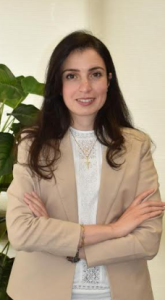
Financials analyst and economist at HC, Heba Monir

Financials analyst and economist at HC, Heba Monir commented: We see Egypt’s external position stabilizing as per the following indicators: (1) the c5% EGP appreciation y-t-d to EGP48.6/USD (2) Egypt’s 1-year CDS retreating to 267 bps from 379 bps at the beginning of the year, (3) Egypt’s worker remittances increasing c13% m-o-m and c17% y-t-d in May to USD3.4bn, reflecting confidence in the FX liquidity in Egypt, (4) Net International Reserves (NIR) inching up c1% m-o-m and c4% y-t-d to USD49.0bn in July, and (5) Egyptian banks’ net foreign assets (NFA) position widening by c2% m-o-m and c72% y-t-d to USD14.9bn in June. On the flip side, (a) deposits not included in official reserves decreased by USD1.72bn m-o-m to USD8.70bn in July from USD10.420bn in the previous month, which we attributed to the government paying USD1bn of its liabilities to foreign oil companies operating in Egypt in July and the higher energy import bill for power generation, (b) the BOP recorded an overall deficit of USD1.37bn in 3Q24/25, reversing a surplus of USD489m in 2Q24/25, due to the reversal of the financial accout into a net outflow of USD256m from a net inflows of USD4.14bn in 2Q24/25, which was mostly related to other external dues repayments. Domestically, the PMI index increased to 49.5 in July from 48.8 in June, still below the 50.0 mark, due to signs of recovery in demand, particularly in the services sector. Regarding the energy prices, the government decided to postpone increases in the electricity and natural gas prices. For the electricity prices, the government decided to postpone hikes until October, after it was initially scheduled to take place at the beginning of FY25/26, due to the current economic conditions and the high consumption bills during the summer. As for natural gas prices, the government postponed increasing the price for the industrial sector by USD1/mmbtu, instead of applying it in August, as the fertiliser companies requested the government to increase local subsidised fertiliser prices if it increases natural gas prices. As for the attractiveness of Egypt’s carry trade, the latest 12M T-bills auction of 26.08% implies a positive yield of 6.66% using our 12M inflation estimate of 15.5% (after deducting a 15% tax rate for European and US investors), which also aligns with our estimates, suggesting that Egypt’s Carry Trade remains attractive. Despite the anticipated hike in energy prices, we still see room for the MPC to cut the policy rates by 200 bps mainly due to (1) the recent inflation deccelration for two consecutive months, (2) the need to stimuilate economic growth and ease the burden on the private sector, (3) the relative stability in Egypt’s external position, (4) the deflationary effect of the recent EGP appreciation, and (5) the still attractive carry trade despite the interest rate cut expectation.