
Home Blog Page 13

Invest Bank delivers AED 102 million profit before tax for 9M-2025, driven by solid income growth and robust balance sheet performance

Invest Bank delivers AED 102 million profit before tax for 9M-2025, driven by solid income growth and robust balance sheet performance

Invest Bank today announced its financial results for the nine-month period ended September 30, 2025, reporting a profit before tax of AED 102M, reflecting continued momentum across income streams, balance sheet expansion, and strong recoveries.

Key Financial Highlights 

  • Total assets at AED 13.4 Bn (+24% YTD).
  • Net loans and advances at AED 6.6Bn (+46% YTD).
  • Customer Deposits at AED 11.1Bn (+28% YTD), with a CASA ratio of 29.4% (FY’24 : 26.6%).
  • Operating Income of AED 251.4Mn (+21% YoY), equally contributed by growth in core Net Interest (+16%) and Non-interest (+29%) 
  • Net Interest Income was at AED 148.4M up YoY (+AED 21M, 16%), driven by uptick in balance sheet size (+AED 2.3B, 22%), with NIM maintained at 1.6% (YTD Sept-24 : 1.5%), notwithstanding 100bps rate drop in H2’24.
  • Non-interest income was at AED 103M up YoY (+23M, 29%), as higher loan volumes drive core business fee income and increase in foreign exchange & other income (+AED 10M).
  • Operating expenses up YoY by AED 36M (+18%) as the bank continues to invest in talent and technology for future growth.
  • Robust recovery strategies continue to show positive signs reporting net recoveries of AED 83M during the year. 
  • The Bank remains well capitalized with a healthy capital adequacy ratio of 22.8% (Dec’24 : 28.7%).
  • Strong Liquidity position with Eligible Liquid Asset Ratio of 21.4% as at Sept’25 (Dec’24 :15.6%) and advances to stable resources ratio was at 70.5% (Dec’24 : 68.8%).
  • Reimbursement Asset (RA): The Bank received AED 380M, during the year (Sep’24 :AED 377M) from Government of Sharjah (GoS) under the Guarantee Agreement, reducing the balance to AED 1.7B in Sept-25  (Dec’24 : 2.1B). 


Ratings Upgrade : Invest bank is rated by Capital Intelligence, which recently raised the Core Financial Strength (CFS) rating to ‘b+’ from ‘b’ and Bank standalone rating (BSR) to ‘bb’ from ‘bb-‘. The long term & short term foreign currency ratings (LT/SC FCR) were affirmed at BBB-/A3, with Extra ordinary support rating (ESL) of ‘High’. The outlook for LT FCR and BSR is ‘stable’


Edris Al Rafi, Chief Executive Officer, Invest Bank, said: “Our nine-month results reflect the continued strength of our strategy and the solid progress we’re making in building a more diversified and resilient bank. We remain focused on expanding our core business, deepening customer relationships, and driving sustainable profitability across all segments.

On the retail side, we’ve strengthened our deposit portfolio through the launch of the ‘Earn Upfront’ Fixed Deposit campaign, which rewards customers with their full interest payment on Day One — underscoring our commitment to innovative, customer-first banking. At the same time, we continue to advance our digital agenda through our integration with the CBUAE Aani platform, enhancing payment capabilities and improving the overall banking experience.

These initiatives reflect our focus on innovation, operational excellence, and long-term value creation for our customers, shareholders, and the wider economy.”

Forward-Looking Statement

Looking ahead, Invest Bank remains well-positioned for continued growth, supported by a solid capital base, prudent risk management, and a strong liquidity position. The Bank will continue to diversify its business mix while investing in technology and process modernization to elevate the customer experience. With initiatives such as enhanced mobile banking, innovative deposit solutions, and ongoing digital transformation, Invest Bank is building a more agile and customer-centric institution aligned with the UAE’s evolving financial landscape.
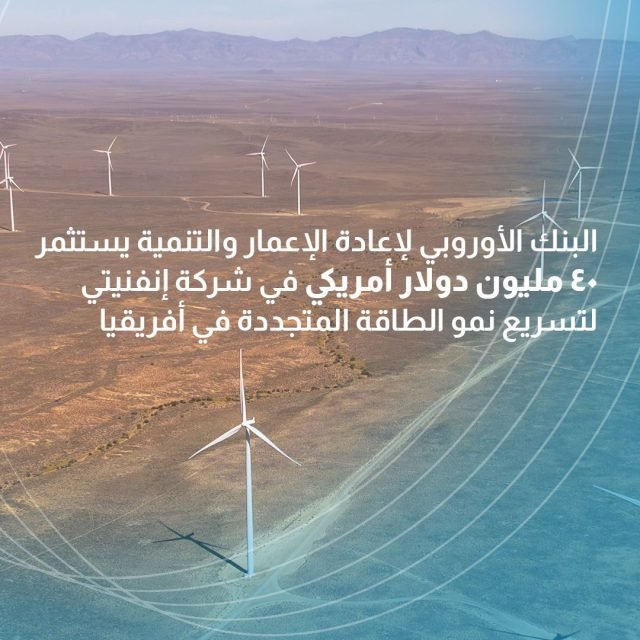

EBRD invests US $40 million in Infinity to accelerate renewable energy growth across Africa

EBRD invests US $40 million in Infinity to accelerate renewable energy growth across Africa

The European Bank for Reconstruction and Development (EBRD) has announced an additional equity investment of US$ 40 million in longstanding client Infinity, Egypt’s leading developer of renewable energy. This brings the Bank’s total equity commitment to US$ 141.5 million, up from US$ 101.5 million. The new capital will support Infinity Power, Infinity’s subsidiary, in delivering approximately 3 gigawatts (GW) of renewable energy capacity across key African markets.

This follow-on investment reflects the EBRD’s continued support for private sector-led renewable energy development in Africa and aligns with its strategic priorities of promoting green transition and sustainable infrastructure.

An EBRD client for many years, Infinity is Egypt’s leading renewable energy developer, operating across Africa through its subsidiary Infinity Power.
Infinity Power, a joint venture between Egypt’s Infinity and Abu Dhabi’s Masdar, has a portfolio of more than 1.3 GW of operational solar and wind projects across Egypt, South Africa and Senegal, and a near-term development pipeline of around 3 GW.

Through its expanding footprint, Infinity Power continues to provide clean, reliable and affordable energy that drives growth, enhances energy access and advances the African continent’s green transition.
Mohamed Ismail Mansour, Chairman of Infinity, said: “This continued support from the EBRD underlines our shared vision of a sustainable, fast-growth future for Egypt and Africa. Together, we are helping to unlock immense renewable energy potential – delivering projects that create jobs, strengthen energy security and enable long-term economic growth.”

Harry Boyd-Carpenter, Managing Director of the EBRD’s Sustainable Infrastructure Group, commented: “We are very pleased to strengthen our partnership with Infinity and support its efforts to deliver large-scale renewable energy projects that will contribute to energy security, decarbonisation and economic development across the continent. Beyond Egypt, this new investment marks an exciting step in expanding Infinity’s footprint across Africa, where we see tremendous potential to scale up solar and wind generation. Together, we aim to bring clean, reliable and affordable energy to fast-growing economies and to drive the continent’s green transformation.”

Egypt is a founding member of the EBRD. Since the start of its operations there in 2012, the EBRD has invested more than €13.5 billion in 207 projects in Egypt.

About Infinity Power

Infinity Power, a joint venture between Infinity and Masdar, is Africa’s largest renewable energy provider.

Infinity Power targets solar, wind, green hydrogen, battery storage and transmission grid projects across the continent, aiming for 10 GW of operational capacity by 2030.

It has a substantial operational portfolio of 1.3 GW across Egypt, South Africa and Senegal, helping to avoid over 3 million metric tonnes of CO₂ emissions annually, and a pipeline of 16 GW in development, including a near-term development pipeline of around 3 GW.

For further information about Infinity Power, visit www.weareinfinitypower.com

Hill International: A Strategic Partner in Egypt’s National Mega-Projects

Hill International: A Strategic Partner in Egypt’s National Mega-Projects

Building on its extensive role in Egypt’s national mega-projects, Hill International—a leading global project management firm—expressed its pride in contributing to the successful completion of the Grand Egyptian Museum (GEM) and the East Nile Monorail. These monumental achievements reflect Egypt’s determination and capacity to advance its ambitious strategy for sustainable development.

Eng. Waleed Abdel Fattah, Hill International President, Middle East and North Africa, emphasized the company’s strategic partnership in managing and executing several of the country’s most significant national projects. Foremost among these are the Grand Egyptian Museum—the world’s largest archaeological museum, which showcases Egypt’s cultural renaissance—and the Monorail project, which embodies the nation’s commitment to sustainable, green transportation.

Eng. Abdel Fattah confirmed that Hill International provided comprehensive project management supervision for the Grand Egyptian Museum (GEM). This mandate involved meticulous coordination with both international and local stakeholders to guarantee the execution of world-class standards across construction, exhibition design, and smart infrastructure development.

He emphasized that the GEM is not just a building; it stands as a global model of integration between culture, tourism, and sustainable development. Furthermore, it powerfully demonstrates the state’s unwavering dedication to preserving its historical heritage while simultaneously embracing a forward-looking vision.

As Egypt prepares to inaugurate the New Administrative Capital Monorail (East Nile) within the next days, which is a milestone in sustainable, electrified transportation, Hill International is proud to have provided consultancy and management throughout the project’s implementation. Eng. Abdel Fattah reaffirmed the company’s commitment to leveraging its global expertise to support Egypt’s mega-projects and strengthen cooperation with government entities in achieving the nation’s sustainable development goals.

He explained that Hill International managed the Monorail’s implementation from design through handover, ensuring adherence to timelines and integration between infrastructure and smart transit systems. The Monorail represents a major leap in Egypt’s transportation network, enhancing connectivity between new cities and setting new standards in efficiency and safety.

He further explained that the company has maintained a substantial presence within the Egyptian market, marked by its involvement in numerous major projects and extensive collaboration with various local and foreign entities. The company strategically prioritizes the transfer of specialized expertise and the rigorous development of local capabilities within the sphere of mega-projects. This focused approach directly supports the state’s comprehensive vision for modern and sustainable development.

The Monorail: A Leap in Smart and Sustainable Transit

Eng. Abdel Fattah highlighted that the Monorail project marks a qualitative shift in Egypt’s modern transit system. It utilizes the latest driverless technologies, characterized by high speed, energy efficiency, and reliability—ensuring passenger comfort and reducing traffic congestion on main roads. This initiative supports the state’s broader transition toward safe, environmentally friendly, and sustainable modes of transport.

He noted that the implementation of the Monorail Project encountered numerous challenges due to the extensive scale of construction works and the complexity of delivery timelines. These challenges were successfully addressed through meticulous planning, the application of the highest standards of project management, and the adoption of innovative engineering solutions. Furthermore, the close collaboration between Egyptian authorities and international partners played a pivotal role in expediting project execution and ensuring the highest levels of quality and safety.

Hill International contributed its global expertise in project management and infrastructure, coordinating diverse work teams and monitoring progress to guarantee the highest standards of quality and safety. The Monorail’s completion extends Hill’s track record of success in rail development and smart transportation, reinforcing its position as a trusted partner in Egypt’s drive toward modernization.

Global Collaboration and Local Empowerment

Eng. Abdel Fattah added: “The Monorail’s success reflects a strong model of global partnership that enabled knowledge exchange and extensive training for local teams. Egyptian companies executed significant portions of the project alongside international consultants, while government bodies played a vital role in coordinating efforts and overcoming challenges. This collaboration proved the capability of Egyptian talent to deliver world-class infrastructure.”

He emphasized that Egypt’s achievements in large-scale transportation projects represent a true regional success story—establishing solid foundations for smart infrastructure through clear vision and institutional cooperation. These accomplishments demonstrate Egypt’s ability to deliver projects that meet international standards with professionalism and precision.

Eng. Abdel Fattah also noted: ‘Hill International believes that Egyptian companies now possess the expertise and capacity to compete regionally and internationally. Their proven ability to execute complex projects efficiently and to the highest quality opens the door for broader participation in major development ventures beyond Egypt’s borders.’ 

He concluded: ‘We extend our gratitude to the Egyptian government for its trust and continuous support, and to the engineers and workers who demonstrated exceptional competence. Hill International looks forward to further contributing to Egypt’s journey in smart transportation, sustainability, and digital infrastructure.’

74% of MENA Executives Say ESG Now Drives Brand Value, New Regional Study Finds

74% of MENA Executives Say ESG Now Drives Brand Value, New Regional Study Finds

 A new regional study examining how companies across the Middle East and North Africa are adapting to rising expectations around environmental, social, and governance (ESG) performance has been released, offering fresh insights into how organisations are shifting from traditional CSR practices to data-driven, long-term ESG strategies.

Now in its fifth edition, the report initiated by Cicero & Bernay as a CSR-focused study, has evolved into a comprehensive benchmark for assessing ESG maturity across the region. It provides detailed country-level insights that trace the transition from philanthropy-driven efforts to data-based, long-term strategic priorities. The findings highlight the UAE’s continued leadership in governance and reporting, Oman’s strong momentum on the environmental front, and Jordan’s increasing progress within the social pillar.

“We’re seeing the conversation turn into action,” said Ahmad Itani, Founder and CEO of C&B. “What stands out in this year’s report is how companies are linking ESG to tangible business outcomes. It’s proof of real momentum, and that’s a positive sign for the region.”

The MENA ESG Report 2025 draws on responses from 361 C-suite executives and senior executives from the UAE, Saudi Arabia, Egypt, Oman, Qatar, Kuwait, Bahrain, Lebanon, and Jordan. Over the past half-decade, the report has tracked the shift from ad hoc CSR initiatives to ESG as a core part of corporate identity, stakeholder engagement, risk mitigation, and long-term value creation.

A snapshot of this year’s findings highlights the growing link between ESG and commercial outcomes. 74% of executives now say ESG directly influences brand value, marking a shift from treating it as a moral obligation to viewing it as a source of competitive differentiation. 

More than 52% of firms report actively supporting all three ESG pillars equally. Looking ahead, 83% of respondents predict their ESG strategies for next year will prioritise the social pillar, moving beyond earlier environmental-focused efforts. This evolution reflects growing stakeholder pressure for tangible, evidence-based ESG actions.

While ESG adoption continues to advance, communication efforts remain inconsistent. Just 32% of executives say their organisations share structured updates. With a broader mix of stakeholders involved, clearly and consistently explaining ESG activity is becoming increasingly important.

Tariq Al Sharabi, Managing Director of C&B, stated: “This report is designed to help business leaders, communicators, and policymakers uncover meaningful insights and ask sharper questions. For us, it’s about offering clarity and supporting a more connected and confident ESG ecosystem across the Middle East and North Africa.”

The path forward calls for embedding ESG into every layer of the business—from strategic planning to day-to-day workflows. With ESG entering the lexicon of business and operations, corporate groups must ensure internal alignment and fluency across departments. Those that successfully integrate and communicate their initiatives will set the pace for the region.

The full report is now available to download at ciceroandbernay.com.

Japan Festival in Riyadh 2025 Celebrates the 70th Anniversary of the Establishment of Diplomatic Relations between Japan and the Kingdom of Saudi Arabia

Japan Festival in Riyadh 2025 Celebrates the 70th Anniversary of the Establishment of Diplomatic Relations between Japan and the Kingdom of Saudi Arabia

Japan National Tourism Organization (JNTO) Dubai Office successfully co-hosted Japan Festival in Riyadh 2025 on October 31 and November 1, in collaboration with the Embassy of Japan in Saudi Arabia, JETRO Riyadh, and the Riyadh Japanese Association. Held at Cultural Palace within the Diplomatic Quarter (DQ), the event celebrated the 70th anniversary of the Establishment of Diplomatic Relations between Japan and the Kingdom of Saudi Arabia, marking a significant milestone in the friendship between the two nations.

This fifth edition of the event featured a special tourism promotion zone organized by JNTO, designed to introduce visitors to Japan’s diverse regional attractions and lesser-known destinations beyond the major cities. The aim was to inspire visitors to explore new areas of Japan and discover authentic cultural and travel experiences.

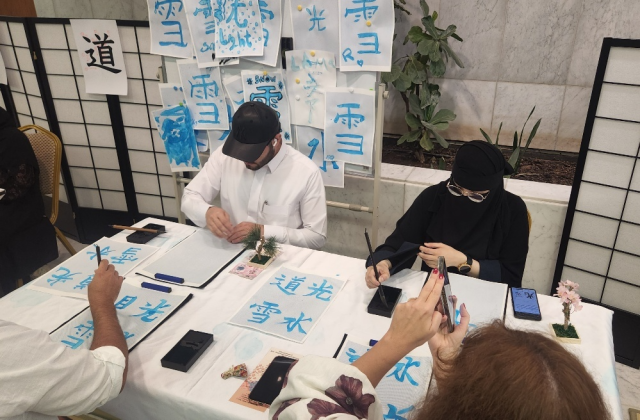
Within the Japan Tourism Promotion Zone, guests were invited to participate in a range of interactive cultural activities led by experts from Japan. Stage performances and experiential booths showcased traditional arts such as bonsai, tea ceremony, kimono, and calligraphy. At the kimono booth, staff highlighted the harmony between Japan’s traditional kimono and Saudi Arabia’s abaya, while introducing the Kansai region’s renowned silk-weaving culture. Many visitors expressed a desire to experience walking through Japanese streets wearing kimono during their future visits to Japan. At the tea ceremony booth, participants enjoyed matcha and learned about Japan’s tea culture through comparisons with Arabic coffee traditions. The presentation also featured tourism information from Japan’s Chubu region, known for its fine tea-producing areas. These engaging cultural connections between Japan and Saudi Arabia were warmly received, allowing guests to deepen their understanding of Japan’s spirit and hospitality.

The two-day event attracted approximately 10,000 visitors, including local residents. Through direct experiences with Japan’s traditional culture, attendees developed a deeper appreciation for Japanese heritage and were inspired to consider traveling to Japan. The event took place at a meaningful time—following the conclusion of Expo 2025 Osaka, Kansai, and leading up to Expo 2030 Riyadh—symbolizing a bridge of friendship and collaboration between the two nations. Japan Festival in Riyadh 2025 concluded on a high note, celebrating the growing ties between Japan and Saudi Arabia through culture and tourism.

【Comments from Mr. Daisuke Kobayashi, Executive Director, JNTO Dubai Office】

KOBAYASHI Daisuke,

Executive Director of JNTO Dubai Office

“We were delighted to welcome so many visitors to Japan Festival in Riyadh 2025. This event provided a wonderful opportunity to celebrate the 70th Anniversary of the Establishment of Diplomatic Relations between Japan and the Kingdom of Saudi Arabia and to showcase Japan’s unique culture and diverse travel attractions.

In the first half of 2025, the number of visitors to Japan from GCC countries reached 25,224, marking a 19.9% increase compared to the same period in 2024. Saudi Arabia continues to lead the region, with 17,443 visitors recorded in 2024 — the highest among all GCC countries. These numbers reflect the growing interest in Japan across the Middle East.

Beyond the major cities such as Tokyo and Osaka, Japan offers countless destinations where travelers can experience its natural beauty, peaceful townscapes, and warm local hospitality. We hope this event inspires more Saudi travelers to explore these regions and to enjoy authentic Japanese cultural experiences, further strengthen mutual exchange and understanding between our two countries.”

For more information on traveling to Japan and the latest updates, please visit: https://www.japan.travel/en/

AFIS 2025 : Un sommet pour libérer la puissance financière africaine et mieux bâtir l’avenir

AFIS 2025 : Un sommet pour libérer la puissance financière africaine et mieux bâtir l’avenir

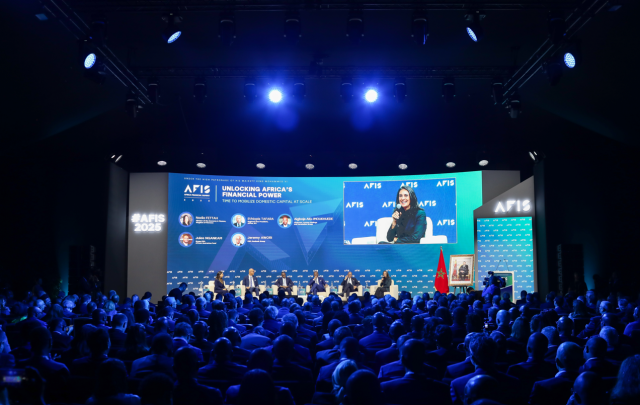
La cinquième édition de l’Africa Financial Summit – AFIS s’ouvre aujourd’hui à Casablanca, sous le thème : « Libérons la puissance financière de l’Afrique – Il est temps de mobiliser à grande échelle les capitaux nationaux ».

Organisé par Jeune Afrique Media Group, en partenariat avec la Société financière internationale (IFC), membre du Groupe de la Banque mondiale et le Royaume du Maroc, l’AFIS 2025 réunit pendant deux jours plus de 1 200 dirigeants financiers, décideurs publics et régulateurs venus de tout le continent et du reste du monde.

Depuis sa création en 2021, l’AFIS s’est imposé comme la principale plateforme de dialogue public-privé dédiée à la construction d’une industrie financière africaine de classe mondiale. Cette nouvelle édition marque une étape clé dans la réflexion collective sur la mobilisation des capitaux du continent. Dans un environnement global caractérisé par des taux d’intérêt élevés, des tensions géopolitiques persistantes et une sélectivité accrue des capitaux internationaux, les acteurs africains s’accordent sur une priorité : bâtir des écosystèmes financiers capables de mobiliser et d’orienter l’épargne africaine vers les investissements productifs du continent.

Alors que de nombreux projets de transformation majeurs dans les domaines de l’énergie, des infrastructures et du numérique nécessitent des investissements massifs, l’Afrique doit pouvoir compter davantage sur ses propres leviers de financement. Le paradoxe d’un continent riche en ressources, mais encore sous-financé, est au cœur des discussions de cette édition de l’AFIS. Pour y répondre, les participants exploreront les pistes de régulations adaptées, d’instruments financiers innovants et de partenariats public-privé capables de convertir les économies africaines en puissances d’investissement régionales.

Amir Ben Yahmed, Président l’Africa Financial Summit, a déclaré : « L’Afrique ne manque pas de capital : il est dans nos banques, nos marchés, nos fonds d’assurance et jusque dans nos téléphones. Ce qui lui manque encore, c’est une régulation ambitieuse et des passerelles solides pour faire circuler ce capital au service du développement. C’est tout le sens d’AFIS : rassembler les acteurs de la finance africaine pour bâtir ensemble une architecture capable de financer nos propres ambitions. »

« La mobilisation de toutes nos ressources – épargne africaine, marchés régionaux, investissements stratégiques internationaux – est la clé d’une croissance durable. Le thème de L’AFIS de cette année – Libérer la puissance financière de l’Afrique : mobiliser à grande échelle les capitaux domestiques – illustre la nécessité de cette transformation. La réussite dépendra de nous tous, » a déclaré Makhtar Diop, Directeur général de la Société financière internationale (IFC).

S.E Mme Nadia Fettah, Ministre de l’Économie et des Finances, a déclaré : « La souveraineté financière n’est pas un slogan, c’est une exigence, un devoir collectif, un passage de témoin entre les générations africaines. Ces paroles nous obligent (…) L’Afrique ne cherche pas à s’isoler du monde. Elle ne veut ni ériger des murs, ni se couper des échanges, mais reprendre la main sur son destin économique. Elle veut pouvoir choisir ses partenariats, peser sur les règles du jeu mondial et orienter ses priorités en fonction de ses propres besoins, et non plus selon les cycles ou les contraintes dictés d’ailleurs. »

Pendant deux jours, plus d’une trentaine de conférences, ateliers et tables rondes offriront aux participants l’occasion de contribuer activement à la transformation du paysage financier africain. L’AFIS 2025 rassemblera les dirigeants des principales institutions bancaires et assurantielles, des fintechs, des bourses régionales et des autorités de régulation, pour construire ensemble les fondations d’une finance africaine résiliente, intégrée et tournée vers l’avenir.

Parmi les personnalités présentes à Casablanca figurent notamment les dirigeants des plus grandes institutions financières de développement tels que Makhtar Diop (IFC), Serge Ekué (BOAD), Dr. George Agyekum Donkor (Banque d’Investissement et de Développement de la CEDEAO), Jules Ngankam (African Guarantee Fund) et Ethiopis Tafara (IFC). Les représentants des principales banques, compagnies d’assurance, marchés de capitaux, fintech et fonds de pension du continent sont également au rendez-vous : Aigboje Aig-Imoukhuede (Access Holdings & Coronation Group), Mohamed El Kettani (Attijariwafa Bank), Jeremy Awori (Ecobank), Mohamed Bah (SUNU Group), Idrissa Nassa (Coris Bank International), Thierry Hebraud (MCB), Amine Bouabid (Bank of Africa), Luís Filipe Rodrigues Lélis (Banco Angolano De Investimentos), Abdeslam Alaoui Smaili (HPS),  Mohamed Hassan Bensalah (Holmarcom), Solomon Quaynor (BAD), Dr. Tilahun Esmael Kassahun (Ethiopian Securities Exchange), Abdou Diop (Forvis Mazars), Edoh Kossi Amenounvé (BRVM), Isabel Espirito Santo (Banco Millenium Atlantica), Ouafae Mriouah (Atlantic Re) , Khalid Safir (CDG Maroc) Gilles Tchamba (l’Archer), Karim Ezzeddine (SkyKapital), Haytham El Maayergi (Afreximbank), Corneille Karekezi (Africa Re) et Cheryl  Buss (ABSA international).

Côté secteur public, 10 gouverneurs et gouverneurs adjoints de banques centrales et 6 ministres et représentants sont attendus, parmi lesquels Nadia Fettah (ministre de l’Économie et des Finances, Maroc), Abdellatif Jouahri (Bank Al-Maghrib), Jean-Claude Kassi Brou (BCEAO), Manuel Antonio Tiago Dias (Banco Nacional de Angola) et André Wameso Nkualoloki (Banque Centrale du Congo). Une quinzaine de dirigeants d’autorité de régulation des marchés de capitaux et des assurances participeront également aux 45 sessions, dont Tarik Senhaji (AMMC) et Hana Tehelku (Ethiopian Capital Market Authority).

Pour la deuxième année consécutive, Casablanca accueille l’AFIS. Ce choix illustre la place centrale du Maroc dans le développement du potentiel financier africain. Avec une Bourse régionale performante, un système bancaire solide et une politique d’intégration continentale affirmée, le Royaume incarne le lien stratégique entre innovation, stabilité et vision panafricaine.

AFIS 2025: A summit to unlock Africa’s financial power and build a better future

AFIS 2025: A summit to unlock Africa’s financial power and build a better future

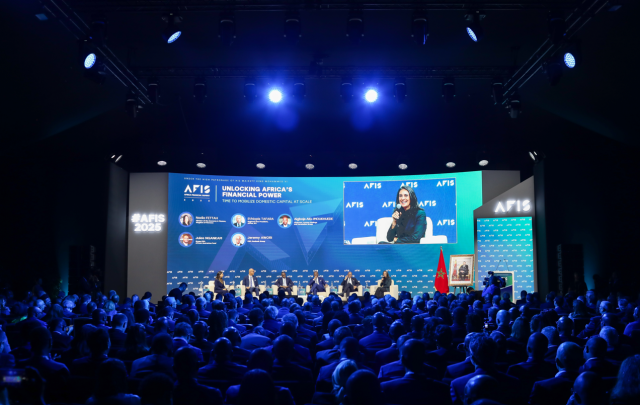
The fifth edition of the Africa Financial Summit (AFIS) opens today in Casablanca under the theme: “Unlocking Africa’s Financial Power: Time to channel domestic capital for the future”.

Organized by Jeune Afrique Media Group, in partnership with the International Finance Corporation (IFC), a member of the World Bank Group, and the Kingdom of Morocco, AFIS 2025 brings together for two days more than 1,200 financial leaders, public decision-makers, and regulators from across the continent and around the world.

Since its inception in 2021, AFIS has established itself as the leading public-private dialogue platform dedicated to building a world-class African financial industry. This new edition marks a key step in the collective reflection on mobilizing the continent’s capital. In a global environment characterized by high interest rates, persistent geopolitical tensions, and greater selectivity of international capital, African stakeholders agree on one priority: to build financial ecosystems capable of mobilizing and channeling African savings toward the continent’s productive investments.

As many major transformation projects in energy, infrastructure, and digital sectors require massive investment, Africa must be able to rely more heavily on its own financing levers. The paradox of a resource-rich yet under-financed continent is at the heart of this year’s AFIS discussions. To address it, participants will explore suitable regulatory frameworks, innovative financial instruments, and public-private partnerships capable of turning African economies into regional investment powerhouses.

Amir Ben Yahmed, President of the Africa Financial Summit, a déclaré : “Africa is not short of capital: it lies in our banks, our markets, our insurance funds, and even in our phones. What it still lacks is ambitious regulation and solid bridges to channel this capital towards development. That is the very purpose of AFIS: bringing together Africa’s financial actors to jointly build an architecture capable of financing our own ambitions.”

Makhtar Diop, Managing Director of the International Finance Corporation (IFC), said: “Mobilizing all our resources – African savings, regional markets, global capital – is the key to sustainable growth. The theme of AFIS 2025 – Unlocking Africa’s financial power: time to mobilize domestic capital at scale – shows how necessary this transformation is. Success depends on us all.”

H.E. Mrs. Nadia Fettah, Minister of Economy and Finance, stated: “Financial sovereignty is not a slogan; it is an imperative, a collective duty, a handover between African generations. These words commit us (…) Africa does not seek to isolate itself from the world. It wishes neither to build walls nor cut itself off from exchanges, but to reclaim control over its economic destiny. It wants to choose its partnerships, influence the rules of the global game, and shape its priorities according to its own needs – no longer according to cycles or constraints dictated from elsewhere.”

Over two days, more than thirty conferences, workshops, and roundtables will give participants the opportunity to actively shape the transformation of Africa’s financial landscape. AFIS 2025 will bring together leaders of major banking and insurance institutions, fintechs, regional stock exchanges, and regulatory authorities to build the foundations of a resilient, integrated, and forward-looking African finance.

Among the personalities present in Casablanca are leaders of the largest development finance institutions, including Makhtar Diop (IFC), Serge Ekué (BOAD), Dr. George Agyekum Donkor (ECOWAS Bank for Investment and Development), Jules Ngankam (African Guarantee Fund), and Ethiopis Tafara (IFC). Representatives of the continent’s leading banks, insurance companies, capital markets, fintechs, and pension funds are also in attendance: Aigboje Aig-Imoukhuede (Access Holdings & Coronation Group), Mohamed El Kettani (Attijariwafa Bank), Jeremy Awori (Ecobank), Mohamed Bah (SUNU Group), Idrissa Nassa (Coris Bank International), Thierry Hebraud (MCB), Amine Bouabid (Bank of Africa), Luís Filipe Rodrigues Lélis (Banco Angolano de Investimentos), Abdeslam Alaoui Smaili (HPS), Mohamed Hassan Bensalah (Holmarcom), Solomon Quaynor (AfDB), Dr. Tilahun Esmael Kassahun (Ethiopian Securities Exchange), Abdou Diop (Forvis Mazars), Edoh Kossi Amenounvé (BRVM), Isabel Espírito Santo (Banco Millennium Atlântico), Ouafae Mriouah (Atlantic Re), Khalid Safir (CDG Maroc), Gilles Tchamba (l’Archer), Karim Ezzeddine (SkyKapital), Haytham El Maayergi (Afreximbank), Corneille Karekezi (Africa Re), and Cheryl Buss (ABSA International).

On the public-sector side, 10 central bank governors and deputy governors and 6 ministers and representatives are expected, including Nadia Fettah (Minister of Economy and Finance, Morocco), Abdellatif Jouahri (Bank Al-Maghrib), Jean-Claude Kassi Brou (BCEAO), Manuel Antonio Tiago Dias (Banco Nacional de Angola), and André Wameso Nkualoloki (Central Bank of the Congo). Around fifteen heads of capital-market and insurance regulatory authorities will also take part in the 45 sessions, including Tarik Senhaji (AMMC) and Hana Tehelku (Ethiopian Capital Market Authority).

For the second consecutive year, Casablanca is hosting AFIS. This choice underscores Morocco’s central role in developing Africa’s financial potential. With a strong regional stock exchange, a solid banking system, and a clear policy of continental integration, the Kingdom embodies the strategic link between innovation, stability, and a Pan-African vision.

Al Baraka Group and its two banking units in Egypt and Turkey are the Golden Sponsor of the AAOIFI – IDB Bank 20th Conference

Al Baraka Group and its two banking units in Egypt and Turkey are the Golden Sponsor of the AAOIFI – IDB Bank 20th Conference

Al Baraka Group (“the Group”) and its two banking units, Al Baraka Bank Egypt and Al Baraka Turk Participation Bank, announced their gold sponsorship of the 20th Annual AAOIFI Conference on Islamic Banking and Finance, which will be held on November 2 and 3, 2025 in Manama, Kingdom of Bahrain, with the support of the Central Bank of Bahrain and in cooperation with the Islamic Development Bank Group. This year’s conference is themed “Islamic Finance in the Era of Artificial Intelligence: Present Potentials and Future Prospects”.

As one of the leading events in the Islamic finance industry, this year’s flagship conference brings together Shari’ah scholars, policymakers and key decision-makers to engage in high-level discussions on critical global issues affecting the industry. 

Al Baraka Group and its two banking units’ annual sponsorship of the AAOIFI Conference reflects its appreciation of the vital role such conferences play in advancing the Islamic banking industry. It also embodies the Group’s strong commitment to supporting the initiatives organized by AAOIFI, a leading institution in developing Islamic accounting and auditing standards and aligning them with emerging global requirements—thereby strengthening the position of the Islamic banking industry both regionally and globally.

The conference will feature several keynote addresses from esteemed dignitaries and policymakers, alongside five insightful panel discussions. These discussions are aimed to address the most pressing issues and latest developments across the global economy that are reshaping how Islamic financial institutions and other stakeholders respond to transformative forces, particularly artificial intelligence (AI) in multiple areas such as business operations, Shari’ah compliance and the mobilization of human and technological resources. Panel discussions will cover certain strategic challenges including integrating AI in Islamic finance operations and services and determining the role of Islamic finance in AI-driven business and finance environment, among other relevant topics.

Islamic finance offers a USD 5.5 trillion opportunity to unlock new markets and capital

Islamic finance offers a USD 5.5 trillion opportunity to unlock new markets and capital

Islamic banking has evolved from a niche offering to a mainstream financial segment, spanning more than 80 countries and assets exceeding USD 5  trillion. Yet, ambiguities around what it is – its principles, structures, and market  dynamics – pose challenges for corporate leaders seeking to engage with or invest in  this space, with 65 per cent of corporates indicating interest in Shariah-compliant  solutions had no prior background, or exposure to Islamic banking. 

Islamic Banking for Corporates: Broadening Horizons, a report by Standard Chartered  published today, identifies a lack of product familiarity as a key factor restricting corporates from accessing USD 5.5 trillion in global Islamic finance assets, which is  projected to reach USD 7.5 trillion by 2028. The number of corporate Sukuk issuers has  nearly doubled since 2020, driving a 38 per cent increase in issuance volumes to USD 58.8 billion in 2024. 

“Islamic banking has evolved into one of the world’s fastest-growing sources of capital,  but awareness amongst corporates has not kept pace,” said Khurram Hilal, CEO of  Group Islamic Banking at Standard Chartered. “Corporates that build Islamic finance  capabilities stand to access specialised capital pools with trillions in assets, preferential  pricing in oversubscribed markets, government incentives in high-growth markets, and  ESG-focused capital pools where ethical screening is structurally embedded. This knowledge gap reflects an increasingly expensive opportunity cost.” 

Islamic finance principles align closely with ESG frameworks, both prioritising  transparency, fairness, ethical conduct and environmental responsibility. Sustainable  Sukuk were oversubscribed by an average of 4.3 times their issuance value in 2024,  compared to 3.1 times for regular Sukuk, reflecting heightened investor demand for  instruments that meet both Shariah and sustainability criteria. 

Digital innovation is further accelerating this momentum. Tokenised Sukuk, blockchain based settlements, and AI-enabled Shariah-compliance tools are set to transform how  capital is raised and managed, while reducing issuance costs and improving cross border governance.

Islamic banking provides strategic access to critical trade corridors and economies  where Shariah-compliant finance is increasingly expected or mandated, particularly  across the GCC, Southeast Asia, South Asia, and Africa. Shariah-compliant finance  underpins much of the USD 5.7 trillion South-South Corridor connecting these regions,  which now accounts for nearly a quarter of global trade. This has become increasingly  relevant amid shifting trade and investment corridors. 

The Halal economy alone represents a USD 2.2 trillion market opportunity. Corporates  operating across Muslim-majority markets are increasingly leveraging Islamic trade  finance and supply chain solutions through initiatives such as Standard Chartered  Saadiq’s Halal360, and the expanding Islamic trade finance networks. 

Standard Chartered is the only international bank with a global Islamic banking  franchise, serving clients across more than 30 markets through Standard Chartered  Saadiq. The bank has arranged over USD 200 billion in Islamic financing, spanning  Sukuk, structured trade and sustainable-finance solutions. 

“Islamic finance is now a strategic conversation in boardrooms,” Khurram Hilal added.  “Our role is to bridge interest with expertise, helping global corporates deploy practical  and cross-border Shariah-compliant banking solutions that support their business  strategies.” 

The full Standard Chartered Islamic Banking for Corporates: Broadening Horizons  report is available here: https://www.sc.com/en/corporate-investment-banking/islamic banking/islamic-banking-corporate-report